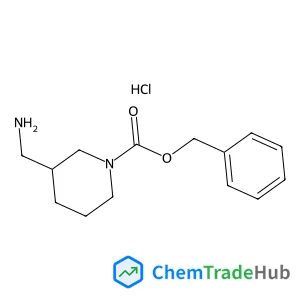
Benzyl 3-(aminomethyl)piperidine-1-carboxylate hydrochloride
CAS Number:
1186663-23-9
Molecular Formula:
C14H21ClN2O2
Denis Jacquemin, Tangui Le Bahers, Ilaria Ciofini
We investigate the efficiency of several partial atomic charge models (Mulliken, Hirshfeld, Bader, Natural, Merz–Kollman and ChelpG) for investigating the through-space charge-transfer in push–pull organic compounds with Time-Dependent Density Functional Theory approaches. The results of these models are compared to benchmark values obtained by determining the difference of total densities between the ground and excited states. Both model push–pull oligomers and two classes of “real-life” organic dyes (indoline and diketopyrrolopyrrole) used as sensitisers in solar cell applications have been considered. Though the difference of dipole moments between the ground and excited states is reproduced by most approaches, no atomic charge model is fully satisfactory for reproducing the distance and amount of charge transferred that are provided by the density picture. Overall, the partitioning schemes fitting the electrostatic potential (e.g. Merz–Kollman) stand as the most consistent compromises in the framework of simulating through-space charge-transfer, whereas the other models tend to yield qualitatively inconsistent values.
Philip D. Stevens, Guifeng Li, Jinda Fan, Max Yen, Yong Gao
DOI: 10.1039/B505424A
Raymond Wai-Yin Sun, Rong Chen, Nancy P.-Y. Chung, Chi-Ming Ho, Chen-Lung Steve Lin, Chi-Ming Che
DOI: 10.1039/B510984A
Yoshihiko Yamamoto, Kozo Hattori, Jun-ichi Ishii, Hisao Nishiyama, Kenji Itoh
DOI: 10.1039/B506977G
Sunita Thyagarajan, Kenneth D. Karlin, Steven E. Rokita
DOI: 10.1039/B509690A
Goverdhan Mehta, Kotapalli Pallavi, Jayant D. Umarye
DOI: 10.1039/B506931A
Carl Redshaw, Mark R. J. Elsegood
DOI: 10.1039/B509556E
David J. Brooks, Richard E. Douthwaite, Lisa J. Gillie
DOI: 10.1039/B506569K
Gonzalo Givaja, Alexander J. Blake, Claire Wilson, Martin Schröder, Jason B. Love
DOI: 10.1039/B507729J
Chris R. Miller, Robert Vogel, Peter P. T. Surawski, Simon R. Corrie, Andreas Rühmann, Matt Trau
DOI: 10.1039/B509503D
6-(3-Fluorophenyl)picolinic acid is generally considered safe for laboratory use...
(3R)-3-Pyrrolidinol is used in the pharmaceutical industry as a precursor for dr...
When handling (4R,5R)-4,5-Diethoxycarbonyl-2,2-dimethyldioxolane (CAS: 59779-75-...
1-(6-Chloroimidazo[1,2-b]pyridazin-3-yl)ethanone is often synthesized via a mult...
The market for N-Ethyl-3,4-dimethylbenzylamine (CAS: 39180-83-1) remains steady,...
Tert-butyl 3-(pyrrolidin-1-yl)azetidine-1-carboxylate is a chemical compound wit...
1-Bromo-3-chloro-2,4-dimethoxybenzene (CAS: 1228956-93-1) falls under the classi...
The safety of 8-Bromo-2-methyl-3,4-dihydroisoquinolin-1(2H)-one (CAS: 1368622-07...
Benzyl [(3S)-2,6-dioxo-3-piperidinyl]carbamate is generally safe when handled wi...
1-{[4-(4,4,5,5-Tetramethyl-1,3,2-dioxaborolan-2-yl)phenyl]sulfonyl}pyrrolidine s...

Physical Chemistry Chemical Physics (PCCP) is an international journal co-owned by 19 physical chemistry and physics societies from around the world. This journal publishes original, cutting-edge research in physical chemistry, chemical physics and biophysical chemistry. To be suitable for publication in PCCP, articles must include significant innovation and/or insight into physical chemistry; this is the most important criterion that reviewers and Editors will judge against when evaluating submissions. The journal has a broad scope and welcomes contributions spanning experiment, theory, computation and data science. Topical coverage includes spectroscopy, dynamics, kinetics, statistical mechanics, thermodynamics, electrochemistry, catalysis, surface science, quantum mechanics, quantum computing and machine learning. Interdisciplinary research areas such as polymers and soft matter, materials, nanoscience, energy, surfaces/interfaces, and biophysical chemistry are welcomed if they demonstrate significant innovation and/or insight into physical chemistry. Joined experimental/theoretical studies are particularly appreciated when complementary and based on up-to-date approaches.
![2-[({[(2-Methyl-2-propanyl)oxy]carbonyl}amino)methyl]isonicotinic acid structure](https://static.chemtradehub.com/structs/473/473924-63-9-973b.webp "2-[({[(2-Methyl-2-propanyl)oxy]carbonyl}amino)methyl]isonicotinic acid structure")
![(2E)-4-[(1R,2S,8R,19S,21R)-14-Hydroxy-11-isopropenyl-8,23,23-trimethyl-5-(3-methyl-2-buten-1-yl)-16,20-dioxo-3,7,22-trioxaheptacyclo[17.4.1.1~8,12~.0~2,17~.0~2,21~.0~4,15~.0~6,13~]pentacosa-4(15),5,13
,17-tetraen-21-yl]-2-methyl-2-butenoic acid structure](https://static.chemtradehub.com/structs/173/173867-04-4-d2d3.webp "(2E)-4-[(1R,2S,8R,19S,21R)-14-Hydroxy-11-isopropenyl-8,23,23-trimethyl-5-(3-methyl-2-buten-1-yl)-16,20-dioxo-3,7,22-trioxaheptacyclo[17.4.1.1~8,12~.0~2,17~.0~2,21~.0~4,15~.0~6,13~]pentacosa-4(15),5,13
,17-tetraen-21-yl]-2-methyl-2-butenoic acid structure")