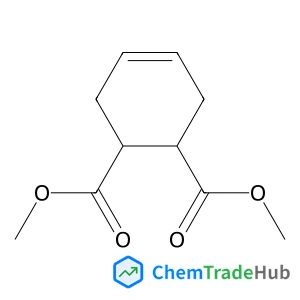
4-Cyclohexene-1,2-dicarboxylic acid, 1,2-dimethyl ester, (1R,2R)-rel-
CAS Number:
17673-68-6
Molecular Formula:
C10H14O4
E. Collini
In the search of new materials characterized by high two-photon absorption (TPA) efficiency, many efforts have been devoted to design chromophores with enhanced TPA responses progressively moving from linear chromophores such as dipoles and quadrupoles toward multimeric complex molecular architectures. This approach is mainly based on the optimization of intra-molecular charge transfer interactions. In contrast to the extensive investigations based on this intramolecular approach, the effect of inter-molecular interactions on TPA has not been fully elucidated, although theoretical studies predict that the presence of such interaction could induce large size-scalable TPA enhancements. Despite these promising predictions, only few investigations have been devoted to understand how intermolecular interactions affect the TPA response of molecular aggregates. Even less are the experimental studies that indeed compare the TPA efficiency of molecules in their monomeric and aggregated form and a thorough rationalization of the results was missing. This perspective aims to fill this gap providing a unified view of the efforts and the results obtained following this strategy.
Muhammad Faizan, Jiahao Xie, Ghulam Murtaza, Carlos Echeverría-Arrondo, Thamraa Alshahrani, Kailash Chandra Bhamu, Amel Laref, Iván Mora-Seró, Shah Haidar Khan
DOI: 10.1039/D0CP05827K
Ge Yao
DOI: 10.1039/D0CP05909A
Bohai Liu, Sudatta Das, Xiangfan Xu, Jingli Xie, Xu Deng, George Fytas
DOI: 10.1039/D0CP05377E
Tongkui Yue, Sai Li, Zhiyu Zhang, Yulong Chen
DOI: 10.1039/D0CP06532C
Juin W. Zhou, M. Hassan Arbab
DOI: 10.1039/D0CP06707E
Shivam Tiwari, Abhijit Gogoi, K. Anki Reddy
DOI: 10.1039/D0CP05268J
Soham Sarkar, Atanu Maity, Rajarshi Chakrabarti
DOI: 10.1039/D0CP05341D
Fanghua Tian, Yebei Li, Qizhong Zhao, Kaiyan Cao, Dingchen Wang, Zhiyong Dai, Zhonghai Yu, Xiaoqin Ke, Yin Zhang, Chao Zhou, Wenliang Zuo, Sen Yang, Xiaoping Song
DOI: 10.1039/D0CP05902A
Ming Sun, Qingrui Yang, Yue Zhang, Pan Wang, Dongshuai Hou, Qingfeng Liu, Jinrui Zhang, Jigang Zhang
DOI: 10.1039/D0CP05211F
6-(3-Fluorophenyl)picolinic acid is generally considered safe for laboratory use...
(3R)-3-Pyrrolidinol is used in the pharmaceutical industry as a precursor for dr...
When handling (4R,5R)-4,5-Diethoxycarbonyl-2,2-dimethyldioxolane (CAS: 59779-75-...
1-(6-Chloroimidazo[1,2-b]pyridazin-3-yl)ethanone is often synthesized via a mult...
The market for N-Ethyl-3,4-dimethylbenzylamine (CAS: 39180-83-1) remains steady,...
Tert-butyl 3-(pyrrolidin-1-yl)azetidine-1-carboxylate is a chemical compound wit...
1-Bromo-3-chloro-2,4-dimethoxybenzene (CAS: 1228956-93-1) falls under the classi...
The safety of 8-Bromo-2-methyl-3,4-dihydroisoquinolin-1(2H)-one (CAS: 1368622-07...
Benzyl [(3S)-2,6-dioxo-3-piperidinyl]carbamate is generally safe when handled wi...
1-{[4-(4,4,5,5-Tetramethyl-1,3,2-dioxaborolan-2-yl)phenyl]sulfonyl}pyrrolidine s...

Physical Chemistry Chemical Physics (PCCP) is an international journal co-owned by 19 physical chemistry and physics societies from around the world. This journal publishes original, cutting-edge research in physical chemistry, chemical physics and biophysical chemistry. To be suitable for publication in PCCP, articles must include significant innovation and/or insight into physical chemistry; this is the most important criterion that reviewers and Editors will judge against when evaluating submissions. The journal has a broad scope and welcomes contributions spanning experiment, theory, computation and data science. Topical coverage includes spectroscopy, dynamics, kinetics, statistical mechanics, thermodynamics, electrochemistry, catalysis, surface science, quantum mechanics, quantum computing and machine learning. Interdisciplinary research areas such as polymers and soft matter, materials, nanoscience, energy, surfaces/interfaces, and biophysical chemistry are welcomed if they demonstrate significant innovation and/or insight into physical chemistry. Joined experimental/theoretical studies are particularly appreciated when complementary and based on up-to-date approaches.
![Benzyl spiro[indole-3,4'-piperidine]-1(2H)-carboxylate hydrochloride (1:1) structure](https://static.chemtradehub.com/structs/159/159635-46-8-8de0.webp "Benzyl spiro[indole-3,4'-piperidine]-1(2H)-carboxylate hydrochloride (1:1) structure")