












Probing the structural and electronic properties of small vanadium monoxide clusters
Literature Information
Publication Date
2012-02-14
DOI
10.1039/C2CP40112F
Impact Factor
3.676
Authors
Huai-Qian Wang, Xiao-Yu Kuang
View Original
Abstract
The structural evolution and bonding of a series of early transition-metal oxide clusters, VnOq (n = 3–9, q = 0,−1), have been investigated with the aid of previous photoelectron spectroscopy (PES) and theoretical calculations. For each vanadium monoxide cluster, many low-lying isomers are generated using the Saunders “Kick” global minimum stochastic search method. Theoretical electron detachment energies (both vertical and adiabatic) were compared with the experimental measurements to verify the ground states of the vanadium monoxide clusters obtained from the DFT calculations. The results demonstrate that the combination of photoelectron spectroscopy experiments and DFT calculation is not only powerful for obtaining the electronic and atomic structures of size-selected clusters, but also valuable in resolving structurally and energetically close isomers. The second difference energies and adsorption energies as a function of the cluster size exhibit a pronounced even–odd alternation phenomenon. The adsorption energies of one O atom on the anionic (6.64 → 8.16 eV) and neutral (6.41 → 8.13 eV) host vanadium clusters are shown to be surprisingly high, suggesting strong capabilities to activate O by structural defects in vanadium oxides.
Related Literature
One-step synthesis of low polydispersity, biotinylated poly(N-isopropylacrylamide) by ATRP
Debora Bontempo, Ronald C. Li, Tiffany Ly, Carrie E. Brubaker, Heather D. Maynard
2005-08-22
Communication
DOI: 10.1039/B507912H
Synthesis and cellular uptake of porphyrin decorated iron oxide nanoparticles—a potential candidate for bimodal anticancer therapy
Hongwei Gu, Keming Xu, Zhimou Yang, Chi K. Chang
2005-07-14
Communication
DOI: 10.1039/B507779F
Zeolite micropattern for biological applications
Wenqing Sun, Koon Fung Lam, Ling Wai Wong, King Lun Yeung
2005-09-07
Communication
DOI: 10.1039/B509323F
Homologous, long-chain alkyl dendrons form homologous thin films on silver oxide surfaces
André A. Williams, B. Scott Day, Brett L. Kite, Melinda K. McPherson, Carla Slebodnick, John R. Morris, Richard D. Gandour
2005-09-20
Communication
DOI: 10.1039/B506710C
The first synthesis of organic–inorganic hybrid materials with chiral bis(oxazoline) ligands
José M. Fraile, José I. García, Clara I. Herrerías, José A. Mayoral
2005-08-23
Communication
DOI: 10.1039/B507739G
Fluorescence resonance energy transfer between a quantum dot donor and a dye acceptor attached to DNA
Joe D. Piper, Chris Abell, David Klenerman, Liming Ying
2005-09-06
Communication
DOI: 10.1039/B508911E
Photoinduced charge separation and charge recombination of fullerene bearing dendritic poly(amidoamine) with carboxylates at the terminal in aqueous media
Yutaka Takaguchi, Yuuki Sako, Mitsuhiro Tamura
2005-09-22
Communication
DOI: 10.1039/B508793G
Highly cytotoxic iron(ii) complexes with pentadentate pyridylligands as a new class of anti-tumor agents
Ella Lai-Ming Wong, Guo-Su Fang, Chi-Ming Che, Nianyong Zhu
2005-08-19
Communication
DOI: 10.1039/B507687K
You might also like
Compound Q&A
Is 6-(3-Fluorophenyl)picolinic acid (CAS: 887982-40-3) safe?
6-(3-Fluorophenyl)picolinic acid is generally considered safe for laboratory use...
887982-40-36-(3-Fluorophenyl)pi...
Compound Q&A
What industries use (3R)-3-Pyrrolidinol (CAS: 2799-21-5)?
(3R)-3-Pyrrolidinol is used in the pharmaceutical industry as a precursor for dr...
2799-21-5(3R)-3-Pyrrolidinol
Compound Q&A
What precautions should be taken when handling (4R,5R)-4,5-Diethoxycarbonyl-2,2-dimethyldioxolane (CAS: 59779-75-8)?
When handling (4R,5R)-4,5-Diethoxycarbonyl-2,2-dimethyldioxolane (CAS: 59779-75-...
59779-75-8(4R,5R)-4,5-Diethoxy...
Compound Q&A
How is 1-(6-Chloroimidazo[1,2-b]pyridazin-3-yl)ethanone (CAS: 90734-71-7) typically synthesized?
1-(6-Chloroimidazo[1,2-b]pyridazin-3-yl)ethanone is often synthesized via a mult...
90734-71-71-(6-Chloroimidazo[1...
Compound Q&A
What is the market or research trend for N-Ethyl-3,4-dimethylbenzylamine (CAS: 39180-83-1)?
The market for N-Ethyl-3,4-dimethylbenzylamine (CAS: 39180-83-1) remains steady,...
39180-83-1N-Ethyl-3,4-dimethyl...
Compound Q&A
What is Tert-butyl 3-(pyrrolidin-1-yl)azetidine-1-carboxylate (CAS: 1019008-21-9)?
Tert-butyl 3-(pyrrolidin-1-yl)azetidine-1-carboxylate is a chemical compound wit...
1019008-21-9Tert-butyl 3-(pyrrol...
Compound Q&A
What regulatory guidelines apply to 1-Bromo-3-chloro-2,4-dimethoxybenzene (CAS: 1228956-93-1)?
1-Bromo-3-chloro-2,4-dimethoxybenzene (CAS: 1228956-93-1) falls under the classi...
1228956-93-11-Bromo-3-chloro-2,4...
Compound Q&A
Is 8-Bromo-2-methyl-3,4-dihydroisoquinolin-1(2H)-one (CAS: 1368622-07-4) safe?
The safety of 8-Bromo-2-methyl-3,4-dihydroisoquinolin-1(2H)-one (CAS: 1368622-07...
1368622-07-48-Bromo-2-methyl-3,4...
Compound Q&A
Is Benzyl [(3S)-2,6-dioxo-3-piperidinyl]carbamate (CAS: 22785-43-9) safe?
Benzyl [(3S)-2,6-dioxo-3-piperidinyl]carbamate is generally safe when handled wi...
22785-43-9Benzyl [(3S)-2,6-dio...
Compound Q&A
How should 1-{[4-(4,4,5,5-Tetramethyl-1,3,2-dioxaborolan-2-yl)phenyl]sulfonyl}pyrrolidine (CAS: 928657-21-0) be stored?
1-{[4-(4,4,5,5-Tetramethyl-1,3,2-dioxaborolan-2-yl)phenyl]sulfonyl}pyrrolidine s...
928657-21-01-{[4-(4,4,5,5-Tetra...
Source Journal
Physical Chemistry Chemical Physics

CiteScore:
5.5
Self-citation Rate:
10.3%
Articles per Year:
3036
Physical Chemistry Chemical Physics (PCCP) is an international journal co-owned by 19 physical chemistry and physics societies from around the world. This journal publishes original, cutting-edge research in physical chemistry, chemical physics and biophysical chemistry. To be suitable for publication in PCCP, articles must include significant innovation and/or insight into physical chemistry; this is the most important criterion that reviewers and Editors will judge against when evaluating submissions. The journal has a broad scope and welcomes contributions spanning experiment, theory, computation and data science. Topical coverage includes spectroscopy, dynamics, kinetics, statistical mechanics, thermodynamics, electrochemistry, catalysis, surface science, quantum mechanics, quantum computing and machine learning. Interdisciplinary research areas such as polymers and soft matter, materials, nanoscience, energy, surfaces/interfaces, and biophysical chemistry are welcomed if they demonstrate significant innovation and/or insight into physical chemistry. Joined experimental/theoretical studies are particularly appreciated when complementary and based on up-to-date approaches.
Recommended Compounds
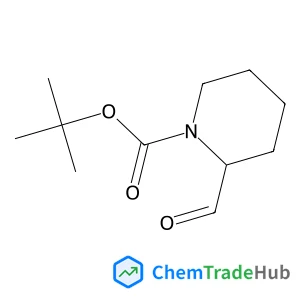
2-Methyl-2-propanyl (2R)-2-formyl-1-piperidinecarboxylate
CAS Number:
134526-69-5
Molecular Formula:
C11H19NO3
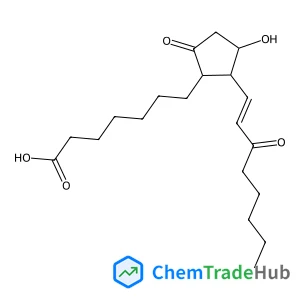
(11alpha,13E)-11-Hydroxy-9,15-dioxoprost-13-en-1-oic acid
CAS Number:
22973-19-9
Molecular Formula:
C20H32O5
Recommended Suppliers






Disclaimer
This page provides academic journal information for reference and research purposes only. We are not affiliated with any journal publishers and do not handle publication submissions. For publication-related inquiries, please contact the respective journal publishers directly.
If you notice any inaccuracies in the information displayed, please contact us at support@chemtradehub.com. We will promptly review and address your concerns.