












![(2E)-4-[(1R,2S,8R,19S,21R)-14-Hydroxy-11-isopropenyl-8,23,23-trimethyl-5-(3-methyl-2-buten-1-yl)-16,20-dioxo-3,7,22-trioxaheptacyclo[17.4.1.1~8,12~.0~2,17~.0~2,21~.0~4,15~.0~6,13~]pentacosa-4(15),5,13
,17-tetraen-21-yl]-2-methyl-2-butenoic acid structure](https://static.chemtradehub.com/structs/173/173867-04-4-d2d3.webp "(2E)-4-[(1R,2S,8R,19S,21R)-14-Hydroxy-11-isopropenyl-8,23,23-trimethyl-5-(3-methyl-2-buten-1-yl)-16,20-dioxo-3,7,22-trioxaheptacyclo[17.4.1.1~8,12~.0~2,17~.0~2,21~.0~4,15~.0~6,13~]pentacosa-4(15),5,13
,17-tetraen-21-yl]-2-methyl-2-butenoic acid structure")
Efficient synthesis of narrowly dispersed amphiphilic double-brush copolymers through the polymerization reaction of macromonomer micelle emulsifiers at the oil–water interface
Literature Information
Publication Date
2016-06-20
DOI
10.1039/C6PY00705H
Impact Factor
5.582
Authors
Heng Li, Han Miao, Yong Gao, Huaming Li, Daoyong Chen
View Original
Abstract
In this study, well-defined amphiphilic double-brush copolymers (DBCs) with narrow molecular weight distributions were efficiently synthesized by the radical polymerization of macromonomers directed by a Pickering emulsion template at an oil–water interface. Firstly, a well-defined poly(methyl methacrylate)-b-poly(N,N-dimethyl acryamide) (PMMA-b-PDMA) diblock macromonomer carrying a pendent methacryloyl (MA) group at the block junction (MA-PMMA-b-PDMA) was synthesized through sequential atom transfer radical polymerization (ATRP) and reversible addition–fragmentation chain transfer (RAFT) polymerization, followed by an acrylation functionalization reaction. The MA-PMMA-b-PDMA macromonomer could self-assemble into core–shell micelles with hydrophobic PMMA-based cores, hydrophilic PDMA shells and MA groups at the core–shell boundary. The as-formed core–shell micelles were then employed as emulsifiers for the formation of a stabilized oil-in-water (o/w) Pickering emulsion, in which the macromonomer micelles were locked at the oil–water interface and presented Janus-like conformations. Finally, a conventional radical polymerization reaction was carried out for the MA groups of the macromonomer micelles absorbed at the oil–water interface, using azobiisobutyronitrile (AIBN) pre-encapsulated in the Pickering emulsion oil droplets as the initiator, leading to well-defined PMA-g-PMMA/PDMA DBCs with narrow molecular weight distributions. The as-formed DBCs showed higher degrees of polymerization of the backbones than DBCs synthesized by micellar polymerization of the macromonomer in pure water, presumably due to the facilitated propagation reaction between the neighboring micelles in the former case. The macromonomers and DBCs were carefully characterized by various instrumental analytical techniques.
Related Literature
Wire-supported CdSe nanowire array photoelectrochemical solar cells
Luhui Zhang, Enzheng Shi, Zhen Li, Peixu Li, Yi Jia, Chunyan Ji, Jinquan Wei, Kunlin Wang, Hongwei Zhu, Dehai Wu, Anyuan Cao
2012-01-18
Paper
DOI: 10.1039/C2CP00024E
Dynamics of the D+ + H2 and H+ + D2 reactions: a detailed comparison between theory and experiment
J. M. Alvariño, D. Gerlich, M. Hankel, V. J. Herrero, V. Sáez-Rábanos, F. J. Aoiz
2012-01-06
Paper
DOI: 10.1039/C2CP23479C
On the structure of the Au18(SR)14 cluster
Alfredo Tlahuice, Ignacio L. Garzón
2012-01-27
Communication
DOI: 10.1039/C2CP24016E
On the formation of phenyldiacetylene (C6H5CCCCH) and D5-phenyldiacetylene (C6D5CCCCH) studied under single collision conditions
D. S. N. Parker, F. Zhang, Y. S. Kim, R. I. Kaiser, A. Landera, A. M. Mebel
2012-01-27
Paper
DOI: 10.1039/C2CP22695B
Electro-catalytic oxidative cleavage of lignin in a protic ionic liquid
Elena Reichert, Reiner Wintringer, Dietrich A. Volmer, Rolf Hempelmann
2012-02-07
Paper
DOI: 10.1039/C2CP23596J
Orientational ordering of the second layer of C60 molecules on Au(111)
Lin Tang, Quanmin Guo
2012-01-09
Paper
DOI: 10.1039/C2CP23871C
Interactions of iodoperfluorobenzene compounds with gold nanoparticles
Idriss Blakey, Zul Merican, Llewellyn Rintoul, Ya-Mi Chuang, Kevin S. Jack, Aaron S. Micallef
2012-01-26
Paper
DOI: 10.1039/C2CP23809H
Energetics of ligand binding to the DNA minor groove
Viktor V. Kostjukov, Adrian A. Hernandez Santiago, Fernando Rojas Rodriguez, Salvador Rosas Castilla, John A. Parkinson, Maxim P. Evstigneev
2012-02-21
Paper
DOI: 10.1039/C2CP40182G
Light harvestingzinc naphthalocyanine–perylenediimide supramolecular dyads: long-lived charge-separated states in nonpolar media
Ana M. Gutiérrez, Ángela Sastre-Santos, Fernando Fernández-Lázaro
2012-01-18
Paper
DOI: 10.1039/C2CP23285E
You might also like
Compound Q&A
What is 3-Fluoro-2-methylbenzylamine (CAS: 771573-36-5)?
3-Fluoro-2-methylbenzylamine is an organic compound with the CAS number 771573-3...
771573-36-53-Fluoro-2-methylben...
Compound Q&A
Is Tert-butyl 2-(oxetan-3-ylidene)acetate (CAS: 1207175-03-8) safe?
Tert-butyl 2-(oxetan-3-ylidene)acetate is considered safe for its intended uses ...
1207175-03-8Tert-butyl 2-(oxetan...
Compound Q&A
What precautions should be taken when handling 4-Acetyl-2-fluorobenzonitrile (CAS: 214760-18-6)?
Proper personal protective equipment (PPE) such as gloves, goggles, and a lab co...
214760-18-64-Acetyl-2-fluoroben...
Compound Q&A
How is 2-Ethyl-4-methyl-1,3-thiazole (CAS: 15679-12-6) typically synthesized?
2-Ethyl-4-methyl-1,3-thiazole is commonly synthesized via the reaction of thiour...
15679-12-62-Ethyl-4-methyl-1,3...
Compound Q&A
How should 5',5''-([2,2'-Bithiophene]-5,5'-diyl)bis(([1,1':3',1''-terphenyl]-4,4''-dicarboxylic acid)) (CAS: 1227780-71-3) be stored?
This compound should be stored in a cool, dry place away from direct sunlight an...
1227780-71-35',5''''-([2,2'-Bith...
Compound Q&A
What regulatory guidelines apply to L-Lysine Acetate Salt (CAS: 52315-92-1)?
L-Lysine Acetate Salt (CAS: 52315-92-1) is subject to various regulatory guideli...
52315-92-1L-LYSINE ACETATE SAL...
Compound Q&A
Is 6-Fluoro-3-hydroxy-2-pyrazinecarboxamide (CAS: 259793-96-9) safe?
6-Fluoro-3-hydroxy-2-pyrazinecarboxamide (CAS: 259793-96-9) is generally conside...
259793-96-96-Fluoro-3-hydroxy-2...
Compound Q&A
What are the physical and chemical properties of 1,1'-Sulfonylbis(1H-imidazole) (CAS: 7189-69-7)?
1,1'-Sulfonylbis(1H-imidazole) is a crystalline solid with a molecular weight of...
7189-69-71,1'-Sulfonylbis(1H-...
Compound Q&A
What industries use 4-methyl-7-nitro-1H-indole-3-carbonitrile (CAS: 289483-82-5)?
4-Methyl-7-nitro-1H-indole-3-carbonitrile (CAS: 289483-82-5) is primarily used i...
289483-82-54-methyl-7-nitro-1H-...
Compound Q&A
How should waste containing 5-Bromo-3-indolyl-beta-galactoside (CAS: 97753-82-7) be handled?
Waste containing 5-Bromo-3-indolyl-beta-galactoside (CAS: 97753-82-7) should be ...
97753-82-75-Bromo-3-indolyl-be...
Source Journal
Polymer Chemistry

CiteScore:
8.6
Self-citation Rate:
7.3%
Articles per Year:
457
Polymer Chemistry welcomes submissions in all areas of polymer science that have a strong focus on macromolecular chemistry. Manuscripts may cover a broad range of fields, yet no direct application focus is required.
Recommended Compounds
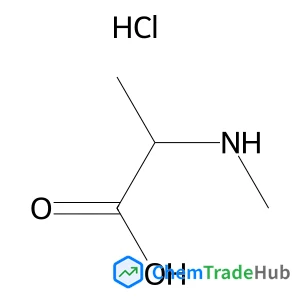
(R)-2-(Methylamino)propanoic acid hydrochloride
CAS Number:
1155878-14-0
Molecular Formula:
C4H10ClNO2
Recommended Suppliers





Disclaimer
This page provides academic journal information for reference and research purposes only. We are not affiliated with any journal publishers and do not handle publication submissions. For publication-related inquiries, please contact the respective journal publishers directly.
If you notice any inaccuracies in the information displayed, please contact us at support@chemtradehub.com. We will promptly review and address your concerns.