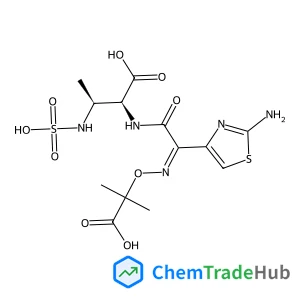
Aztreonam USP Related Compound A (Open-ring Aztreonam)
CAS Number:
87500-74-1
Molecular Formula:
C13H19N5O9S2
J. M. Alvariño, D. Gerlich, M. Hankel, V. J. Herrero, V. Sáez-Rábanos, F. J. Aoiz
An extensive set of experimental measurements on the dynamics of the H+ + D2 and D+ + H2 ion–molecule reactions is compared with the results of quantum mechanical (QM), quasiclassical trajectory (QCT), and statistical quasiclassical trajectory (SQCT) calculations. The dynamical observables considered include specific rate coefficients as a function of the translational energy, ET, thermal rate coefficients in the 100–500 K temperature range. In addition, kinetic energy spectra (KES) of the D+ ions reactively scattered in H+ + D2 collisions are also presented for translational energies between 0.4 eV and 2.0 eV. For the two reactions, the best global agreement between experiment and theory over the whole energy range corresponds to the QCT calculations using a Gaussian binning (GB) procedure, which gives more weight to trajectories whose product vibrational action is closer to the actual integer QM values. The QM calculations also perform well, although somewhat worse over the more limited range of translational energies where they are available (ET < 0.6 eV and ET < 0.2 eV for the H+ + D2 and D+ + H2 reactions, respectively). The worst agreement is obtained with the SQCT method, which is only adequate for low translational energies. The comparison between theory and experiment also suggests that the most reliable rate coefficient measurements are those obtained with the merged beams technique. It is worth noting that none of the theoretical approaches can account satisfactorily for the experimental specific rate coefficients of H+ + D2 for ET ≤ 0.2 eV although there is a considerable scatter in the existing measurements. On the whole, the best agreement with the experimental laboratory KES is obtained with the simulations carried out using the state resolved differential cross sections (DCSs) calculated with the QCT-GB method, which seems to account for most of the observed features. In contrast, the simulations with the SQCT data predict kinetic energy spectra (KES) considerably cooler than those experimentally determined.
DOI: 10.1039/D0CP05617K
L. Slocombe, J. S. Al-Khalili, M. Sacchi
DOI: 10.1039/D0CP05781A
Juin W. Zhou, M. Hassan Arbab
DOI: 10.1039/D0CP06707E
Katarzyna Merkel, Barbara Loska, Chris Welch, Georg H. Mehl, Antoni Kocot
DOI: 10.1039/D1CP00187F
R. Saha, C. Welch, G. H. Mehl, J. Feng, C. Zhu, J. Gleeson
DOI: 10.1039/D0CP06633H
Bohai Liu, Sudatta Das, Xiangfan Xu, Jingli Xie, Xu Deng, George Fytas
DOI: 10.1039/D0CP05377E
Shiqiang Liu, Zhiwen Cheng, Yawei Liu, Xiaoping Gao, Yujia Tan, Yuanyang Ren
DOI: 10.1039/D0CP06036D
Shivam Tiwari, Abhijit Gogoi, K. Anki Reddy
DOI: 10.1039/D0CP05268J
Takeshi Kobayashi, Jun Fukazawa, Frédéric A. Perras
DOI: 10.1039/D0CP05658H
6-(3-Fluorophenyl)picolinic acid is generally considered safe for laboratory use...
(3R)-3-Pyrrolidinol is used in the pharmaceutical industry as a precursor for dr...
When handling (4R,5R)-4,5-Diethoxycarbonyl-2,2-dimethyldioxolane (CAS: 59779-75-...
1-(6-Chloroimidazo[1,2-b]pyridazin-3-yl)ethanone is often synthesized via a mult...
The market for N-Ethyl-3,4-dimethylbenzylamine (CAS: 39180-83-1) remains steady,...
Tert-butyl 3-(pyrrolidin-1-yl)azetidine-1-carboxylate is a chemical compound wit...
1-Bromo-3-chloro-2,4-dimethoxybenzene (CAS: 1228956-93-1) falls under the classi...
The safety of 8-Bromo-2-methyl-3,4-dihydroisoquinolin-1(2H)-one (CAS: 1368622-07...
Benzyl [(3S)-2,6-dioxo-3-piperidinyl]carbamate is generally safe when handled wi...
1-{[4-(4,4,5,5-Tetramethyl-1,3,2-dioxaborolan-2-yl)phenyl]sulfonyl}pyrrolidine s...

Physical Chemistry Chemical Physics (PCCP) is an international journal co-owned by 19 physical chemistry and physics societies from around the world. This journal publishes original, cutting-edge research in physical chemistry, chemical physics and biophysical chemistry. To be suitable for publication in PCCP, articles must include significant innovation and/or insight into physical chemistry; this is the most important criterion that reviewers and Editors will judge against when evaluating submissions. The journal has a broad scope and welcomes contributions spanning experiment, theory, computation and data science. Topical coverage includes spectroscopy, dynamics, kinetics, statistical mechanics, thermodynamics, electrochemistry, catalysis, surface science, quantum mechanics, quantum computing and machine learning. Interdisciplinary research areas such as polymers and soft matter, materials, nanoscience, energy, surfaces/interfaces, and biophysical chemistry are welcomed if they demonstrate significant innovation and/or insight into physical chemistry. Joined experimental/theoretical studies are particularly appreciated when complementary and based on up-to-date approaches.