













Energetics of ligand binding to the DNA minor groove
Literature Information
Publication Date
2012-02-21
DOI
10.1039/C2CP40182G
Impact Factor
3.676
Authors
Viktor V. Kostjukov, Adrian A. Hernandez Santiago, Fernando Rojas Rodriguez, Salvador Rosas Castilla, John A. Parkinson, Maxim P. Evstigneev
View Original
Abstract
In the present work the decomposition of the total Gibbs free energy of ligand-DNA binding onto various physical terms was accomplished for the group of nine DNA minor groove binders (MGB ligands) differing in both structure and charge state. The decomposition protocol includes the analysis of the most complete set of physical factors known to contribute to the complexation process, viz. the net change in the number of degrees of freedom (translational, rotational, vibrations of the chemical bonds and vibrations of the ligand as a whole within the binding site), the conformational entropy, van der Waals, electrostatic and hydrophobic interactions, the polyelectrolyte contribution and the net effect of changes in the number of hydrogen bonds. All of these processes are further decomposed into the interaction with the solvent and the interaction of the ligand with DNA. The principal outcome of the decomposition is the possibility of performing a comparative analysis of the energetic contribution of various physical terms and provide an answer to the question concerning what physical factors stabilize or destabilize the complexes of MGB ligands with DNA.
Related Literature
Peculiarities of high-pressure hydrogen adsorption on Pt catalyzed Cu-BTC metal–organic framework
S. V. Chuvikov, E. A. Berdonosova, A. Krautsou, J. V. Kostina, V. V. Minin, E. A. Ugolkova, S. N. Klyamkin
2021-02-15
Paper
DOI: 10.1039/D0CP03900D
A new global potential energy surface of the SH2+(X4A′′) system and quantum calculations for the S+ + H2(v = 0–3, j = 0) reaction
Ziliang Zhu, Aijie Zhang, Di He, Wentao Li
2021-02-18
Paper
DOI: 10.1039/D0CP06335E
Strain-controlled electronic and magnetic properties of tVS2/hVS2 van der Waals heterostructures
Dan Jin, Meimei Shi, Pan Li, Huiyan Zhao, Man Shen, Fengxian Ma, Zhixue Tian, Ying Liu
2021-01-29
Paper
DOI: 10.1039/D0CP05395C
Effective Debye relaxation models for binary solutions of polar liquids at terahertz frequencies
Juin W. Zhou, M. Hassan Arbab
2021-02-02
Paper
DOI: 10.1039/D0CP06707E
An insight into the reaction mechanism of CO2 photoreduction catalyzed by atomically dispersed Fe atoms supported on graphitic carbon nitride
Zhengyan Zhao, Wei Liu, Yantao Shi, Heming Zhang, Xuedan Song, Wenzhe Shang, Ce Hao
2021-02-01
Paper
DOI: 10.1039/D0CP05570K
Two-dimensional magnetic interplay in the tensile-strained LaCoO3 thin films
Azizur Rahman, Rujun Tang, Lei Zhang, Langsheng Ling
2021-01-19
Paper
DOI: 10.1039/D0CP05550F
Cooperation and competition between magnetism and chemisorption
Satadeep Bhattacharjee, Seung-Cheol Lee
2021-01-19
Paper
DOI: 10.1039/D0CP06007K
Theoretical modeling of the singlet–triplet spin transition in different Ni(ii)-diketo-pyrphyrin-based metal–ligand octahedral complexes
Alex-Adrian Farcaş, Attila Bende
2021-01-29
Paper
DOI: 10.1039/D0CP05366J
Boosting electrochemical nitrogen reduction reaction performance of two-dimensional Mo porphyrin monolayers via turning the coordination environment
Shiqiang Liu, Zhiwen Cheng, Yawei Liu, Xiaoping Gao, Yujia Tan, Yuanyang Ren
2021-01-15
Paper
DOI: 10.1039/D0CP06036D
You might also like
Compound Q&A
Is 6-(3-Fluorophenyl)picolinic acid (CAS: 887982-40-3) safe?
6-(3-Fluorophenyl)picolinic acid is generally considered safe for laboratory use...
887982-40-36-(3-Fluorophenyl)pi...
Compound Q&A
What industries use (3R)-3-Pyrrolidinol (CAS: 2799-21-5)?
(3R)-3-Pyrrolidinol is used in the pharmaceutical industry as a precursor for dr...
2799-21-5(3R)-3-Pyrrolidinol
Compound Q&A
What precautions should be taken when handling (4R,5R)-4,5-Diethoxycarbonyl-2,2-dimethyldioxolane (CAS: 59779-75-8)?
When handling (4R,5R)-4,5-Diethoxycarbonyl-2,2-dimethyldioxolane (CAS: 59779-75-...
59779-75-8(4R,5R)-4,5-Diethoxy...
Compound Q&A
How is 1-(6-Chloroimidazo[1,2-b]pyridazin-3-yl)ethanone (CAS: 90734-71-7) typically synthesized?
1-(6-Chloroimidazo[1,2-b]pyridazin-3-yl)ethanone is often synthesized via a mult...
90734-71-71-(6-Chloroimidazo[1...
Compound Q&A
What is the market or research trend for N-Ethyl-3,4-dimethylbenzylamine (CAS: 39180-83-1)?
The market for N-Ethyl-3,4-dimethylbenzylamine (CAS: 39180-83-1) remains steady,...
39180-83-1N-Ethyl-3,4-dimethyl...
Compound Q&A
What is Tert-butyl 3-(pyrrolidin-1-yl)azetidine-1-carboxylate (CAS: 1019008-21-9)?
Tert-butyl 3-(pyrrolidin-1-yl)azetidine-1-carboxylate is a chemical compound wit...
1019008-21-9Tert-butyl 3-(pyrrol...
Compound Q&A
What regulatory guidelines apply to 1-Bromo-3-chloro-2,4-dimethoxybenzene (CAS: 1228956-93-1)?
1-Bromo-3-chloro-2,4-dimethoxybenzene (CAS: 1228956-93-1) falls under the classi...
1228956-93-11-Bromo-3-chloro-2,4...
Compound Q&A
Is 8-Bromo-2-methyl-3,4-dihydroisoquinolin-1(2H)-one (CAS: 1368622-07-4) safe?
The safety of 8-Bromo-2-methyl-3,4-dihydroisoquinolin-1(2H)-one (CAS: 1368622-07...
1368622-07-48-Bromo-2-methyl-3,4...
Compound Q&A
Is Benzyl [(3S)-2,6-dioxo-3-piperidinyl]carbamate (CAS: 22785-43-9) safe?
Benzyl [(3S)-2,6-dioxo-3-piperidinyl]carbamate is generally safe when handled wi...
22785-43-9Benzyl [(3S)-2,6-dio...
Compound Q&A
How should 1-{[4-(4,4,5,5-Tetramethyl-1,3,2-dioxaborolan-2-yl)phenyl]sulfonyl}pyrrolidine (CAS: 928657-21-0) be stored?
1-{[4-(4,4,5,5-Tetramethyl-1,3,2-dioxaborolan-2-yl)phenyl]sulfonyl}pyrrolidine s...
928657-21-01-{[4-(4,4,5,5-Tetra...
Source Journal
Physical Chemistry Chemical Physics

CiteScore:
5.5
Self-citation Rate:
10.3%
Articles per Year:
3036
Physical Chemistry Chemical Physics (PCCP) is an international journal co-owned by 19 physical chemistry and physics societies from around the world. This journal publishes original, cutting-edge research in physical chemistry, chemical physics and biophysical chemistry. To be suitable for publication in PCCP, articles must include significant innovation and/or insight into physical chemistry; this is the most important criterion that reviewers and Editors will judge against when evaluating submissions. The journal has a broad scope and welcomes contributions spanning experiment, theory, computation and data science. Topical coverage includes spectroscopy, dynamics, kinetics, statistical mechanics, thermodynamics, electrochemistry, catalysis, surface science, quantum mechanics, quantum computing and machine learning. Interdisciplinary research areas such as polymers and soft matter, materials, nanoscience, energy, surfaces/interfaces, and biophysical chemistry are welcomed if they demonstrate significant innovation and/or insight into physical chemistry. Joined experimental/theoretical studies are particularly appreciated when complementary and based on up-to-date approaches.
Recommended Compounds
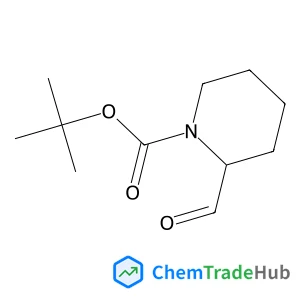
2-Methyl-2-propanyl (2R)-2-formyl-1-piperidinecarboxylate
CAS Number:
134526-69-5
Molecular Formula:
C11H19NO3


Recommended Suppliers





Disclaimer
This page provides academic journal information for reference and research purposes only. We are not affiliated with any journal publishers and do not handle publication submissions. For publication-related inquiries, please contact the respective journal publishers directly.
If you notice any inaccuracies in the information displayed, please contact us at support@chemtradehub.com. We will promptly review and address your concerns.