












Transition path time distribution and the transition path free energy barrier
Literature Information
Publication Date
2016-09-16
DOI
10.1039/C6CP05052B
Impact Factor
3.676
Authors
View Original
Abstract
The recent experimental measurement of the transition path time distributions of proteins presents several challenges to theory. Firstly, why do the fits of the experimental data to a theoretical expression lead to barrier heights which are much lower than the free energies of activation of the observed transitions? Secondly, there is the theoretical question of determining the transition path time distribution, without invoking the Smoluchowski limit. In this paper, we derive an exact expression for a transition path time distribution which is valid for arbitrary memory friction using the normal mode transformation which underlies Kramers' rate theory. We then recall that for low barriers, there is a noticeable difference between the transition path time distribution obtained with absorbing boundary conditions and free boundary conditions. For the former, the transition times are shorter, since recrossings of the boundaries are disallowed. As a result, if one uses the distribution based on absorbing boundary conditions to fit the experimental data, one will find that the transition path barrier will be larger than the values found based on a theory with free boundary conditions. We then introduce the paradigm of a transition path barrier height, and show that one should always expect it to be much smaller than the activation energy.
Related Literature
Towards capturing cellular complexity: combining encapsulation and macromolecular crowding in a reverse micelle
Philipp Honegger, Othmar Steinhauser
2019-03-25
Paper
DOI: 10.1039/C9CP00053D
First-principles studies of a two-dimensional electron gas at the interface of polar/polar LaAlO3/KNbO3 superlattices
Qiang Zhu
2019-03-18
Paper
DOI: 10.1039/C8CP07202G
The synthesis and photophysical properties of tris-coumarins
Olaf W. Morawski, Andrzej L. Sobolewski, Daniel T. Gryko
2019-04-01
Paper
DOI: 10.1039/C9CP00978G
Self-emitting blue and red EuOX (X = F, Cl, Br, I) materials: band structure, charge transfer energy, and emission energy
Donghyeon Kim, Jae Ryeol Jeong, Yujin Jang, Jong-Seong Bae, In Chung, Runli Liang, Dong-Kyun Seo, Seung-Joo Kim, Jung-Chul Park
2018-12-27
Paper
DOI: 10.1039/C8CP06470A
Theoretical insight into the photophysical properties of long-lifetime Ir(iii) and Rh(iii) complexes for two-photon photodynamic therapy
Xue Yin, Xiao-Yong Lai, Xin Wang, Ying-Tao Liu
2019-03-20
Paper
DOI: 10.1039/C9CP00512A
Theoretical design of a series of 2D TM–C3N4 and TM–C3N4@graphene (TM = V, Nb and Ta) nanostructures with highly efficient catalytic activity for the hydrogen evolution reaction
Ting Wang, Guangtao Yu, Jingwei Liu, Xuri Huang, Wei Chen
2018-12-21
Paper
DOI: 10.1039/C8CP06011H
Study of electronic structure in the L-edge spectroscopy of actinide materials: UO2 as an example
Harry Ramanantoanina, Goutam Kuri, Matthias Martin, Johannes Bertsch
2019-03-18
Paper
DOI: 10.1039/C9CP01021A
The effect of Fe vacancies and Cu adhesion on the magnetic properties of Fe3GeTe2
Jia Liu, Anping Wang, Kaisong Pu, Shaozheng Zhang, Terence Musho, Liang Chen
2019-03-12
Paper
DOI: 10.1039/C9CP00151D
Computational models explain how copper binding to amyloid-β peptide oligomers enhances oxidative pathways
2019-04-02
Paper
DOI: 10.1039/C9CP00293F
Phase stability of intercalated V2O5 battery cathodes elucidated through the Goldschmidt tolerance factor
Kit McColl, Furio Corà
2019-02-12
Paper
DOI: 10.1039/C9CP00170K
You might also like
Compound Q&A
Are there alternatives to 1-(4-Chlorophenyl)-N-hydroxymethanimine (CAS: 3848-36-0) in synthesis?
When considering alternatives to 1-(4-Chlorophenyl)-N-hydroxymethanimine (CAS: 3...
3848-36-01-(4-Chlorophenyl)-N...
Compound Q&A
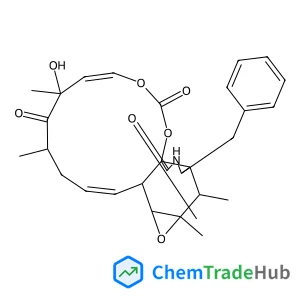
How should (1R,9S,10S,12S,14E,16S,19R,20R,21S,22R)-3,9,21-Trihydroxy-5,10,12,14,16,20,22-heptamethyl-23,24-dioxatetracyclo[17.3.1.1~6,9~.0~2,7~]tetracosa-2,5,7,14-tetraen-4-one (CAS: 183202-73-5) be stored?
This compound should be stored in a cool, dry place away from direct sunlight. I...
183202-73-5(1R,9S,10S,12S,14E,1...
Compound Q&A
How is 3-(4-Bromophenyl)-5-(2-fluorophenyl)-1,2,4-oxadiazole (CAS: 419553-16-5) typically synthesized?
3-(4-Bromophenyl)-5-(2-fluorophenyl)-1,2,4-oxadiazole is synthesized through a m...
419553-16-53-(4-Bromophenyl)-5-...
Compound Q&A
How is 5-Chloro-2-(4-chlorophenyl)-4-methyl-6-[3-(1-piperidinyl)propoxy]pyrimidine (CAS: 1639220-19-1) typically synthesized?
5-Chloro-2-(4-chlorophenyl)-4-methyl-6-[3-(1-piperidinyl)propoxy]pyrimidine (CAS...
1639220-19-15-Chloro-2-(4-chloro...
Compound Q&A
What industries use 2-Chloro-4-(difluoromethoxy)pyridine (CAS: 1206978-15-5)?
2-Chloro-4-(difluoromethoxy)pyridine is used in the pharmaceutical industry for ...
1206978-15-52-Chloro-4-(difluoro...
Compound Q&A
What regulatory guidelines apply to 3-Chloro-6-methylpyridazine (CAS: 1121-79-5)?
3-Chloro-6-methylpyridazine (CAS: 1121-79-5) is classified under the Globally Ha...
1121-79-53-Chloro-6-methylpyr...
Compound Q&A
Are there alternatives to Methyl 4,5-dimethyl-2-nitrobenzoate in synthesis?
Several alternatives can be used in the synthesis of Methyl 4,5-dimethyl-2-nitro...
90922-74-0Methyl 4,5-dimethyl-...
Compound Q&A
Are there alternatives to (2E,2'E)-3,3'-(1,4-Phenylene)bisacrylaldehyde in synthesis?
Alternatives to (2E,2'E)-3,3'-(1,4-Phenylene)bisacrylaldehyde include other acry...
63405-68-5(2E,2'E)-3,3'-(1,4-P...
Compound Q&A
What is 3-Amino-5-chloropyridin-2-ol hydrochloride (CAS: 1261906-29-9)?
3-Amino-5-chloropyridin-2-ol hydrochloride is an organic compound with the CAS n...
1261906-29-93-Amino-5-chloropyri...
Compound Q&A
What precautions should be taken when handling 6,7-Difluoro-2,3-dihydro-4H-chromen-4-one (CAS: 1092349-93-3)?
When handling 6,7-Difluoro-2,3-dihydro-4H-chromen-4-one, it is essential to wear...
1092349-93-36,7-Difluoro-2,3-dih...
Source Journal
Physical Chemistry Chemical Physics

CiteScore:
5.5
Self-citation Rate:
10.3%
Articles per Year:
3036
Physical Chemistry Chemical Physics (PCCP) is an international journal co-owned by 19 physical chemistry and physics societies from around the world. This journal publishes original, cutting-edge research in physical chemistry, chemical physics and biophysical chemistry. To be suitable for publication in PCCP, articles must include significant innovation and/or insight into physical chemistry; this is the most important criterion that reviewers and Editors will judge against when evaluating submissions. The journal has a broad scope and welcomes contributions spanning experiment, theory, computation and data science. Topical coverage includes spectroscopy, dynamics, kinetics, statistical mechanics, thermodynamics, electrochemistry, catalysis, surface science, quantum mechanics, quantum computing and machine learning. Interdisciplinary research areas such as polymers and soft matter, materials, nanoscience, energy, surfaces/interfaces, and biophysical chemistry are welcomed if they demonstrate significant innovation and/or insight into physical chemistry. Joined experimental/theoretical studies are particularly appreciated when complementary and based on up-to-date approaches.
Recommended Compounds
![(2S)-2-{[(9H-Fluoren-9-ylmethoxy)carbonyl]amino}-4-(methylselanyl)butanoic acid structure](https://static.chemtradehub.com/structs/121/1217852-49-7-f252.webp "(2S)-2-{[(9H-Fluoren-9-ylmethoxy)carbonyl]amino}-4-(methylselanyl)butanoic acid structure")
(2S)-2-{[(9H-Fluoren-9-ylmethoxy)carbonyl]amino}-4-(methylselanyl)butanoic acid
CAS Number:
1217852-49-7
Molecular Formula:
C20H21NO4Se
Recommended Suppliers



Disclaimer
This page provides academic journal information for reference and research purposes only. We are not affiliated with any journal publishers and do not handle publication submissions. For publication-related inquiries, please contact the respective journal publishers directly.
If you notice any inaccuracies in the information displayed, please contact us at support@chemtradehub.com. We will promptly review and address your concerns.