












Computational models explain how copper binding to amyloid-β peptide oligomers enhances oxidative pathways
Literature Information
Publication Date
2019-04-02
DOI
10.1039/C9CP00293F
Impact Factor
3.676
Authors
View Original
Abstract
Amyloid-β (Aβ) peptides are intrinsically disordered peptides and their aggregation is the major hallmark of Alzheimer's disease (AD) development. The interactions between copper ions and Aβ peptides create catalysts that activate the production of reactive oxygen species in the synaptic region, a reactivity that is strongly related to AD onset. Recent experimental work [Gu et al., Sci. Rep., 2018, 8(1), 16190] confirmed that the oxidative reactivity of Cu–Aβ catalyzes the formation of Tyr–Tyr crosslinks in peptide dimers. This work provides a structural basis to these observations, describing structures of Cu–Aβ dimers that enhance the propagation of the oxidative pathways activated around the Cu center. Among these, the formation of Tyr–Tyr crosslinks becomes more likely when previous crosslinks involve Cu forming bridges between different peptides. Peptides are, therefore, easily assembled into dimers and tetramers, the latter being dimers of dimers. The size of such dimers and tetramers fits with ion mobility mass spectrometry results [Sitkiewicz et al., J. Mol. Biol., 2014, 426(15), 2871].
Related Literature
Synthesis of a coumarin compound from phenanthrene by a TiO2-photocatalyzed reaction
Suguru Higashida, Aiko Harada, Rikako Kawakatsu, Noriko Fujiwara, Michio Matsumura
2006-05-31
Communication
DOI: 10.1039/B604332A
Versatile and efficient functionalisation of multiallylic dendronised polymers: can dense packing be reached?
Firmin Moingeon, Patrick Masson, Françoise Arnaud, Stéphane Méry
2008-01-23
Communication
DOI: 10.1039/B718318F
Fabrication of Cd(OH)2 nanorings by ultrasonic chiselling on Cd(OH)2 nanoplates
Jian-Jun Miao, Rui-Ling Fu, Jian-Min Zhu, Ke Xu, Jun-Jie Zhu, Hong-Yuan Chen
2006-06-13
Communication
DOI: 10.1039/B604688F
Active peroxo titanium complexes: syntheses, characterization and their potential in the photooxidation of 2-propanol
Markus Rohe, Klaus Merz
2007-12-19
Communication
DOI: 10.1039/B716199A
Stereoselective polymerization of rac- and meso-lactide catalyzed by sterically encumbered N-heterocyclic carbenes
Andrew P. Dove, Hongbo Li, Russell C. Pratt, Bas G. G. Lohmeijer, Darcy A. Culkin, Robert M. Waymouth, James L. Hedrick
2006-06-06
Communication
DOI: 10.1039/B601393G
Intramolecularcation–π interactions control the conformation of nonrestricted (phenylalkyl)pyridines
Isabella Richter, Jusaku Minari, Philip Axe, John P. Lowe, Tony D. James, Kazuo Sakurai, Steven D. Bull, John S. Fossey
2008-01-08
Communication
DOI: 10.1039/B716937J
Asymmetric aldol reactions catalyzed by tryptophan in water
Zhian Liang, Xiaoyu Wu
2006-05-26
Communication
DOI: 10.1039/B606154K
Highly active iridium(i) complexes for catalytic hydrogen isotope exchange
Jack A. Brown, Stephanie Irvine, Alan R. Kennedy, William J. Kerr, Shalini Andersson, Göran N. Nilsson
2008-01-03
Communication
DOI: 10.1039/B715938B
One-step coating of fluoro-containing silicananoparticles for universal generation of surface superhydrophobicity
Hongxia Wang, Jian Fang, Tong Cheng, Jie Ding, Liangti Qu, Liming Dai, Xungai Wang, Tong Lin
2007-12-18
Communication
DOI: 10.1039/B714352D
Facile routes to Alkyl-BIAN ligands
Jennifer A. Moore, Kalyan Vasudevan, Nicholas J. Hill, Gregor Reeske, Alan H. Cowley
2006-06-05
Communication
DOI: 10.1039/B606390J
You might also like
Compound Q&A
Are there alternatives to 1-(4-Chlorophenyl)-N-hydroxymethanimine (CAS: 3848-36-0) in synthesis?
When considering alternatives to 1-(4-Chlorophenyl)-N-hydroxymethanimine (CAS: 3...
3848-36-01-(4-Chlorophenyl)-N...
Compound Q&A
How should (1R,9S,10S,12S,14E,16S,19R,20R,21S,22R)-3,9,21-Trihydroxy-5,10,12,14,16,20,22-heptamethyl-23,24-dioxatetracyclo[17.3.1.1~6,9~.0~2,7~]tetracosa-2,5,7,14-tetraen-4-one (CAS: 183202-73-5) be stored?
This compound should be stored in a cool, dry place away from direct sunlight. I...
183202-73-5(1R,9S,10S,12S,14E,1...
Compound Q&A
How is 3-(4-Bromophenyl)-5-(2-fluorophenyl)-1,2,4-oxadiazole (CAS: 419553-16-5) typically synthesized?
3-(4-Bromophenyl)-5-(2-fluorophenyl)-1,2,4-oxadiazole is synthesized through a m...
419553-16-53-(4-Bromophenyl)-5-...
Compound Q&A
How is 5-Chloro-2-(4-chlorophenyl)-4-methyl-6-[3-(1-piperidinyl)propoxy]pyrimidine (CAS: 1639220-19-1) typically synthesized?
5-Chloro-2-(4-chlorophenyl)-4-methyl-6-[3-(1-piperidinyl)propoxy]pyrimidine (CAS...
1639220-19-15-Chloro-2-(4-chloro...
Compound Q&A
What industries use 2-Chloro-4-(difluoromethoxy)pyridine (CAS: 1206978-15-5)?
2-Chloro-4-(difluoromethoxy)pyridine is used in the pharmaceutical industry for ...
1206978-15-52-Chloro-4-(difluoro...
Compound Q&A
What regulatory guidelines apply to 3-Chloro-6-methylpyridazine (CAS: 1121-79-5)?
3-Chloro-6-methylpyridazine (CAS: 1121-79-5) is classified under the Globally Ha...
1121-79-53-Chloro-6-methylpyr...
Compound Q&A
Are there alternatives to Methyl 4,5-dimethyl-2-nitrobenzoate in synthesis?
Several alternatives can be used in the synthesis of Methyl 4,5-dimethyl-2-nitro...
90922-74-0Methyl 4,5-dimethyl-...
Compound Q&A
Are there alternatives to (2E,2'E)-3,3'-(1,4-Phenylene)bisacrylaldehyde in synthesis?
Alternatives to (2E,2'E)-3,3'-(1,4-Phenylene)bisacrylaldehyde include other acry...
63405-68-5(2E,2'E)-3,3'-(1,4-P...
Compound Q&A
What is 3-Amino-5-chloropyridin-2-ol hydrochloride (CAS: 1261906-29-9)?
3-Amino-5-chloropyridin-2-ol hydrochloride is an organic compound with the CAS n...
1261906-29-93-Amino-5-chloropyri...
Compound Q&A
What precautions should be taken when handling 6,7-Difluoro-2,3-dihydro-4H-chromen-4-one (CAS: 1092349-93-3)?
When handling 6,7-Difluoro-2,3-dihydro-4H-chromen-4-one, it is essential to wear...
1092349-93-36,7-Difluoro-2,3-dih...
Source Journal
Physical Chemistry Chemical Physics

CiteScore:
5.5
Self-citation Rate:
10.3%
Articles per Year:
3036
Physical Chemistry Chemical Physics (PCCP) is an international journal co-owned by 19 physical chemistry and physics societies from around the world. This journal publishes original, cutting-edge research in physical chemistry, chemical physics and biophysical chemistry. To be suitable for publication in PCCP, articles must include significant innovation and/or insight into physical chemistry; this is the most important criterion that reviewers and Editors will judge against when evaluating submissions. The journal has a broad scope and welcomes contributions spanning experiment, theory, computation and data science. Topical coverage includes spectroscopy, dynamics, kinetics, statistical mechanics, thermodynamics, electrochemistry, catalysis, surface science, quantum mechanics, quantum computing and machine learning. Interdisciplinary research areas such as polymers and soft matter, materials, nanoscience, energy, surfaces/interfaces, and biophysical chemistry are welcomed if they demonstrate significant innovation and/or insight into physical chemistry. Joined experimental/theoretical studies are particularly appreciated when complementary and based on up-to-date approaches.
Recommended Compounds
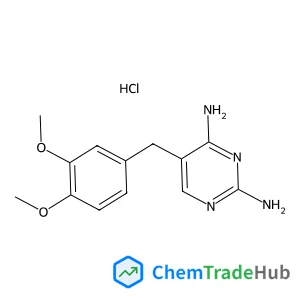
5-(3,4-Dimethoxybenzyl)-2,4-pyrimidinediamine hydrochloride (1:1)
CAS Number:
2507-23-5
Molecular Formula:
C13H17ClN4O2
Recommended Suppliers







Disclaimer
This page provides academic journal information for reference and research purposes only. We are not affiliated with any journal publishers and do not handle publication submissions. For publication-related inquiries, please contact the respective journal publishers directly.
If you notice any inaccuracies in the information displayed, please contact us at support@chemtradehub.com. We will promptly review and address your concerns.