












Surface-state dependent optical properties of OH-, F-, and H-terminated 4H-SiC quantum dots
Literature Information
Publication Date
2016-07-14
DOI
10.1039/C6CP03775E
Impact Factor
3.676
Authors
Amit K. Tiwari, J. P. Goss, M. J. Rayson, P. R. Briddon, A. B. Horsfall
View Original
Abstract
Density functional calculations are performed for OH-, F- and H-terminated 4H-SiC 10–20 Å diameter clusters to investigate the effect of surface species upon the optical absorption properties. H-termination results in a pronounced size-dependent quantum-confinement in the absorption, whereas F- and OH-terminations exhibit much reduced size dependent absorption due to surface states. Our findings are in good agreement with recent experimental studies, and are able to explain the little explored dual-feature photoluminescence spectra of SiC quantum dots. We propose that along with controlling the size, suitable surface termination is the key for optimizing optical properties of 4H-SiC quantum structures, such as might be exploited in optoelectronics, photovoltaics and biological applications.
Related Literature
The effect of Mg2+ incorporation on the structure of calcium carbonate clusters: investigation by the anharmonic downward distortion following method
Satoshi Maeda, Takaya Nagai
2015-12-09
Paper
DOI: 10.1039/C5CP05139H
Micromechanical measurements of the effect of surfactants on cyclopentane hydrate shell properties
Erika P. Brown, Carolyn A. Koh
2015-11-20
Paper
DOI: 10.1039/C5CP06071K
Enhanced thermal energy harvesting performance of a cobalt redox couple in ionic liquid–solvent mixtures
Manoj A. Lazar, Danah Al-Masri, Douglas R. MacFarlane, Jennifer M. Pringle
2015-09-08
Paper
DOI: 10.1039/C5CP04305K
X-ray diffraction and high-resolution TEM observations of biopolymer nanoskin-covered metallic copper fine particles: preparative conditions and surface oxidation states
Tetsu Yonezawa, Yoshiki Uchida, Hiroki Tsukamoto
2015-11-11
Paper
DOI: 10.1039/C5CP06107E
Solvent transport through hard–soft segmented polymer nanocomposites
Sangram K. Rath, Saji S. Edatholath, T. Umasankar Patro, Kathi Sudarshan, P. U. Sastry, Pradeep K. Pujari, G. Harikrishnan
2015-12-16
Paper
DOI: 10.1039/C5CP04432D
Carbon monoxide oxidation catalysed by defective palladium chloride: DFT calculations, EXAFS, and in situ DRIRS measurements
Qiaohong Li, Luyang Qiao, Ruiping Chen, Zuju Ma, Rui Si, Yuangen Yao, Kechen Wu
2015-12-15
Paper
DOI: 10.1039/C5CP07309J
Chemical structures and physical properties of vanadium oxide films modified by single-walled carbon nanotubes
Qiong He, Meng Wang, Minghui Sun, Jie Yao, Tianhong Ao
2015-09-28
Paper
DOI: 10.1039/C5CP03600C
The fabrication of In2O3/In2S3/Ag nanocubes for efficient photoelectrochemical water splitting
Rui Xu, Haohua Li, Wenwen Zhang, Zepeng Yang, Guiwu Liu, Ziwei Xu, Haicheng Shao
2015-12-17
Paper
DOI: 10.1039/C5CP05833C
Effects of Ga–Te interface layer on the potential barrier height of CdTe/GaAs heterointerface
Yanyan Yuan, Wenhua Zhang, Junfa Zhu, Jie Su, Jiawei Li
2015-11-10
Paper
DOI: 10.1039/C5CP04802H
Quantitative monitoring of the removal of non-encapsulated material external to filled carbon nanotube samples
Markus Martincic, Elzbieta Pach, Belén Ballesteros, Gerard Tobias
2015-10-30
Paper
DOI: 10.1039/C5CP04664E
You might also like
Compound Q&A
How should waste containing (6-Bromo-2-naphthyl)oxy](dimethyl)(2-methyl-2-propanyl)silane be handled?
Waste containing (6-Bromo-2-naphthyl)oxy](dimethyl)(2-methyl-2-propanyl)silane (...
100751-65-3[(6-Bromo-2-naphthyl...
Compound Q&A
How is 7-Fluoro-4-isoquinolinecarboxylic acid (CAS: 1841081-40-0) typically synthesized?
7-Fluoro-4-isoquinolinecarboxylic acid can be synthesized via a multi-step proce...
1841081-40-07-Fluoro-4-isoquinol...
Compound Q&A
What are the physical and chemical properties of 2,3,5,6-Tetrabromothieno[3,2-b]thiophene (CAS: 124638-53-5)?
2,3,5,6-Tetrabromothieno[3,2-b]thiophene is a crystalline compound with a high m...
124638-53-52,3,5,6-Tetrabromoth...
Compound Q&A
Is 1-[4-(Benzylamino)-7,8-dihydro-5H-pyrano[4,3-d]pyrimidin-2-yl]-2-methyl-1H-indole-4-carboxamide (CAS: 1542705-92-9) safe?
1-[4-(Benzylamino)-7,8-dihydro-5H-pyrano[4,3-d]pyrimidin-2-yl]-2-methyl-1H-indol...
1542705-92-91-[4-(Benzylamino)-7...
Compound Q&A
What is the market or research trend for imidazo[5,1-d]-1,2,3,5-tetrazine-8-carboxylic acid, 3,4-dihydro-3-methyl-4-oxo- (CAS: 113942-30-6)?
The market for imidazo[5,1-d]-1,2,3,5-tetrazine-8-carboxylic acid, 3,4-dihydro-3...
113942-30-6Imidazo[5,1-d]-1,2,3...
Compound Q&A
What is 3-(Triisopropylsilyl)propiolaldehyde (CAS: 163271-80-5)?
3-(Triisopropylsilyl)propiolaldehyde is a synthetic organic compound with the CA...
163271-80-53-(Triisopropylsilyl...
Compound Q&A
What regulatory guidelines apply to 6-Nitro-2H-1,4-benzoxazin-3(4H)-one (CAS: 81721-87-1)?
6-Nitro-2H-1,4-benzoxazin-3(4H)-one (CAS: 81721-87-1) is subject to various regu...
81721-87-16-Nitro-2H-1,4-benzo...
Compound Q&A
How should waste containing (3-Fluorophenyl)(4-{[(2-methyl-2-propanyl)oxy]carbonyl}-1-piperazinyl)acetic acid (CAS: 885272-91-3) be handled?
Waste containing (3-Fluorophenyl)(4-{[(2-methyl-2-propanyl)oxy]carbonyl}-1-piper...
885272-91-3(3-Fluorophenyl)(4-{...
Compound Q&A
What are the physical and chemical properties of N,N'-4,4'-Biphenyldiyldiisonicotinamide (CAS: 55119-40-9)?
N,N'-4,4'-Biphenyldiyldiisonicotinamide is a white crystalline solid with a mole...
55119-40-9N,N'-4,4'-Biphenyldi...
Compound Q&A
What industries use 6-Bromo-8-fluoro-2-quinazolinol (CAS: 1036756-15-6)?
6-Bromo-8-fluoro-2-quinazolinol is primarily used in the pharmaceutical industry...
1036756-15-66-Bromo-8-fluoro-2-q...
Source Journal
Physical Chemistry Chemical Physics

CiteScore:
5.5
Self-citation Rate:
10.3%
Articles per Year:
3036
Physical Chemistry Chemical Physics (PCCP) is an international journal co-owned by 19 physical chemistry and physics societies from around the world. This journal publishes original, cutting-edge research in physical chemistry, chemical physics and biophysical chemistry. To be suitable for publication in PCCP, articles must include significant innovation and/or insight into physical chemistry; this is the most important criterion that reviewers and Editors will judge against when evaluating submissions. The journal has a broad scope and welcomes contributions spanning experiment, theory, computation and data science. Topical coverage includes spectroscopy, dynamics, kinetics, statistical mechanics, thermodynamics, electrochemistry, catalysis, surface science, quantum mechanics, quantum computing and machine learning. Interdisciplinary research areas such as polymers and soft matter, materials, nanoscience, energy, surfaces/interfaces, and biophysical chemistry are welcomed if they demonstrate significant innovation and/or insight into physical chemistry. Joined experimental/theoretical studies are particularly appreciated when complementary and based on up-to-date approaches.
Recommended Compounds
![Sodium 3-[(E)-(4-anilinophenyl)diazenyl]benzenesulfonate structure](https://static.chemtradehub.com/structs/587/587-98-4-035f.webp "Sodium 3-[(E)-(4-anilinophenyl)diazenyl]benzenesulfonate structure")
Sodium 3-[(E)-(4-anilinophenyl)diazenyl]benzenesulfonate
CAS Number:
587-98-4
Molecular Formula:
C18H14N3NaO3S
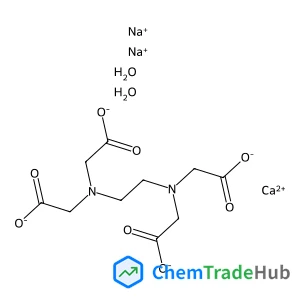
EthylenediaminetetraaceticacidcalciumDisodiumsalthydrate
CAS Number:
23411-34-9
Molecular Formula:
C10H16CaN2Na2O10
Recommended Suppliers






Disclaimer
This page provides academic journal information for reference and research purposes only. We are not affiliated with any journal publishers and do not handle publication submissions. For publication-related inquiries, please contact the respective journal publishers directly.
If you notice any inaccuracies in the information displayed, please contact us at support@chemtradehub.com. We will promptly review and address your concerns.