













Enhanced thermal energy harvesting performance of a cobalt redox couple in ionic liquid–solvent mixtures
Literature Information
Publication Date
2015-09-08
DOI
10.1039/C5CP04305K
Impact Factor
3.676
Authors
Manoj A. Lazar, Danah Al-Masri, Douglas R. MacFarlane, Jennifer M. Pringle
View Original
Abstract
Thermoelectrochemical cells are increasingly promising devices for harvesting waste heat, offering an alternative to the traditional semiconductor-based design. Advancement of these devices relies on new redox couple/electrolyte systems and an understanding of the interplay between the different factors that dictate device performance. The Seebeck coefficient (Se) of the redox couple in the electrolyte gives the potential difference achievable for a given temperature gradient across the device. Prior work has shown that a cobalt bipyridyl redox couple in ionic liquids (ILs) displays high Seebeck coefficients, but the thermoelectrochemical cell performance was limited by mass transport. Here we present the Se and thermoelectrochemical power generation performance of the cobalt couple in novel mixed IL/molecular solvent electrolyte systems. The highest power density of 880 mW m−2, at a ΔT of 70 °C, was achieved with a 3 : 1 (v/v) MPN–[C2mim][B(CN)4] electrolyte combination. The significant power enhancement compared to the single solvent or IL systems results from a combination of superior ionic conductivity and higher diffusion coefficients, shown by electrochemical analysis of the different electrolytes. This is the highest power output achieved to-date for a thermoelectrochemical cell utilising a high boiling point redox electrolyte.
Related Literature
Intramolecular hydrogen-bonding activation in cysteines: a new effective radical scavenger
Luisa Haya, Iñaki Osante, Ana M. Mainar, Carlos Cativiela, Jose S. Urieta
2013-04-17
Paper
DOI: 10.1039/C3CP50743B
Robust switching characteristics of CdSe/ZnS quantum dot non-volatile memory devices
V. Kannan, J. K. Rhee
2013-05-10
Paper
DOI: 10.1039/C3CP50216C
Insight into the mechanism of carbon steel corrosion under aerobic and anaerobic conditions
Y. El Mendili, A. Abdelouas, J.-F. Bardeau
2013-04-16
Paper
DOI: 10.1039/C3CP50853F
Improving the antifouling property of polysulfone ultrafiltration membrane by incorporation of isocyanate-treated graphene oxide
Haiyang Zhao, Liguang Wu, Zhijun Zhou, Lin Zhang, Huanlin Chen
2013-04-08
Paper
DOI: 10.1039/C3CP50955A
First spectroscopic identification of pyrocarbonate for high CO2 flux membranes containing highly interconnected three dimensional ionic channels
Lingling Zhang, Xinyu Huang, Changyong Qin, Kyle Brinkman, Yunhui Gong, Siwei Wang, Kevin Huang
2013-06-11
Paper
DOI: 10.1039/C3CP52362D
Orbital-based insights into parallel-displaced and twisted conformations in π–π interactions
Patricia B. Lutz, Craig A. Bayse
2013-03-21
Paper
DOI: 10.1039/C3CP51077H
Synthesis and characterization of the crystal structure and magnetic properties of the hydroxyfluoride MnF2−x(OH)x (x ∼ 0.8)
Hamdi Ben Yahia, Masahiro Shikano, Hironori Kobayashi, Maxim Avdeev, Samuel Liu, Chris D. Ling
2013-06-10
Paper
DOI: 10.1039/C3CP50740H
3D graphene–Fe3O4 nanocomposites with high-performance microwave absorption
Chuangang Hu, Zhongyu Mou, Gewu Lu, Nan Chen, Zelin Dong, Minjia Hu, Liangti Qu
2013-05-29
Paper
DOI: 10.1039/C3CP51253C
You might also like
Compound Q&A
What are the main uses of 1H-Indazole-6-carbonitrile (CAS: 141290-59-7)?
1H-Indazole-6-carbonitrile finds applications in pharmaceuticals, where it serve...
141290-59-71H-Indazole-6-carbon...
Compound Q&A
How should waste containing Dioctyl (2E)-2-butenedioate (CAS: 2997-85-5) be handled?
Waste containing Dioctyl (2E)-2-butenedioate (CAS: 2997-85-5) should be collecte...
2997-85-5Dioctyl (2E)-2-buten...
Compound Q&A
What industries use Sodium [(1,2-benzoxazol-3-ylmethyl)sulfonyl]azanide (CAS: 68291-98-5)?
Sodium [(1,2-benzoxazol-3-ylmethyl)sulfonyl]azanide is primarily used in pharmac...
68291-98-5Sodium [(1,2-benzoxa...
Compound Q&A
Are there alternatives to Dimethyl 4-(4,4,5,5-tetramethyl-1,3,2-dioxaborolan-2-yl)-2,6-pyridinedicarboxylate (CAS: 741709-66-0) in synthesis?
Dimethyl 4-(4,4,5,5-tetramethyl-1,3,2-dioxaborolan-2-yl)-2,6-pyridinedicarboxyla...
741709-66-0Dimethyl 4-(4,4,5,5-...
Compound Q&A
How should waste containing 2-Fluoro-6-hydrazinopyridine (CAS: 80714-39-2) be handled?
Waste containing 2-Fluoro-6-hydrazinopyridine (CAS: 80714-39-2) should be manage...
80714-39-22-Fluoro-6-hydrazino...
Compound Q&A
What is 6-Formyl-2-pyridinecarboxylic acid (CAS: 499214-11-8)?
6-Formyl-2-pyridinecarboxylic acid is an organic compound with the molecular for...
499214-11-86-Formyl-2-pyridinec...
Compound Q&A
What is the market or research trend for 3-(3,4-dimethoxyphenyl)-2,5-dimethyl-N-(2-morpholin-4-ylethyl)pyrazolo[1,5-a]pyrimidin-7-amine (CAS: 900874-91-1)?
Research trends for this compound indicate a focus on its potential applications...
900874-91-13-(3,4-dimethoxyphen...
Compound Q&A
How is 9H-Tribenzo[b,d,f]azepine (CAS: 29875-73-8) typically synthesized?
9H-Tribenzo[b,d,f]azepine is typically synthesized via a multi-step process invo...
29875-73-89H-Tribenzo[b,d,f]az...
Compound Q&A
How is 1-Cyclopropyl-7-ethoxy-6-fluoro-8-methoxy-4-oxo-1,4-dihydro-3-quinolinecarboxylic acid (CAS: 1797982-51-4) typically synthesized?
1-Cyclopropyl-7-ethoxy-6-fluoro-8-methoxy-4-oxo-1,4-dihydro-3-quinolinecarboxyli...
1797982-51-41-Cyclopropyl-7-etho...
Compound Q&A
How should waste containing Methyl 3-oxo-1,2,3,4-tetrahydro-6-quinoxalinecarboxylate (CAS: 671820-52-3) be handled?
Waste containing Methyl 3-oxo-1,2,3,4-tetrahydro-6-quinoxalinecarboxylate (CAS: ...
671820-52-3Methyl 3-oxo-1,2,3,4...
Source Journal
Physical Chemistry Chemical Physics

CiteScore:
5.5
Self-citation Rate:
10.3%
Articles per Year:
3036
Physical Chemistry Chemical Physics (PCCP) is an international journal co-owned by 19 physical chemistry and physics societies from around the world. This journal publishes original, cutting-edge research in physical chemistry, chemical physics and biophysical chemistry. To be suitable for publication in PCCP, articles must include significant innovation and/or insight into physical chemistry; this is the most important criterion that reviewers and Editors will judge against when evaluating submissions. The journal has a broad scope and welcomes contributions spanning experiment, theory, computation and data science. Topical coverage includes spectroscopy, dynamics, kinetics, statistical mechanics, thermodynamics, electrochemistry, catalysis, surface science, quantum mechanics, quantum computing and machine learning. Interdisciplinary research areas such as polymers and soft matter, materials, nanoscience, energy, surfaces/interfaces, and biophysical chemistry are welcomed if they demonstrate significant innovation and/or insight into physical chemistry. Joined experimental/theoretical studies are particularly appreciated when complementary and based on up-to-date approaches.
Recommended Compounds
![(1S)-1,5-Anhydro-1-[3-(1-benzothiophen-2-ylmethyl)-4-fluorophenyl]-D-glucitol structure](https://static.chemtradehub.com/structs/761/761423-87-4-dbeb.webp "(1S)-1,5-Anhydro-1-[3-(1-benzothiophen-2-ylmethyl)-4-fluorophenyl]-D-glucitol structure")
(1S)-1,5-Anhydro-1-[3-(1-benzothiophen-2-ylmethyl)-4-fluorophenyl]-D-glucitol
CAS Number:
761423-87-4
Molecular Formula:
C21H21FO5S
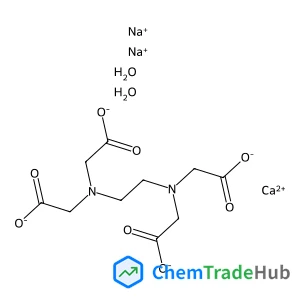
EthylenediaminetetraaceticacidcalciumDisodiumsalthydrate
CAS Number:
23411-34-9
Molecular Formula:
C10H16CaN2Na2O10
Recommended Suppliers




Disclaimer
This page provides academic journal information for reference and research purposes only. We are not affiliated with any journal publishers and do not handle publication submissions. For publication-related inquiries, please contact the respective journal publishers directly.
If you notice any inaccuracies in the information displayed, please contact us at support@chemtradehub.com. We will promptly review and address your concerns.