













Quantitative monitoring of the removal of non-encapsulated material external to filled carbon nanotube samples
Literature Information
Publication Date
2015-10-30
DOI
10.1039/C5CP04664E
Impact Factor
3.676
Authors
Markus Martincic, Elzbieta Pach, Belén Ballesteros, Gerard Tobias
View Original
Abstract
The endohedral functionalization of carbon nanotubes with both organic and inorganic materials allows the development of tailored functional hybrids whose properties benefit from the synergistic effects of the constituent compounds. Bulk filling of carbon nanotubes (CNTs) results in samples that contain a large amount of non-encapsulated material external to the CNTs. The presence of the external material is detrimental to the processing and application of the resulting hybrids. Here we introduce the use of UV-Vis spectroscopy to monitor the cleaning process, i.e. the elimination of non-encapsulated compounds. Chrome azurol S has been employed to assess the bulk removal of external samarium(III) chloride from filled single-walled carbon nanotubes. Chrome azurol S is of interest since it can be used to quantify a large variety of materials in a fast, accurate and reliable manner. The parameters that control the cleaning process have been optimized, including the time, temperature, volume and sonication, to achieve a fast and complete removal of the external material.
Related Literature
First spectroscopic identification of pyrocarbonate for high CO2 flux membranes containing highly interconnected three dimensional ionic channels
Lingling Zhang, Xinyu Huang, Changyong Qin, Kyle Brinkman, Yunhui Gong, Siwei Wang, Kevin Huang
2013-06-11
Paper
DOI: 10.1039/C3CP52362D
Amyloid-β–neuropeptide interactions assessed by ion mobility-mass spectrometry
Molly T. Soper, Alaina S. DeToma, Suk-Joon Hyung, Brandon T. Ruotolo
2013-04-15
Paper
DOI: 10.1039/C3CP50721A
On the chemical bonding features in boron containing compounds: a combined QTAIM/ELF topological analysis
2013-05-29
Paper
DOI: 10.1039/C3CP50396H
Crystallization kinetics of lithium niobate glass: determination of the Johnson–Mehl–Avrami–Kolmogorov parameters
H. W. Choi, Y. H. Kim, Y. H. Rim, Y. S. Yang
2013-04-19
Paper
DOI: 10.1039/C3CP50909E
Atomic insight into copper nanostructures nucleation on bending graphene
Yezeng He, Hui Li, Yunfang Li, Kun Zhang, Yanyan Jiang, Xiufang Bian
2013-04-10
Paper
DOI: 10.1039/C3CP50876E
A novel cobalt tetranitrophthalocyanine/graphene composite assembled by an in situsolvothermal synthesis method as a highly efficient electrocatalyst for the oxygen reduction reaction in alkaline medium
Guojun Lv, Lili Cui, Yanying Wu, Ying Liu, Tao Pu, Xingquan He
2013-06-03
Paper
DOI: 10.1039/C3CP51577J
OperandoXAFS study of catalytic NO reduction over Cu/CeO2: the effect of copper–ceria interaction under periodic operation
Yasutaka Nagai, Kazuhiko Dohmae, Yusaku F. Nishimura, Hitoshi Kato, Hirohito Hirata, Naoki Takahashi
2013-01-17
Communication
DOI: 10.1039/C3CP44316G
The conformational landscape of tartrate-based inhibitors of the TACE enzyme as revealed by Hamiltonian Replica Exchange simulation
Carlo Guardiani, Piero Procacci
2013-04-15
Paper
DOI: 10.1039/C3CP00108C
In-depth safety-focused analysis of solvents used in electrolytes for large scale lithium ion batteries
Simeon Boyanov, Amandine Lecocq, Jean-Pierre Bertrand, Guy Marlair
2013-04-11
Paper
DOI: 10.1039/C3CP51315G
You might also like
Compound Q&A
What are the main uses of 1H-Indazole-6-carbonitrile (CAS: 141290-59-7)?
1H-Indazole-6-carbonitrile finds applications in pharmaceuticals, where it serve...
141290-59-71H-Indazole-6-carbon...
Compound Q&A
How should waste containing Dioctyl (2E)-2-butenedioate (CAS: 2997-85-5) be handled?
Waste containing Dioctyl (2E)-2-butenedioate (CAS: 2997-85-5) should be collecte...
2997-85-5Dioctyl (2E)-2-buten...
Compound Q&A
What industries use Sodium [(1,2-benzoxazol-3-ylmethyl)sulfonyl]azanide (CAS: 68291-98-5)?
Sodium [(1,2-benzoxazol-3-ylmethyl)sulfonyl]azanide is primarily used in pharmac...
68291-98-5Sodium [(1,2-benzoxa...
Compound Q&A
Are there alternatives to Dimethyl 4-(4,4,5,5-tetramethyl-1,3,2-dioxaborolan-2-yl)-2,6-pyridinedicarboxylate (CAS: 741709-66-0) in synthesis?
Dimethyl 4-(4,4,5,5-tetramethyl-1,3,2-dioxaborolan-2-yl)-2,6-pyridinedicarboxyla...
741709-66-0Dimethyl 4-(4,4,5,5-...
Compound Q&A
How should waste containing 2-Fluoro-6-hydrazinopyridine (CAS: 80714-39-2) be handled?
Waste containing 2-Fluoro-6-hydrazinopyridine (CAS: 80714-39-2) should be manage...
80714-39-22-Fluoro-6-hydrazino...
Compound Q&A
What is 6-Formyl-2-pyridinecarboxylic acid (CAS: 499214-11-8)?
6-Formyl-2-pyridinecarboxylic acid is an organic compound with the molecular for...
499214-11-86-Formyl-2-pyridinec...
Compound Q&A
What is the market or research trend for 3-(3,4-dimethoxyphenyl)-2,5-dimethyl-N-(2-morpholin-4-ylethyl)pyrazolo[1,5-a]pyrimidin-7-amine (CAS: 900874-91-1)?
Research trends for this compound indicate a focus on its potential applications...
900874-91-13-(3,4-dimethoxyphen...
Compound Q&A
How is 9H-Tribenzo[b,d,f]azepine (CAS: 29875-73-8) typically synthesized?
9H-Tribenzo[b,d,f]azepine is typically synthesized via a multi-step process invo...
29875-73-89H-Tribenzo[b,d,f]az...
Compound Q&A
How is 1-Cyclopropyl-7-ethoxy-6-fluoro-8-methoxy-4-oxo-1,4-dihydro-3-quinolinecarboxylic acid (CAS: 1797982-51-4) typically synthesized?
1-Cyclopropyl-7-ethoxy-6-fluoro-8-methoxy-4-oxo-1,4-dihydro-3-quinolinecarboxyli...
1797982-51-41-Cyclopropyl-7-etho...
Compound Q&A
How should waste containing Methyl 3-oxo-1,2,3,4-tetrahydro-6-quinoxalinecarboxylate (CAS: 671820-52-3) be handled?
Waste containing Methyl 3-oxo-1,2,3,4-tetrahydro-6-quinoxalinecarboxylate (CAS: ...
671820-52-3Methyl 3-oxo-1,2,3,4...
Source Journal
Physical Chemistry Chemical Physics

CiteScore:
5.5
Self-citation Rate:
10.3%
Articles per Year:
3036
Physical Chemistry Chemical Physics (PCCP) is an international journal co-owned by 19 physical chemistry and physics societies from around the world. This journal publishes original, cutting-edge research in physical chemistry, chemical physics and biophysical chemistry. To be suitable for publication in PCCP, articles must include significant innovation and/or insight into physical chemistry; this is the most important criterion that reviewers and Editors will judge against when evaluating submissions. The journal has a broad scope and welcomes contributions spanning experiment, theory, computation and data science. Topical coverage includes spectroscopy, dynamics, kinetics, statistical mechanics, thermodynamics, electrochemistry, catalysis, surface science, quantum mechanics, quantum computing and machine learning. Interdisciplinary research areas such as polymers and soft matter, materials, nanoscience, energy, surfaces/interfaces, and biophysical chemistry are welcomed if they demonstrate significant innovation and/or insight into physical chemistry. Joined experimental/theoretical studies are particularly appreciated when complementary and based on up-to-date approaches.
Recommended Compounds
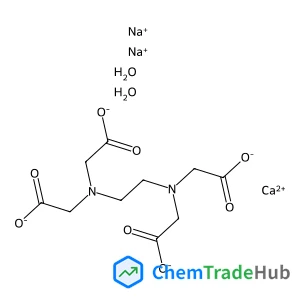
EthylenediaminetetraaceticacidcalciumDisodiumsalthydrate
CAS Number:
23411-34-9
Molecular Formula:
C10H16CaN2Na2O10


Recommended Suppliers







Disclaimer
This page provides academic journal information for reference and research purposes only. We are not affiliated with any journal publishers and do not handle publication submissions. For publication-related inquiries, please contact the respective journal publishers directly.
If you notice any inaccuracies in the information displayed, please contact us at support@chemtradehub.com. We will promptly review and address your concerns.