












Solvent transport through hard–soft segmented polymer nanocomposites
Literature Information
Publication Date
2015-12-16
DOI
10.1039/C5CP04432D
Impact Factor
3.676
Authors
Sangram K. Rath, Saji S. Edatholath, T. Umasankar Patro, Kathi Sudarshan, P. U. Sastry, Pradeep K. Pujari, G. Harikrishnan
View Original
Abstract
We conducted transport studies of a common solvent (toluene) in its condensed state, through a model hard–soft segmented polyurethane–clay nanocomposite. The solvent diffusivity is observed to be non-monotonic in a functional relationship with a filler volume fraction. In stark contrast, both classical tortuous path theory based geometric calculations and free volume measurements suggest the normally expected monotonic decrease in diffusivity with increase in clay volume fraction. Large deviations between experimentally observed diffusivity coefficients and those theoretically estimated from geometric theory are also observed. However, the equilibrium swelling of a nanocomposite as indicated by the solubility coefficient did not change. To gain an insight into the solvent interaction behavior, we conducted a pre- and post swollen segmented phase analysis of pure polymers and nanocomposites. We find that in a nanocomposite, the solvent has to interact with a filler altered hard–soft segmented morphology. In the altered phase separated morphology, the spatial distribution of thermodynamically segmented hard blocks in the continuous soft matrix becomes a strong function of filler concentration. Upon solvent interaction, this spatial distribution gets reoriented due to sorption and de-clustering. The results indicate strong non-barrier influences of nanoscale fillers dispersed in phase segmented block co-polymers, affecting solvent diffusivity through them. Based on pre- and post swollen morphological observations, we postulate a possible mechanism for the non-monotonic behaviour of solvent transport for hard–soft segmented co-polymers, in which the thermodynamic phase separation is influenced by the filler.
Related Literature
Temperature dependence of CO2 and N2 core-electron excitation spectra at high pressure
J. Inkinen, K. O. Ruotsalainen, T. Pylkkänen, J. Niskanen, S. Galambosi, M. Hakala, G. Monaco, K. Hämäläinen
2013-05-08
Paper
DOI: 10.1039/C3CP50512J
Fluorescence behavior of (selected) flavonols: a combined experimental and computational study
Sebastian Höfener, Pieter C. Kooijman, Janneke Groen, Freek Ariese, Lucas Visscher
2013-05-24
Paper
DOI: 10.1039/C3CP44267E
Na3V2O2(PO4)2F/graphene sandwich structure for high-performance cathode of a sodium-ion battery
Long Wang, Xin Zhao, Jie Song, Hui Xie, Yuhao Lu, John B. Goodenough
2013-06-19
Paper
DOI: 10.1039/C3CP52408F
In situ study of the catalytic mechanism for the oxygen reduction reaction on a polypyrrole modified carbon supported cobalt hydroxide cathode in direct borohydride fuel cells
Haiying Qin, Juan Wang, Jiabin Liu, Yan He, Zhoupeng Li, Shuai Yan, Aiguo Li, Xiaohan Yu
2013-04-26
Communication
DOI: 10.1039/C3CP50706H
Conformational disorder in energy transfer: beyond Förster theory
Tammie Nelson, Sebastian Fernandez-Alberti, Adrian E. Roitberg, Sergei Tretiak
2013-04-30
Paper
DOI: 10.1039/C3CP50857A
Contributions of magnetic properties in epitaxial copper-doped ZnO
Hongyan Liu, Fei Zeng, Shuang Gao, Guangyue Wang, Cheng Song, Feng Pan
2013-07-03
Paper
DOI: 10.1039/C3CP51894A
DFT investigations for the reaction mechanism of dimethyl carbonate synthesis on Pd(ii)/β zeolites
Yongli Shen, Qingsen Meng, Shouying Huang, Jinlong Gong, Xinbin Ma
2013-05-30
Paper
DOI: 10.1039/C3CP51092A
Hydrogen bonding involving side chain exchangeable groups stabilizes amyloid quarternary structure
Vipin Agarwal, Rasmus Linser, Uwe Fink
2013-05-08
Paper
DOI: 10.1039/C3CP44653K
Atomic insight into copper nanostructures nucleation on bending graphene
Yezeng He, Hui Li, Yunfang Li, Kun Zhang, Yanyan Jiang, Xiufang Bian
2013-04-10
Paper
DOI: 10.1039/C3CP50876E
An extrapolation method for the efficient calculation of molecular response properties within Born–Oppenheimer molecular dynamics
2013-05-10
Paper
DOI: 10.1039/C3CP50204J
You might also like
Compound Q&A
What are the main uses of 1H-Indazole-6-carbonitrile (CAS: 141290-59-7)?
1H-Indazole-6-carbonitrile finds applications in pharmaceuticals, where it serve...
141290-59-71H-Indazole-6-carbon...
Compound Q&A
How should waste containing Dioctyl (2E)-2-butenedioate (CAS: 2997-85-5) be handled?
Waste containing Dioctyl (2E)-2-butenedioate (CAS: 2997-85-5) should be collecte...
2997-85-5Dioctyl (2E)-2-buten...
Compound Q&A
What industries use Sodium [(1,2-benzoxazol-3-ylmethyl)sulfonyl]azanide (CAS: 68291-98-5)?
Sodium [(1,2-benzoxazol-3-ylmethyl)sulfonyl]azanide is primarily used in pharmac...
68291-98-5Sodium [(1,2-benzoxa...
Compound Q&A
Are there alternatives to Dimethyl 4-(4,4,5,5-tetramethyl-1,3,2-dioxaborolan-2-yl)-2,6-pyridinedicarboxylate (CAS: 741709-66-0) in synthesis?
Dimethyl 4-(4,4,5,5-tetramethyl-1,3,2-dioxaborolan-2-yl)-2,6-pyridinedicarboxyla...
741709-66-0Dimethyl 4-(4,4,5,5-...
Compound Q&A
How should waste containing 2-Fluoro-6-hydrazinopyridine (CAS: 80714-39-2) be handled?
Waste containing 2-Fluoro-6-hydrazinopyridine (CAS: 80714-39-2) should be manage...
80714-39-22-Fluoro-6-hydrazino...
Compound Q&A
What is 6-Formyl-2-pyridinecarboxylic acid (CAS: 499214-11-8)?
6-Formyl-2-pyridinecarboxylic acid is an organic compound with the molecular for...
499214-11-86-Formyl-2-pyridinec...
Compound Q&A
What is the market or research trend for 3-(3,4-dimethoxyphenyl)-2,5-dimethyl-N-(2-morpholin-4-ylethyl)pyrazolo[1,5-a]pyrimidin-7-amine (CAS: 900874-91-1)?
Research trends for this compound indicate a focus on its potential applications...
900874-91-13-(3,4-dimethoxyphen...
Compound Q&A
How is 9H-Tribenzo[b,d,f]azepine (CAS: 29875-73-8) typically synthesized?
9H-Tribenzo[b,d,f]azepine is typically synthesized via a multi-step process invo...
29875-73-89H-Tribenzo[b,d,f]az...
Compound Q&A
How is 1-Cyclopropyl-7-ethoxy-6-fluoro-8-methoxy-4-oxo-1,4-dihydro-3-quinolinecarboxylic acid (CAS: 1797982-51-4) typically synthesized?
1-Cyclopropyl-7-ethoxy-6-fluoro-8-methoxy-4-oxo-1,4-dihydro-3-quinolinecarboxyli...
1797982-51-41-Cyclopropyl-7-etho...
Compound Q&A
How should waste containing Methyl 3-oxo-1,2,3,4-tetrahydro-6-quinoxalinecarboxylate (CAS: 671820-52-3) be handled?
Waste containing Methyl 3-oxo-1,2,3,4-tetrahydro-6-quinoxalinecarboxylate (CAS: ...
671820-52-3Methyl 3-oxo-1,2,3,4...
Source Journal
Physical Chemistry Chemical Physics

CiteScore:
5.5
Self-citation Rate:
10.3%
Articles per Year:
3036
Physical Chemistry Chemical Physics (PCCP) is an international journal co-owned by 19 physical chemistry and physics societies from around the world. This journal publishes original, cutting-edge research in physical chemistry, chemical physics and biophysical chemistry. To be suitable for publication in PCCP, articles must include significant innovation and/or insight into physical chemistry; this is the most important criterion that reviewers and Editors will judge against when evaluating submissions. The journal has a broad scope and welcomes contributions spanning experiment, theory, computation and data science. Topical coverage includes spectroscopy, dynamics, kinetics, statistical mechanics, thermodynamics, electrochemistry, catalysis, surface science, quantum mechanics, quantum computing and machine learning. Interdisciplinary research areas such as polymers and soft matter, materials, nanoscience, energy, surfaces/interfaces, and biophysical chemistry are welcomed if they demonstrate significant innovation and/or insight into physical chemistry. Joined experimental/theoretical studies are particularly appreciated when complementary and based on up-to-date approaches.
Recommended Compounds
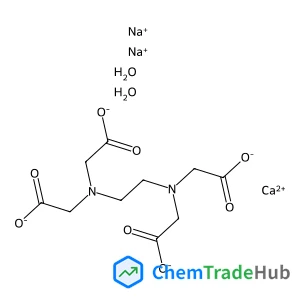
EthylenediaminetetraaceticacidcalciumDisodiumsalthydrate
CAS Number:
23411-34-9
Molecular Formula:
C10H16CaN2Na2O10
![N-[(9H-Fluoren-9-ylmethoxy)carbonyl]serine structure](https://static.chemtradehub.com/structs/737/73724-45-5-b0dc.webp "N-[(9H-Fluoren-9-ylmethoxy)carbonyl]serine structure")

Recommended Suppliers





Disclaimer
This page provides academic journal information for reference and research purposes only. We are not affiliated with any journal publishers and do not handle publication submissions. For publication-related inquiries, please contact the respective journal publishers directly.
If you notice any inaccuracies in the information displayed, please contact us at support@chemtradehub.com. We will promptly review and address your concerns.