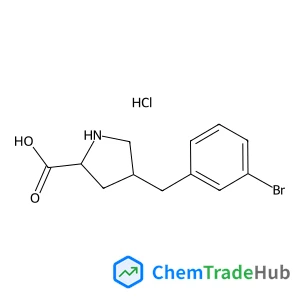
(2S,4R)-4-(3-Bromobenzyl)pyrrolidine-2-carboxylic acid hydrochloride
CAS Number:
1049734-10-2
Molecular Formula:
C12H15BrClNO2
Hideshi Ooka, Yuanqing Wang, Akira Yamaguchi, Makoto Hatakeyama, Shinichiro Nakamura, Kazuhito Hashimoto, Ryuhei Nakamura
Understanding how the four-electron oxidation of water to dioxygen proceeds in different materials is critical to the rational design of efficient catalysts towards artificial photosynthetic systems. Here, using in situ electrochemical evanescent wave spectroscopy under oxygen-evolving conditions, we report two intermediates of iridium oxide (IrOx), which is the most active and stable catalyst characterized to date in acidic medium. The observed potential dependence of the two intermediates indicated that they were associated with different surface sites, and intermediate scavenging experiments using H2O2 provided insight into their role during catalysis. Notably, an IrV species with an absorption maximum at 450 nm was found to mediate the initial two-electron oxidation of water. Inhibition of the IrV species by H2O2, combined with computational modeling, indicates that the accumulation and concurrent spin-state change of the IrV species is a prerequisite for efficient water oxidation by IrOx electrodes.

Journal of Asian Natural Products Research

Heteroatom Chemistry

Bioorganic & Medicinal Chemistry Letters

Electroanalysis

Critical Reviews in Solid State and Materials Sciences

Atomization and Sprays

Herald of the Russian Academy of Sciences

Journal of Chemical Sciences

Topics in Catalysis

Polycyclic Aromatic Compounds
Stefan Rubner, Sabine Schubert, Thorsten Berg
DOI: 10.1039/C9OB00080A
Dongjie Wang, Kehan Zhou, Jingyu Zhang, Yingsheng Zhao
DOI: 10.1039/D0QO00940G
Manickam Bakthadoss, Srinivasan Jayakumar, Selvakumar Raman, Anthonisamy Devaraj, Duddu S. Sharada
DOI: 10.1039/C8OB02970A
Jian Chen, Baolan Tang, Xuexin Liu, Guanghui Lv, Yuesen Shi, Tianle Huang, Huimin Xing, Xiaoyu Guo, Li Hai, Yong Wu
DOI: 10.1039/D0QO00769B
Zongrui Wang, Hua Li, Jianmei Lu
DOI: 10.1039/D0QO00637H
Hua Deng, Tian-Tian Liu, Zheng-Dong Ding, Wu-Lin Yang, Xiaoyan Luo
DOI: 10.1039/D0QO00789G
Adiki Raja Sekhar, Bhagaban Mallik, Vimlesh Kumar, Jeyaraman Sankar
DOI: 10.1039/C9OB00408D
Hye Im Jung, Yubin Kim, Dae Young Kim
DOI: 10.1039/C9OB00373H
Vijay Natarajan, Natesan Thirumalaivasan, Shu-Pao Wu, Velmathi Sivan
DOI: 10.1039/C9OB00143C
Youcan Zhang, Han-Jun Ai
DOI: 10.1039/D0QO00999G
2-(2-Chloroacetamido)-3-phenylpropanoic acid (CAS: 7765-11-9) is generally consi...
2-(Benzyloxy)-5-bromobenzoic acid can be handled safely if appropriate precautio...
(4-Methyl-1,2,5-oxadiazol-3-yl)methanamine hydrochloride is a chemical compound ...
2-(5-Hexylthiophen-2-yl)-4,4,5,5-tetramethyl-1,3,2-dioxaborolane (CAS: 917985-54...
While 4-(8-Methyl-9H-1,3-dioxolo[4,5-h][2,3]benzodiazepin-5-yl)benzenamine (CAS:...
The market for tert-butyl 3-hydroxy-4,5,7,8-tetrahydro-2H-pyrazolo[3,4-d]azepine...
Waste containing 3,5-Diamino-1H-pyrazole-4-carbonitrile (CAS: 6844-58-2) should ...
(6-Fluoro-3-pyridinyl)boronic acid can be synthesized through the reaction of 6-...
Dibenzyl carbonimidoylbiscarbamate (CAS: 10065-79-9) finds applications in vario...
The market for (beta,beta,2,3,4,5,6-~2~H_7_)Phenylalanine (CAS: 74228-83-4) is g...

Physical Chemistry Chemical Physics (PCCP) is an international journal co-owned by 19 physical chemistry and physics societies from around the world. This journal publishes original, cutting-edge research in physical chemistry, chemical physics and biophysical chemistry. To be suitable for publication in PCCP, articles must include significant innovation and/or insight into physical chemistry; this is the most important criterion that reviewers and Editors will judge against when evaluating submissions. The journal has a broad scope and welcomes contributions spanning experiment, theory, computation and data science. Topical coverage includes spectroscopy, dynamics, kinetics, statistical mechanics, thermodynamics, electrochemistry, catalysis, surface science, quantum mechanics, quantum computing and machine learning. Interdisciplinary research areas such as polymers and soft matter, materials, nanoscience, energy, surfaces/interfaces, and biophysical chemistry are welcomed if they demonstrate significant innovation and/or insight into physical chemistry. Joined experimental/theoretical studies are particularly appreciated when complementary and based on up-to-date approaches.
![Ethyl ({[(2-methyl-2-propanyl)oxy]carbonyl}amino)(2-pyridinyl)acetate structure](https://static.chemtradehub.com/structs/313/313490-90-3-dd15.webp "Ethyl ({[(2-methyl-2-propanyl)oxy]carbonyl}amino)(2-pyridinyl)acetate structure")
![19-[Chloro(dideuterio)methyl]-19-deuterio-20,20-dideuteriooxyoctatriacontane-18,21-dione structure](https://static.chemtradehub.com/structs/124/1246818-85-8-6244.webp "19-[Chloro(dideuterio)methyl]-19-deuterio-20,20-dideuteriooxyoctatriacontane-18,21-dione structure")