












![Pyrazolo[1,5-a]pyridine-3-carbothioamide structure](https://static.chemtradehub.com/structs/885/885275-44-5-aae0.webp "Pyrazolo[1,5-a]pyridine-3-carbothioamide structure")
A sedimentation study of graphene oxide in aqueous solution using gradient differential centrifugation
Literature Information
Publication Date
2016-03-16
DOI
10.1039/C6CP00167J
Impact Factor
3.676
Authors
Jing-Jing Huang, Yong J. Yuan
View Original
Abstract
This work involved the study of sedimentation of graphene oxide (GO) in aqueous solution by gradient differential centrifugation. GO sheets of size varying from 400 nm to 1100 nm were separated with layer numbers ranging from 2–17. Semiquantitative analysis of FT-IR spectra was conducted based on statistical variance, in which relative oxidation and hydration degrees were numeralized. Combining XRD, optical microscopy and particle size measurements, the dominant effects of hydration and d-spacing on GO sediment in aqueous solution were observed. However, lateral particle shifting showed a relatively insignificant influence even though it has much larger effects on the GO weight compared with the GO thickness. Highly oxidized GO sheets were highly hydrated and had the tendency to face more severe resistance in aqueous sedimentation. Larger d-spacing allowed more water molecules to enter into interlayers and thus improved the degree of hydration, the lower density and the lower sedimentation velocity of GO sheets. However, fast sedimentation could be found in both large and small GO sheets due to the relatively non-dominant effect from lateral size shifting. The underlying mechanism was further probed by the mathematical modeling process. Our study reveals the potential limitations of current theory for explaining GO sedimentation and also demonstrates the effectiveness of gradient differential centrifugation for sorting GO sheets varying in hydration degree and thickness.
Recommended Journals
Related Literature
Asymmetric anti-Mannich reactions in continuous flow
Rafael Martín-Rapún, Sonia Sayalero
2013-09-20
Communication
DOI: 10.1039/C3GC41444B
A down-scaled fluorimetric determination of the solubility properties of drugs to minimize waste generation
Víctor González-Ruiz, Ana I. Olives, M. Antonia Martín
2013-07-16
Paper
DOI: 10.1039/C3GC40974K
Synthesis of acetylenic alcohols with calcium carbide as the acetylene source
Yin Ngai Sum, Dingyi Yu, Yugen Zhang
2013-08-14
Communication
DOI: 10.1039/C3GC41269E
Palladium nanoparticles supported on mpg-C3N4 as active catalyst for semihydrogenation of phenylacetylene under mild conditions
Dongshun Deng, Yang Yang, Yutong Gong, Yi Li, Xuan Xu, Yong Wang
2013-06-26
Paper
DOI: 10.1039/C3GC40779A
Direct synthesis of hydrogen peroxide in water in a continuous trickle bed reactor optimized to maximize productivity
Pierdomenico Biasi, Juan García-Serna, Alice Bittante, Tapio Salmi
2013-07-01
Paper
DOI: 10.1039/C3GC40811F
Catalyst-free facile synthesis of 2-substituted benzothiazoles
Siva S. Panda, Alexander A. Oliferenko
2013-08-09
Communication
DOI: 10.1039/C3GC41255E
Depolymerisation of condensed tannins in ethanol as a gateway to biosourced phenolic synthons
Chahinez Aouf, Eric Dubreucq, Hélène Fulcrand
2013-08-23
Paper
DOI: 10.1039/C3GC41281D
GAP chemistry for pyrrolyl coumarin derivatives: a highly efficient one-pot synthesis under catalyst-free conditions
Xuecheng Liu, Xian Feng, Zhibin Huang, Daqing Shi
2013-09-25
Communication
DOI: 10.1039/C3GC41799A
Characteristics and origin of char and coke from fast and slow, catalytic and thermal pyrolysis of biomass and relevant model compounds
Shoucheng Du, Julia A. Valla, George M. Bollas
2013-09-13
Paper
DOI: 10.1039/C3GC41581C
Environmentally benign enhanced H2 production from abundant copious waste H2S using size tuneable cubic bismuth (Bi0) quantum dots–GeO2 glass photocatalyst under solar light
Sanjay K. Apte, Sunil N. Garaje, Sonali D. Naik, Rupali P. Waichal, Bharat B. Kale
2013-10-22
Paper
DOI: 10.1039/C3GC41940A
You might also like
Compound Q&A
What are the main uses of 1-(3-Aminophenyl)-3-[(3R)-1-(3,3-dimethyl-2-oxobutyl)-2-oxo-5-(2-pyridinyl)-2,3-dihydro-1H-1,4-benzodiazepin-3-yl]urea (CAS: 155412-88-7)?
This compound is mainly used as an intermediate in the synthesis of antipsychoti...
155412-88-71-(3-Aminophenyl)-3-...
Compound Q&A
How should waste containing 1-(D-Ribofuranosyl)-1,4-dihydro-3-pyridinecarboxamide (CAS: 19132-12-8) be handled?
Waste containing 1-(D-Ribofuranosyl)-1,4-dihydro-3-pyridinecarboxamide (CAS: 191...
19132-12-81-(D-Ribofuranosyl)-...
Compound Q&A
What regulatory guidelines apply to 2-Methyl-2-propanyl 3-bromo-3-(hydroxymethyl)-1-azetidinecarboxylate (CAS: 2007919-81-3)?
2-Methyl-2-propanyl 3-bromo-3-(hydroxymethyl)-1-azetidinecarboxylate (CAS: 20079...
2007919-81-32-Methyl-2-propanyl ...
Compound Q&A
What is N-(4-Chloro-2-pyridinyl)acetamide (CAS: 245056-66-0)?
N-(4-Chloro-2-pyridinyl)acetamide (CAS: 245056-66-0) is a chemical compound with...
245056-66-0N-(4-Chloro-2-pyridi...
Compound Q&A
What is 5-Chloro-2-hydroxybenzoic acid (CAS: 321-14-2)?
5-Chloro-2-hydroxybenzoic acid, also known as 5-chlorosalicylic acid, is an arom...
321-14-25-Chloro-2-hydroxybe...
Compound Q&A
What precautions should be taken when handling 1,1-Dichloro-1-fluoroethane (CAS: 1717-00-6)?
When handling 1,1-Dichloro-1-fluoroethane (CAS: 1717-00-6), it is important to u...
1717-00-61,1-Dichloro-1-fluor...
Compound Q&A
What are the physical and chemical properties of Fmoc-(2S,3R)-3-phenylpyrrolidine-2-carboxylic acid (CAS: 281655-32-1)?
Fmoc-(2S,3R)-3-phenylpyrrolidine-2-carboxylic acid is a white crystalline solid ...
281655-32-1Fmoc-(2S,3R)-3-pheny...
Compound Q&A
What are the main uses of 4-Amino-5-bromo-2-pyridinecarboxylic acid (CAS: 1363381-01-4)?
4-Amino-5-bromo-2-pyridinecarboxylic acid is primarily used as a precursor in th...
1363381-01-44-Amino-5-bromo-2-py...
Compound Q&A
What precautions should be taken when handling (S)-tert-butyl 2-((2-(4-bromophenyl)-2-oxoethyl)carbamoyl)pyrrolidine-1-carboxylate (CAS: 1007881-98-2)?
Handling this compound should be done with personal protective equipment (PPE) i...
1007881-98-2(S)-tert-butyl 2-((2...
Compound Q&A
What precautions should be taken when handling 8-bromo-2,2-dimethyl-3,4-dihydro-2H-1,4-benzoxazin-3-one (CAS: 688363-73-7)?
When handling 8-bromo-2,2-dimethyl-3,4-dihydro-2H-1,4-benzoxazin-3-one, use prop...
688363-73-78-bromo-2,2-dimethyl...
Source Journal
Physical Chemistry Chemical Physics

CiteScore:
5.5
Self-citation Rate:
10.3%
Articles per Year:
3036
Physical Chemistry Chemical Physics (PCCP) is an international journal co-owned by 19 physical chemistry and physics societies from around the world. This journal publishes original, cutting-edge research in physical chemistry, chemical physics and biophysical chemistry. To be suitable for publication in PCCP, articles must include significant innovation and/or insight into physical chemistry; this is the most important criterion that reviewers and Editors will judge against when evaluating submissions. The journal has a broad scope and welcomes contributions spanning experiment, theory, computation and data science. Topical coverage includes spectroscopy, dynamics, kinetics, statistical mechanics, thermodynamics, electrochemistry, catalysis, surface science, quantum mechanics, quantum computing and machine learning. Interdisciplinary research areas such as polymers and soft matter, materials, nanoscience, energy, surfaces/interfaces, and biophysical chemistry are welcomed if they demonstrate significant innovation and/or insight into physical chemistry. Joined experimental/theoretical studies are particularly appreciated when complementary and based on up-to-date approaches.
Recommended Compounds
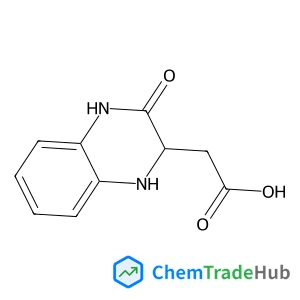
(3-Oxo-1,2,3,4-tetrahydro-2-quinoxalinyl)acetic acid
CAS Number:
136584-14-0
Molecular Formula:
C10H10N2O3

Recommended Suppliers



Disclaimer
This page provides academic journal information for reference and research purposes only. We are not affiliated with any journal publishers and do not handle publication submissions. For publication-related inquiries, please contact the respective journal publishers directly.
If you notice any inaccuracies in the information displayed, please contact us at support@chemtradehub.com. We will promptly review and address your concerns.