![tert-Butyl N-[(2-chloropyridin-4-yl)methyl]carbamate structure](https://static.chemtradehub.com/structs/916/916210-27-0-9f95.webp "tert-Butyl N-[(2-chloropyridin-4-yl)methyl]carbamate structure")
tert-Butyl N-[(2-chloropyridin-4-yl)methyl]carbamate
CAS Number:
916210-27-0
Molecular Formula:
C11H15ClN2O2
Pierdomenico Biasi, Juan García-Serna, Alice Bittante, Tapio Salmi
Hydrogen peroxide direct synthesis was studied in continuous mode over a 5% wt Pd/C commercial catalyst in a Trickle Bed Reactor. The target of the study was to maximize the hydrogen peroxide production. The catalyst was uniformly diluted in quartz sand at different concentrations to investigate their effects on the direct synthesis. The amount of catalyst and the distribution of the catalyst along the bed were optimized to obtain the highest possible yield. The distribution of the catalyst along the bed gave the possibility to significantly improve the selectivity and production of hydrogen peroxide (up to 0.5% under selected conditions). Higher production rate and selectivity were found when the catalyst concentration was decreased along the bed from the top to the bottom as compared to the uniformly dispersed catalyst. The H2/Pd ratio was found to be an important parameter that has to be investigated in the hydrogen peroxide direct synthesis. The effect of a pretreatment of the catalyst with a solution of sodium bromide and phosphoric acid was studied; the results showed how a catalyst pretreatment can lead to a real green hydrogen peroxide synthesis in water. Some optimization guidelines are also provided.
Chungwei Lin, Andrew Knyazev, Keisuke Kojima, Joseph Katz, Koichi Akiyama, Eiji Nakai, Hiroyuki Kawahara
DOI: 10.1039/C9CP00122K
Jianna Bao, Huabo Fan, Xiaojia Xue, Qing Xie, Pengju Pan
DOI: 10.1039/C8CP05066J
Jonas Warneke, Szymon Z. Konieczka, Gao-Lei Hou, Edoardo Aprà, Christoph Kerpen, Fabian Keppner, Thomas C. Schäfer, Michael Deckert, Zheng Yang, Eric J. Bylaska, Grant E. Johnson, Julia Laskin, Xue-Bin Wang, Maik Finze
DOI: 10.1039/C8CP05313H
Evgeny A. Bondarenko, Eugene A. Streltsov, Alexander V. Mazanik, Anatoly I. Kulak, Vytautas Grivickas, Patrik Ščajev, Ekaterina V. Skorb
DOI: 10.1039/C8CP03225D
Xiran Cheng, Ziyun Wang, Yu Mao, P. Hu
DOI: 10.1039/C8CP06224B
Ranganathan Krishnan, Shiuan-Yau Wu, Hsin-Tsung Chen
DOI: 10.1039/C8CP04745F
Guilherme Wiethaus, Josene Maria Toldo, Fabiano da Silveira Santos, Rodrigo da Costa Duarte, Paulo Fernando Bruno Gonçalves, Fabiano Severo Rodembusch
DOI: 10.1039/C8CP05186K
Thomas Forsting, Julia Zischang, Martin A. Suhm, Marco Eckhoff, Benjamin Schröder, Ricardo A. Mata
DOI: 10.1039/C9CP00399A
Xiaohu Yu, Caibin Zhao, Tianlei Zhang, Zhong Liu
DOI: 10.1039/C8CP03035A
L. E. Marbella, N. M. Trease, M. De Volder, C. P. Grey
DOI: 10.1039/C8CP07776B
When handling 4-(2-Furylmethyl)thiomorpholine 1,1-dioxide (CAS: 79206-94-3), it ...
When handling 4-Chloro-N-[2-(4-morpholinyl)ethyl]benzamide (CAS: 71320-77-9), it...
Waste containing this compound (CAS: 62921-74-8) should be handled according to ...
Waste containing (S)-Methyl 2-amino-3-cyclohexylpropanoate should be collected i...
This compound can be synthesized using a multi-step process involving the conjug...
There are several alternatives to (2E)-3-(3,4-Dichlorophenyl)acrylic acid in syn...
Ethyl 6-(2-nitrophenyl)imidazo[2,1-b][1,3]thiazole-3-carboxylate (CAS: 925437-84...
Waste containing 2-(1,3-Thiazol-2-yl)ethanamine (CAS: 18453-07-1) should be coll...
Methyl 5-iodo-2-methylbenzoate can be synthesized through the iodination of meth...
5-Chloro[1,2,4]triazolo[1,5-a]pyridine is commonly synthesized via the condensat...

Green Chemistry provides a unique forum for the publication of innovative research on the development of alternative green and sustainable technologies. The scope of Green Chemistry is based on, but not limited to, the definition proposed by Anastas and Warner (Green Chemistry: Theory and Practice, P T Anastas and J C Warner, Oxford University Press, Oxford, 1998). Green chemistry is the utilisation of a set of principles that reduces or eliminates the use or generation of hazardous substances in the design, manufacture and application of chemical products. Green Chemistry is at the frontiers of this continuously-evolving interdisciplinary science and publishes research that attempts to reduce the environmental impact of the chemical enterprise by developing a technology base that is inherently non-toxic to living things and the environment. Submissions on all aspects of research relating to the endeavour are welcome. The journal publishes original and significant cutting-edge research that is likely to be of wide general appeal. To be published, work must present a significant advance in green chemistry. Papers must contain a comparison with existing methods and demonstrate advantages over those methods before publication can be considered. For more information please see this Editorial. Coverage includes the following, but is not limited to: Design (e.g. biomimicry, design for degradation/recycling/reduced toxicity…) Reagents & Feedstocks (e.g. renewables, CO2, solvents, auxiliary agents, waste utilization…) Synthesis (e.g. organic, inorganic, synthetic biology…) Catalysis (e.g. homogeneous, heterogeneous, enzyme, whole cell…) Process (e.g. process design, intensification, separations, recycling, efficiency…) Energy (e.g. renewable energy, fuels, photovoltaics, fuel cells, energy storage, energy carriers…) Applications (e.g. electronics, dyes, consumer products, coatings, pharmaceuticals, preservatives, building materials, chemicals for industry/agriculture/mining…) Impact (e.g. safety, metrics, LCA, sustainability, (eco)toxicology…) Green chemistry is, by definition, a continuously-evolving frontier. Therefore, the inclusion of a particular material or technology does not, of itself, guarantee that a paper is suitable for the journal. To be suitable, the novel advance should have the potential for reduced environmental impact relative to the state of the art. Green Chemistry does not normally deal with research associated with 'end-of-pipe' or remediation issues.
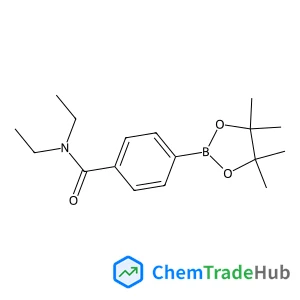
![5-Methyl-4,5,6,7-tetrahydropyrazolo[1,5-a]pyrazin-2-amine structure](https://static.chemtradehub.com/structs/122/1227210-33-4-8d64.webp "5-Methyl-4,5,6,7-tetrahydropyrazolo[1,5-a]pyrazin-2-amine structure")