


Depolymerisation of condensed tannins in ethanol as a gateway to biosourced phenolic synthons
Literature Information
Publication Date
2013-08-23
DOI
10.1039/C3GC41281D
Impact Factor
10.182
Authors
Chahinez Aouf, Eric Dubreucq, Hélène Fulcrand
View Original
Abstract
Plant polyphenols are potential sources of substitutes for phenolic petrochemicals, such as bisphenol A. Among them, condensed tannins are the most abundant after lignins in terrestrial plants. They are especially encountered in agro-industrial residues (i.e. fruit marc) and unprocessed biomass (i.e. barks, needles, and leaves). However, this class of biopolymers requires a depolymerisation step prior to their industrial use as fine chemicals. In this work, phenolic synthons were produced by depolymerisation of an industrial grape seed extract of condensed tannins at the multigram scale. The optimization of the depolymerisation reaction through the selection of the most suitable solvent, nucleophilic agent and temperature allowed the reaction to be carried out at mild temperature (40 °C), in two hours, using ethanol as a solvent. The isolation of compounds of interest was performed by precipitation in ethyl acetate followed by a simple adsorption/desorption step on a polyamide cartridge using ethanol as an eluent.
Recommended Journals

Critical Reviews in Solid State and Materials Sciences

Journal of Chemical Sciences

Chinese Journal of Chemistry

Heteroatom Chemistry

Atomization and Sprays

Medicinal Chemistry Research

Biocatalysis and Biotransformation

Bioorganic & Medicinal Chemistry

Journal of Asian Natural Products Research

Electroanalysis
Related Literature
Development of a ratiometric two-photon fluorescent probe for imaging of hydrogen peroxide in ischemic brain injury
Baoping Zhai, Wei Hu, Ruilin Hao, Wenjing Ni, Zhihong Liu
2019-08-21
Paper
DOI: 10.1039/C9AN01326A
Chip-based platform for dynamic analysis of NK cell cytolysis mediated by a triplebody
Elisavet I. Chatzopoulou, Claudia C. Roskopf, Farzad Sekhavati, Todd A. Braciak, Nadja C. Fenn, Karl-Peter Hopfner, Fuat S. Oduncu, Georg H. Fey, Joachim O. Rädler
2016-03-09
Paper
DOI: 10.1039/C5AN02585K
An antifouling interface integrated with HRP-based amplification to achieve a highly sensitive electrochemical aptasensor for lysozyme detection
Zimeng Liu, Haiyan Wang
2019-08-13
Paper
DOI: 10.1039/C9AN01430F
Estimation of bisulfate in edible plant foods, dog urine, and drugs: picomolar level detection and bio-imaging in living organisms
2019-08-19
Paper
DOI: 10.1039/C9AN01078E
Rapid prototyping of electrochemical lateral flow devices: stencilled electrodes
Miguel Aller Pellitero, Maria Kitsara, Friedrich Eibensteiner, F. Javier del Campo
2016-03-07
Paper
DOI: 10.1039/C5AN02424B
Surface activation of CNT Webs towards layer by layer assembly of biosensors
Mustafa Musameh, Chi P. Huynh, Mark Hickey, Ilias Louis Kyratzis
2016-01-21
Paper
DOI: 10.1039/C5AN02547H
Exosome-specific tumor diagnosis via biomedical analysis of exosome-containing microRNA biomarkers
Jun Yu, Jingyan Lin, Ying Liu
2019-08-21
Paper
DOI: 10.1039/C9AN00777F
Target-controlled in situ formation of G-quadruplex DNAzyme for a sensitive visual assay of telomerase activity
Yaocai Wang, Luzhu Yang, Yanjun Wang, Wei Liu, Baoxin Li, Yan Jin
2019-08-09
Paper
DOI: 10.1039/C9AN01271K
FTIR bio-spectroscopy scattering correction using natural biological characteristics of different cell lines
Sara Hariri, Sahar Barzegari B., Kamyar Keshavarz F., Nastaran Nikounezhad, Behnoosh Safaei, Golrokh Farnam
2019-08-21
Paper
DOI: 10.1039/C9AN00811J
You might also like
Compound Q&A
What are the main uses of 1-(3-Aminophenyl)-3-[(3R)-1-(3,3-dimethyl-2-oxobutyl)-2-oxo-5-(2-pyridinyl)-2,3-dihydro-1H-1,4-benzodiazepin-3-yl]urea (CAS: 155412-88-7)?
This compound is mainly used as an intermediate in the synthesis of antipsychoti...
155412-88-71-(3-Aminophenyl)-3-...
Compound Q&A
How should waste containing 1-(D-Ribofuranosyl)-1,4-dihydro-3-pyridinecarboxamide (CAS: 19132-12-8) be handled?
Waste containing 1-(D-Ribofuranosyl)-1,4-dihydro-3-pyridinecarboxamide (CAS: 191...
19132-12-81-(D-Ribofuranosyl)-...
Compound Q&A
What regulatory guidelines apply to 2-Methyl-2-propanyl 3-bromo-3-(hydroxymethyl)-1-azetidinecarboxylate (CAS: 2007919-81-3)?
2-Methyl-2-propanyl 3-bromo-3-(hydroxymethyl)-1-azetidinecarboxylate (CAS: 20079...
2007919-81-32-Methyl-2-propanyl ...
Compound Q&A
What is N-(4-Chloro-2-pyridinyl)acetamide (CAS: 245056-66-0)?
N-(4-Chloro-2-pyridinyl)acetamide (CAS: 245056-66-0) is a chemical compound with...
245056-66-0N-(4-Chloro-2-pyridi...
Compound Q&A
What is 5-Chloro-2-hydroxybenzoic acid (CAS: 321-14-2)?
5-Chloro-2-hydroxybenzoic acid, also known as 5-chlorosalicylic acid, is an arom...
321-14-25-Chloro-2-hydroxybe...
Compound Q&A
What precautions should be taken when handling 1,1-Dichloro-1-fluoroethane (CAS: 1717-00-6)?
When handling 1,1-Dichloro-1-fluoroethane (CAS: 1717-00-6), it is important to u...
1717-00-61,1-Dichloro-1-fluor...
Compound Q&A
What are the physical and chemical properties of Fmoc-(2S,3R)-3-phenylpyrrolidine-2-carboxylic acid (CAS: 281655-32-1)?
Fmoc-(2S,3R)-3-phenylpyrrolidine-2-carboxylic acid is a white crystalline solid ...
281655-32-1Fmoc-(2S,3R)-3-pheny...
Compound Q&A
What are the main uses of 4-Amino-5-bromo-2-pyridinecarboxylic acid (CAS: 1363381-01-4)?
4-Amino-5-bromo-2-pyridinecarboxylic acid is primarily used as a precursor in th...
1363381-01-44-Amino-5-bromo-2-py...
Compound Q&A
What precautions should be taken when handling (S)-tert-butyl 2-((2-(4-bromophenyl)-2-oxoethyl)carbamoyl)pyrrolidine-1-carboxylate (CAS: 1007881-98-2)?
Handling this compound should be done with personal protective equipment (PPE) i...
1007881-98-2(S)-tert-butyl 2-((2...
Compound Q&A
What precautions should be taken when handling 8-bromo-2,2-dimethyl-3,4-dihydro-2H-1,4-benzoxazin-3-one (CAS: 688363-73-7)?
When handling 8-bromo-2,2-dimethyl-3,4-dihydro-2H-1,4-benzoxazin-3-one, use prop...
688363-73-78-bromo-2,2-dimethyl...
Source Journal
Green Chemistry

CiteScore:
16.1
Self-citation Rate:
7.5%
Articles per Year:
944
Green Chemistry provides a unique forum for the publication of innovative research on the development of alternative green and sustainable technologies. The scope of Green Chemistry is based on, but not limited to, the definition proposed by Anastas and Warner (Green Chemistry: Theory and Practice, P T Anastas and J C Warner, Oxford University Press, Oxford, 1998). Green chemistry is the utilisation of a set of principles that reduces or eliminates the use or generation of hazardous substances in the design, manufacture and application of chemical products. Green Chemistry is at the frontiers of this continuously-evolving interdisciplinary science and publishes research that attempts to reduce the environmental impact of the chemical enterprise by developing a technology base that is inherently non-toxic to living things and the environment. Submissions on all aspects of research relating to the endeavour are welcome. The journal publishes original and significant cutting-edge research that is likely to be of wide general appeal. To be published, work must present a significant advance in green chemistry. Papers must contain a comparison with existing methods and demonstrate advantages over those methods before publication can be considered. For more information please see this Editorial. Coverage includes the following, but is not limited to: Design (e.g. biomimicry, design for degradation/recycling/reduced toxicity…) Reagents & Feedstocks (e.g. renewables, CO2, solvents, auxiliary agents, waste utilization…) Synthesis (e.g. organic, inorganic, synthetic biology…) Catalysis (e.g. homogeneous, heterogeneous, enzyme, whole cell…) Process (e.g. process design, intensification, separations, recycling, efficiency…) Energy (e.g. renewable energy, fuels, photovoltaics, fuel cells, energy storage, energy carriers…) Applications (e.g. electronics, dyes, consumer products, coatings, pharmaceuticals, preservatives, building materials, chemicals for industry/agriculture/mining…) Impact (e.g. safety, metrics, LCA, sustainability, (eco)toxicology…) Green chemistry is, by definition, a continuously-evolving frontier. Therefore, the inclusion of a particular material or technology does not, of itself, guarantee that a paper is suitable for the journal. To be suitable, the novel advance should have the potential for reduced environmental impact relative to the state of the art. Green Chemistry does not normally deal with research associated with 'end-of-pipe' or remediation issues.
Recommended Compounds
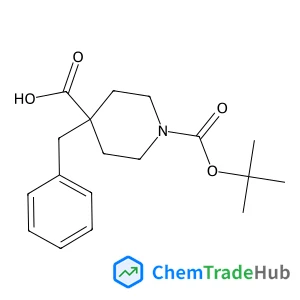
4-Benzyl-1-(tert-butoxycarbonyl)piperidine-4-carboxylic acid
CAS Number:
170838-87-6
Molecular Formula:
C18H25NO4
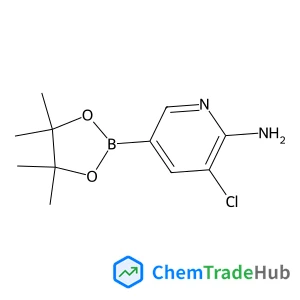
3-Chloro-5-(4,4,5,5-tetramethyl-1,3,2-dioxaborolan-2-yl)-2-pyridinamine
CAS Number:
1032758-99-8
Molecular Formula:
C11H16BClN2O2
![6-Benzyl-4,5,6,7-tetrahydro-1H-pyrazolo[3,4-c]pyridin-3(2H)-one structure](https://static.chemtradehub.com/structs/909/909187-64-0-f54f.webp "6-Benzyl-4,5,6,7-tetrahydro-1H-pyrazolo[3,4-c]pyridin-3(2H)-one structure")
6-Benzyl-4,5,6,7-tetrahydro-1H-pyrazolo[3,4-c]pyridin-3(2H)-one
CAS Number:
909187-64-0
Molecular Formula:
C13H15N3O
Recommended Suppliers







Disclaimer
This page provides academic journal information for reference and research purposes only. We are not affiliated with any journal publishers and do not handle publication submissions. For publication-related inquiries, please contact the respective journal publishers directly.
If you notice any inaccuracies in the information displayed, please contact us at support@chemtradehub.com. We will promptly review and address your concerns.