












Thermal optical non-linearity of nematic mesophase enhanced by gold nanoparticles – an experimental and numerical investigation
Literature Information
Publication Date
2016-03-01
DOI
10.1039/C6CP00116E
Impact Factor
3.676
Authors
O. Kurochkin, Y. K. Murugesan, T. P. Bennett, G. D'Alessandro, Y. Reznikov, B. J. Tang, G. H. Mehl, M. Kaczmarek
View Original
Abstract
In this work the mechanisms leading to the enhancement of optical nonlinearity of nematic liquid crystalline material through localized heating by doping the liquid crystals (LCs) with gold nanoparticles (GNPs) are investigated. We present some experimental and theoretical results on the effect of voltage and nanoparticle concentration on the nonlinear response of GNP–LC suspensions. The optical nonlinearity of these systems is characterized by diffraction measurements and the second order nonlinear refractive index, n2, is used to compare systems with different configurations and operating conditions. A theoretical model based on heat diffusion that takes into account the intensity and finite size of the incident beam, the nanoparticle concentration dependent absorbance of GNP doped LC systems and the presence of bounding substrates is developed and validated. We use the model to discuss the possibilities of further enhancing the optical nonlinearity.
Related Literature
Electron tunneling from electronically excited states of isolated bisdisulizole-derived trianion chromophores following UV absorption
Marc-Oliver Winghart, Michael Kühn, Andreas-Neil Unterreiner, Thomas J. A. Wolf, Phuong D. Dau, Hong-Tao Liu, Dao-Ling Huang, Lai-Sheng Wang
2013-03-18
Paper
DOI: 10.1039/C3CP50497B
Role of the organic linker in the early stages of the templated synthesis of PMOs
Ryusuke Futamura, Miguel Jorge, José R. B. Gomes
2013-03-06
Communication
DOI: 10.1039/C3CP50193K
Impact of short and long-range effects on the magnetic interactions in neutral organic radical-based materials
Alex Domingo, Martin Vérot, Fernando Mota, Juan J. Novoa, Vincent Robert
2013-03-18
Paper
DOI: 10.1039/C3CP44647F
Rotational spectroscopy meets theory
Cristina Puzzarini
2013-02-19
Perspective
DOI: 10.1039/C3CP44301A
Measurement of the interface tension of smectic membranes in water
Kirsten Harth, Ralf Stannarius
2013-03-18
Paper
DOI: 10.1039/C3CP44055A
Ligand strain and conformations in a family of Fe(ii) spin crossover hexadentate complexes involving the 2-pyridylmethyl-amino moiety: DFT modelling
Galina S. Matouzenko, Serguei A. Borshch, Volker Schünemann, Juliusz A. Wolny
2013-03-22
Paper
DOI: 10.1039/C3CP44570D
Experimental evidence for surface freezing in supercooled n-alkane nanodroplets
Viraj P. Modak, Harshad Pathak, Mitchell Thayer, Sherwin J. Singer
2013-03-05
Paper
DOI: 10.1039/C3CP44490B
Complementary mechanistic properties of Fe- and Mn-doped aluminophosphates in the catalytic aerobic oxidation of hydrocarbons
Luis Gómez-Hortigüela, Furio Corà, C. Richard A. Catlow
2013-03-14
Paper
DOI: 10.1039/C3CP51079D
The reaction force constant as an indicator of synchronicity/nonsynchronicity in [4+2] cycloaddition processes
Diana Yepes, Oscar Donoso-Tauda, Patricia Pérez, Pablo Jaque
2013-01-18
Paper
DOI: 10.1039/C3CP44197K
You might also like
Compound Q&A
What is the market or research trend for N-(4-Methoxybenzyl)-2-pyridinamine (CAS: 52818-63-0)?
N-(4-Methoxybenzyl)-2-pyridinamine (CAS: 52818-63-0) is increasingly being used ...
52818-63-0N-(4-Methoxybenzyl)-...
Compound Q&A
What precautions should be taken when handling Ethyl 4-(2-chlorophenyl)-1,3-thiazole-2-carboxylate (CAS: 1050507-06-6)?
When handling Ethyl 4-(2-chlorophenyl)-1,3-thiazole-2-carboxylate, appropriate p...
1050507-06-6Ethyl 4-(2-chlorophe...
Compound Q&A
What regulatory guidelines apply to diethyldiselane (CAS: 628-39-7)?
Diethyldiselane (CAS: 628-39-7) is classified under the Globally Harmonized Syst...
628-39-7Diethyldiselane
Compound Q&A
What is the market or research trend for oxocopper (CAS: 12053-18-8)?
The market for oxocopper (CAS: 12053-18-8) is primarily driven by its use in cat...
12053-18-8oxocopper; oxo-(oxoc...
Compound Q&A
What is the market or research trend for 5-{[(2-Methyl-2-propanyl)oxy]carbonyl}-5-azaspiro[2.4]heptane-7-carboxylic acid?
The market for 5-{[(2-Methyl-2-propanyl)oxy]carbonyl}-5-azaspiro[2.4]heptane-7-c...
1268519-54-55-{[(2-Methyl-2-prop...
Compound Q&A
What is 2-(1-Pyrrolidinyl)-4-pyridinamine (CAS: 35981-63-6)?
2-(1-Pyrrolidinyl)-4-pyridinamine is a chemical compound with the CAS number 359...
35981-63-62-(1-Pyrrolidinyl)-4...
Compound Q&A
What are the physical and chemical properties of 2-(3-Pyridinyl)-1-azabicyclo[2.2.2]octane (CAS: 91556-75-1)?
2-(3-Pyridinyl)-1-azabicyclo[2.2.2]octane (CAS: 91556-75-1) is a crystalline sol...
91556-75-12-(3-Pyridinyl)-1-az...
Compound Q&A
How is (S)-Alpha-allyl-proline hydrochloride (CAS: 129704-91-2) typically synthesized?
(S)-Alpha-allyl-proline hydrochloride is usually synthesized via a Wittig reacti...
129704-91-2(S)-Alpha-allyl-prol...
Compound Q&A
What is 3-Methyl-1,2-oxazole-5-carboxylic acid (CAS: 4857-42-5)?
3-Methyl-1,2-oxazole-5-carboxylic acid (CAS: 4857-42-5) is an organic compound w...
4857-42-53-Methyl-1,2-oxazole...
Compound Q&A
How is Lys-SMCC-DM1 (CAS: 1281816-04-3) typically synthesized?
Lys-SMCC-DM1 is synthesized via a multi-step process involving the coupling of S...
1281816-04-3Lys-SMCC-DM1
Source Journal
Physical Chemistry Chemical Physics

CiteScore:
5.5
Self-citation Rate:
10.3%
Articles per Year:
3036
Physical Chemistry Chemical Physics (PCCP) is an international journal co-owned by 19 physical chemistry and physics societies from around the world. This journal publishes original, cutting-edge research in physical chemistry, chemical physics and biophysical chemistry. To be suitable for publication in PCCP, articles must include significant innovation and/or insight into physical chemistry; this is the most important criterion that reviewers and Editors will judge against when evaluating submissions. The journal has a broad scope and welcomes contributions spanning experiment, theory, computation and data science. Topical coverage includes spectroscopy, dynamics, kinetics, statistical mechanics, thermodynamics, electrochemistry, catalysis, surface science, quantum mechanics, quantum computing and machine learning. Interdisciplinary research areas such as polymers and soft matter, materials, nanoscience, energy, surfaces/interfaces, and biophysical chemistry are welcomed if they demonstrate significant innovation and/or insight into physical chemistry. Joined experimental/theoretical studies are particularly appreciated when complementary and based on up-to-date approaches.
Recommended Compounds
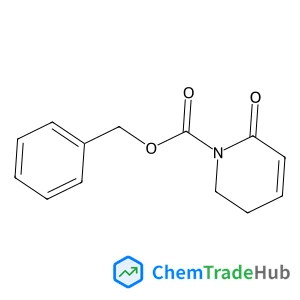
Benzyl 6-oxo-3,6-dihydro-1(2H)-pyridinecarboxylate
CAS Number:
725746-35-0
Molecular Formula:
C13H13NO3
![1-oxaspiro[4.4]nonan-6-one structure](https://static.chemtradehub.com/structs/134/134179-01-4-e051.webp "1-oxaspiro[4.4]nonan-6-one structure")
Recommended Suppliers




Disclaimer
This page provides academic journal information for reference and research purposes only. We are not affiliated with any journal publishers and do not handle publication submissions. For publication-related inquiries, please contact the respective journal publishers directly.
If you notice any inaccuracies in the information displayed, please contact us at support@chemtradehub.com. We will promptly review and address your concerns.