












Rotational spectroscopy meets theory
Literature Information
Publication Date
2013-02-19
DOI
10.1039/C3CP44301A
Impact Factor
3.676
Authors
Cristina Puzzarini
View Original
Abstract
Rotational spectroscopy is known to be a technique that is widely used to infer information on molecular structure and dynamics. In the last few decades, its role in the field of atmospheric and astrophysical investigations has rapidly grown. However, several are the challenging aspects in rotational spectroscopy, since the detection and analysis of spectra as well as interpretation of obtained results are not at all straightforward. Quantum chemistry has reached such an accuracy that can be used to disentangle these challenging situations by guiding the experimental investigation, assisting in the determination of the spectroscopic parameters, and extracting information of chemical interest. This perspective provides an overview of the theoretical background and computational requirements needed for the accurate evaluation of the spectroscopic parameters of relevance to rotational spectroscopy. The role of theory in guiding and supporting experiment is detailed through a few examples, and the interplay of experiment and theory is discussed in terms of the information of physical and chemical interest that can be derived.
Related Literature
Free volume in ionic liquids: a connection of experimentally accessible observables from PALS and PVT experiments with the molecular structure from XRD data‡
Yang Yu, Günter Dlubek, Reinhard Krause-Rehberg, Jürgen Pionteck, Dirk Pfefferkorn, Safak Bulut, Dana Bejan, Christian Friedrich
2013-04-10
Paper
DOI: 10.1039/C3CP43306D
Morphology dependent oxygen reduction activity of titanium carbide: bulk vs. nanowires
Vankayala Kiran, Kancharlapalli Srinivasu, Srinivasan Sampath
2013-04-03
Paper
DOI: 10.1039/C3CP50731A
The impact of spectator species on the interaction of H2O2 with platinum – implications for the oxygen reduction reaction pathways
Ioannis Katsounaros, Josef C. Meier, Udo Benedikt, P. Ulrich Biedermann, Angel Cuesta, Alexander A. Auer, Karl J. J. Mayrhofer
2013-03-01
Paper
DOI: 10.1039/C3CP50649E
Structure of Nb2O5–NaPO3 glasses by X-ray and neutron diffraction
U. Hoppe, L. Delevoye, L. Montagne, M. v. Zimmermann, A. C. Hannon
2012-12-03
Paper
DOI: 10.1039/C2CP42772A
Faceting preferences for AuN and PdN nanoclusters with high-symmetry motifs
Z. Y. Li, Roy L. Johnston
2013-04-15
Paper
DOI: 10.1039/C3CP50978H
Effects of rare-earth co-doping on the local structure of rare-earth phosphate glasses using high and low energy X-ray diffraction
Vicky FitzGerald, Veijo Honkimaki, Mark A. Roberts, Tessa Brennan, Richard A. Martin, George A. Saunders, Robert J. Newport
2013-03-06
Paper
DOI: 10.1039/C3CP44298E
New Li2FeSiO4–carbon monoliths with controlled macropores: effects of pore properties on electrode performance
George Hasegawa, Mai Sannohe, Yuya Ishihara, Kazuyoshi Kanamori, Kazuki Nakanishi, Takeshi Abe
2013-04-09
Paper
DOI: 10.1039/C3CP50352F
Surface modification imparts selectivity, facilitating redox catalytic studies: quinone mediated oxygen reduction
Joseph Mason, Christopher Batchelor-McAuley, Richard G. Compton
2013-04-22
Paper
DOI: 10.1039/C3CP50607J
A multi-scale molecular dynamics study of the assembly of micron-size supraparticles from 30 nm alkyl-coated nanoparticles
Damien Thompson, Mateusz Sikora, Piotr Szymczak, Marek Cieplak
2013-04-09
Paper
DOI: 10.1039/C3CP50523E
You might also like
Compound Q&A
What is the market or research trend for N-(4-Methoxybenzyl)-2-pyridinamine (CAS: 52818-63-0)?
N-(4-Methoxybenzyl)-2-pyridinamine (CAS: 52818-63-0) is increasingly being used ...
52818-63-0N-(4-Methoxybenzyl)-...
Compound Q&A
What precautions should be taken when handling Ethyl 4-(2-chlorophenyl)-1,3-thiazole-2-carboxylate (CAS: 1050507-06-6)?
When handling Ethyl 4-(2-chlorophenyl)-1,3-thiazole-2-carboxylate, appropriate p...
1050507-06-6Ethyl 4-(2-chlorophe...
Compound Q&A
What regulatory guidelines apply to diethyldiselane (CAS: 628-39-7)?
Diethyldiselane (CAS: 628-39-7) is classified under the Globally Harmonized Syst...
628-39-7Diethyldiselane
Compound Q&A
What is the market or research trend for oxocopper (CAS: 12053-18-8)?
The market for oxocopper (CAS: 12053-18-8) is primarily driven by its use in cat...
12053-18-8oxocopper; oxo-(oxoc...
Compound Q&A
What is the market or research trend for 5-{[(2-Methyl-2-propanyl)oxy]carbonyl}-5-azaspiro[2.4]heptane-7-carboxylic acid?
The market for 5-{[(2-Methyl-2-propanyl)oxy]carbonyl}-5-azaspiro[2.4]heptane-7-c...
1268519-54-55-{[(2-Methyl-2-prop...
Compound Q&A
What is 2-(1-Pyrrolidinyl)-4-pyridinamine (CAS: 35981-63-6)?
2-(1-Pyrrolidinyl)-4-pyridinamine is a chemical compound with the CAS number 359...
35981-63-62-(1-Pyrrolidinyl)-4...
Compound Q&A
What are the physical and chemical properties of 2-(3-Pyridinyl)-1-azabicyclo[2.2.2]octane (CAS: 91556-75-1)?
2-(3-Pyridinyl)-1-azabicyclo[2.2.2]octane (CAS: 91556-75-1) is a crystalline sol...
91556-75-12-(3-Pyridinyl)-1-az...
Compound Q&A
How is (S)-Alpha-allyl-proline hydrochloride (CAS: 129704-91-2) typically synthesized?
(S)-Alpha-allyl-proline hydrochloride is usually synthesized via a Wittig reacti...
129704-91-2(S)-Alpha-allyl-prol...
Compound Q&A
What is 3-Methyl-1,2-oxazole-5-carboxylic acid (CAS: 4857-42-5)?
3-Methyl-1,2-oxazole-5-carboxylic acid (CAS: 4857-42-5) is an organic compound w...
4857-42-53-Methyl-1,2-oxazole...
Compound Q&A
How is Lys-SMCC-DM1 (CAS: 1281816-04-3) typically synthesized?
Lys-SMCC-DM1 is synthesized via a multi-step process involving the coupling of S...
1281816-04-3Lys-SMCC-DM1
Source Journal
Physical Chemistry Chemical Physics

CiteScore:
5.5
Self-citation Rate:
10.3%
Articles per Year:
3036
Physical Chemistry Chemical Physics (PCCP) is an international journal co-owned by 19 physical chemistry and physics societies from around the world. This journal publishes original, cutting-edge research in physical chemistry, chemical physics and biophysical chemistry. To be suitable for publication in PCCP, articles must include significant innovation and/or insight into physical chemistry; this is the most important criterion that reviewers and Editors will judge against when evaluating submissions. The journal has a broad scope and welcomes contributions spanning experiment, theory, computation and data science. Topical coverage includes spectroscopy, dynamics, kinetics, statistical mechanics, thermodynamics, electrochemistry, catalysis, surface science, quantum mechanics, quantum computing and machine learning. Interdisciplinary research areas such as polymers and soft matter, materials, nanoscience, energy, surfaces/interfaces, and biophysical chemistry are welcomed if they demonstrate significant innovation and/or insight into physical chemistry. Joined experimental/theoretical studies are particularly appreciated when complementary and based on up-to-date approaches.
Recommended Compounds

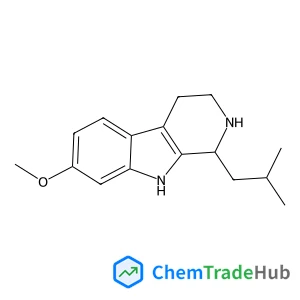
1-Isobutyl-7-methoxy-2,3,4,9-tetrahydro-1H-beta-carboline
CAS Number:
175975-76-5
Molecular Formula:
C16H22N2O
Recommended Suppliers




Disclaimer
This page provides academic journal information for reference and research purposes only. We are not affiliated with any journal publishers and do not handle publication submissions. For publication-related inquiries, please contact the respective journal publishers directly.
If you notice any inaccuracies in the information displayed, please contact us at support@chemtradehub.com. We will promptly review and address your concerns.