![(2R,6S)-6-[(Benzyloxy)methyl]-4-{[(2-methyl-2-propanyl)oxy]carbonyl}-2-morpholinecarboxylic acid structure](https://static.chemtradehub.com/structs/109/1093085-91-6-3382.webp "(2R,6S)-6-[(Benzyloxy)methyl]-4-{[(2-methyl-2-propanyl)oxy]carbonyl}-2-morpholinecarboxylic acid structure")
(2R,6S)-6-[(Benzyloxy)methyl]-4-{[(2-methyl-2-propanyl)oxy]carbonyl}-2-morpholinecarboxylic acid
CAS Number:
1093085-91-6
Molecular Formula:
C18H25NO6
Marc-Oliver Winghart, Michael Kühn, Andreas-Neil Unterreiner, Thomas J. A. Wolf, Phuong D. Dau, Hong-Tao Liu, Dao-Ling Huang, Lai-Sheng Wang
Photoelectron spectra of isolated [M–BDSZ]3− (BDSZ = bisdisulizole, M = H, Li, Na, K, Cs) triply charged anions exhibit a dominant constant electron kinetic energy (KE) detachment feature, independent of detachment wavelengths over a wide UV range. Photoelectron imaging spectroscopy shows that this constant KE feature displays an angular distribution consistent with delayed rather than direct electron emission. Time-resolved pump–probe (388 nm/775 nm) two-colour photoelectron spectroscopy reveals that the constant KE feature results from two simultaneously populated excited states, which decay at different rates. The faster of the two rates is essentially the same for all the [M–BDSZ]3− species, regardless of M. The slower process is associated with lifetimes ranging from several picoseconds to tens of picoseconds. The lighter the alkali cation is, the longer the lifetime of this state. Quantum chemical calculations indicate that the two decaying states are in fact the two lowest singlet excited states of the trianions. Each of the two corresponding photoexcitations is associated with significant charge transfer. However, electron density is transferred from different ends of the roughly chain-like molecule to its aromatic center. The energy (and therefore the decay rate) of the longer-lived excited state is found to be influenced by polarization effects due to the proximal alkali cation complexed to that end of the molecule. Systematic M-dependent geometry changes, mainly due to the size of the alkali cation, lead to M-dependent shifts in transition energies. At the constant pump wavelength this leads to different amounts of vibrational energy in the respective excited state, contributing to the variations in decay rates. The current experiments and calculations confirm excited state electron tunneling detachment (ESETD) to be the mechanism responsible for the observed constant KE feature. The ESETD phenomenon may be quite common for isolated multiply charged anions, which are strong fluorophores in the condensed phase – making ESETD useful for studies of the transient response of such species after electronic excitation.
Ting Liao, Ziqi Sun, Aijun Du, Sean Smith
DOI: 10.1039/C3CP50654A
Alexander J. Cowan, Wenhua Leng, Piers R. F. Barnes, David R. Klug, James R. Durrant
DOI: 10.1039/C3CP50318F
Ying Dai, Baibiao Huang, Timo Jacob
DOI: 10.1039/C3CP51078F
Kwan Kim, Kyung Lock Kim, Kuan Soo Shin
DOI: 10.1039/C3CP51204E
V. Petkov, Y. Ren, S. Kabekkodu, D. Murphy
DOI: 10.1039/C2CP43378H
Jonathan Keating, Gopinathan Sankar, Timothy I. Hyde, Shinji Kohara, Koji Ohara
DOI: 10.1039/C3CP50600B
Yuriy I. Prylutskyy, Anatoly S. Buchelnikov, Dmitry P. Voronin, Viktor V. Kostjukov, Uwe Ritter, John A. Parkinson, Maxim P. Evstigneev
DOI: 10.1039/C3CP50187F
Armin Hoffmann, Krishna Neupane
DOI: 10.1039/C3CP44564J
Johannes Auerswald, Bernd Engels, Ingo Fischer, Thiemo Gerbich, Jörg Herterich, Anke Krueger, Melanie Lang, Hans-Christian Schmitt, Christof Schon, Christof Walter
DOI: 10.1039/C3CP44271C
Sergey Sirotin, Philippe Bazin, Françoise Maugé, Arnaud Travert
DOI: 10.1039/C3CP51146D
N-(4-Methoxybenzyl)-2-pyridinamine (CAS: 52818-63-0) is increasingly being used ...
When handling Ethyl 4-(2-chlorophenyl)-1,3-thiazole-2-carboxylate, appropriate p...
Diethyldiselane (CAS: 628-39-7) is classified under the Globally Harmonized Syst...
The market for oxocopper (CAS: 12053-18-8) is primarily driven by its use in cat...
The market for 5-{[(2-Methyl-2-propanyl)oxy]carbonyl}-5-azaspiro[2.4]heptane-7-c...
2-(1-Pyrrolidinyl)-4-pyridinamine is a chemical compound with the CAS number 359...
2-(3-Pyridinyl)-1-azabicyclo[2.2.2]octane (CAS: 91556-75-1) is a crystalline sol...
(S)-Alpha-allyl-proline hydrochloride is usually synthesized via a Wittig reacti...
3-Methyl-1,2-oxazole-5-carboxylic acid (CAS: 4857-42-5) is an organic compound w...
Lys-SMCC-DM1 is synthesized via a multi-step process involving the coupling of S...

Physical Chemistry Chemical Physics (PCCP) is an international journal co-owned by 19 physical chemistry and physics societies from around the world. This journal publishes original, cutting-edge research in physical chemistry, chemical physics and biophysical chemistry. To be suitable for publication in PCCP, articles must include significant innovation and/or insight into physical chemistry; this is the most important criterion that reviewers and Editors will judge against when evaluating submissions. The journal has a broad scope and welcomes contributions spanning experiment, theory, computation and data science. Topical coverage includes spectroscopy, dynamics, kinetics, statistical mechanics, thermodynamics, electrochemistry, catalysis, surface science, quantum mechanics, quantum computing and machine learning. Interdisciplinary research areas such as polymers and soft matter, materials, nanoscience, energy, surfaces/interfaces, and biophysical chemistry are welcomed if they demonstrate significant innovation and/or insight into physical chemistry. Joined experimental/theoretical studies are particularly appreciated when complementary and based on up-to-date approaches.
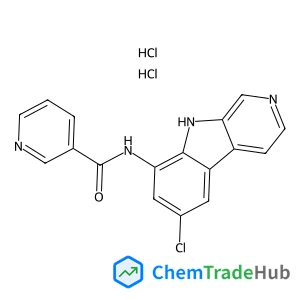
![1-[6-(1H-Imidazol-1-yl)-3-pyridinyl]methanamine structure](https://static.chemtradehub.com/structs/914/914637-08-4-8825.webp "1-[6-(1H-Imidazol-1-yl)-3-pyridinyl]methanamine structure")