


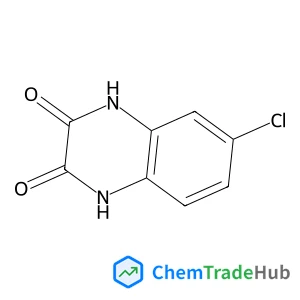
6-CHLORO-2,3-DIOXO-1,2,3,4-TETRAHYDROQUINOXALINE, 97
CAS Number:
169-14-2
Molecular Formula:
C8H5ClN2O2
Ji-Yu Lin, Yuan-Kai Lin, Sydney Peng, Li-Yu Lee, Chieh-Nan Chen, I-Ming Chu
Herein, we report the synthesis and characterization of a novel positively charged thermosensitive hydrogel prepared from poloxamer (PLX)-poly(L-alanine-lysine) (Lys-Ala-PLX-Ala-Lys) that demonstrates potential in biomedical applications including tissue engineering and drug delivery. At a dilute concentration, the copolymer self-assembled into micelles that were sensitive to temperature elevation. In the concentration range of 3–7 wt%, the aqueous copolymer solution underwent sol–gel transition near the physiological temperature and exhibited changes in its secondary structure content, as evidenced by FT-IR. Excellent viability of cells cultured within the scaffold was observed after 72 h of incubation. On the other hand, negatively charged bovine serum albumin was incorporated into the hydrogel without diminishing material integrity. Over the course of seven days, the protein underwent extended zero-order release. These findings highlight the potential of this system as a cell scaffold as well as a depot for the extended delivery of drugs and proteins, specifically those which bear a charge opposite to that of the hydrogel.

Faraday Discussions

Environmental Toxicology and Pharmacology

Journal of Enzyme inhibition and Medicinal Chemistry

Contact Lens & Anterior Eye

Physical Chemistry Chemical Physics

Mini-Reviews in Medicinal Chemistry

Lab on a Chip

Coloration Technology

Angewandte Chemie International Edition

Advanced Engineering Materials
Frank A. Alexander Jr, Eric G. Huey, Dorielle T. Price, Shekhar Bhansali
DOI: 10.1039/C2AN36341K
DOI: 10.1039/C5AN00803D
Massimiliano Porrini, Ryan Morris, Tom Smith, Stefan Weidt, C. Logan Mackay, Cait E. MacPhee, Perdita E. Barran
DOI: 10.1039/C5AN01253H
Zhi Yu, Youngju Lee, Xu Wang, Bing Zhao, Young Mee Jung
DOI: 10.1039/C2AN35715A
Vivek K. Rawat, Christopher J. Hogan, Jr.
DOI: 10.1039/C5AN00753D
Michael D. Scott, Rinku Dutta, Manas K. Haldar, Anil Wagh, Thomas R. Gustad, Benedict Law, Daniel L. Friesner, Sanku Mallik
DOI: 10.1039/C2AN35877H
Danlu Wu, Milena Dumont Milutinovic, David R. Walt
DOI: 10.1039/C5AN01238D
Neha Batra, Monika Tomar, Vinay Gupta
DOI: 10.1039/C2AN35693G
Sandilya V. B. Garimella, Yehia. M. Ibrahim, Ian K. Webb, Andreas B. Ipsen, Tsung-Chi Chen, Aleksey V. Tolmachev, Erin S. Baker, Gordon A. Anderson, Richard D. Smith
DOI: 10.1039/C5AN00844A
Tirayut Vilaivan, Voravee P. Hoven
DOI: 10.1039/C2AN36133G
4-Nitrophenyl phosphate disodium salt hexahydrate is primarily used as a substra...
2-(Trifluoromethyl)-1,3-oxazole-4-carboxylic Acid (CAS: 1060816-01-4) is widely ...
2-Fluoro-4-biphenylcarboxylic acid should be stored in a cool, dry place at room...
Prednisolone-21-Carboxylic Acid is primarily used in the pharmaceutical industry...
4-(Hydrazinomethyl)-1,2,3-benzenetriol (CAS: 3614-72-0) should be stored in a co...
4-Amino-1-methyl-1H-pyrazole-5-carboxylic acid hydrochloride (CAS: 92534-70-8) i...
Dehydropachymic acid (CAS: 77012-31-8) is regulated by various agencies. It fall...
The market and research trends for 6-[(2,2-Dimethylpropanoyl)amino]nicotinic aci...
1,10-Phenanthroline-2,9-dicarbaldehyde should be stored in a cool, dry place awa...
5-Carbamoyl-11-oxo-10,11-dihydro-5H-dibenzo[b,f]azepin-10-yl acetate can be synt...

Polymer Chemistry welcomes submissions in all areas of polymer science that have a strong focus on macromolecular chemistry. Manuscripts may cover a broad range of fields, yet no direct application focus is required.
![N-[2-(4-Hydroxyphenoxy)-4-nitrophenyl]methanesulfonamide structure](https://static.chemtradehub.com/structs/109/109032-22-6-7c88.webp "N-[2-(4-Hydroxyphenoxy)-4-nitrophenyl]methanesulfonamide structure")
![S-[2,3-Bis(palmitoyloxy)propyl]-N-[(9H-fluoren-9-ylmethoxy)(hydroxy)methylene]cysteine structure](https://static.chemtradehub.com/structs/210/210532-98-2-f6a7.webp "S-[2,3-Bis(palmitoyloxy)propyl]-N-[(9H-fluoren-9-ylmethoxy)(hydroxy)methylene]cysteine structure")




