












Modeling vapor uptake induced mobility shifts in peptide ions observed with transversal modulation ion mobility spectrometry-mass spectrometry
Literature Information
Publication Date
2015-06-01
DOI
10.1039/C5AN00753D
Impact Factor
4.616
Authors
Vivek K. Rawat, Christopher J. Hogan, Jr.
View Original
Abstract
Low field ion mobility spectrometry-mass spectrometry (IMS-MS) techniques exhibit low orthogonality, as inverse mobility often scales with mass to charge ratio. This inadequacy can be mitigated by adding vapor dopants, which may cluster with analyte ions and shift their mobilities by amounts independent of both mass and mobility of the ion. It is therefore important to understand the interactions of vapor dopants with ions, to better quantify the extent of dopant facilitated mobility shifts. Here, we develop predictive models of vapor dopant facilitated mobility shifts, and compare model calculations to measurements of mobility shifts for peptide ions exposed to variable gas phase concentrations of isopropanol. Mobility measurements were made at atmospheric pressure and room temperature using a recently developed transversal modulation ion mobility spectrometer (TMIMS). Results are compared to three separate models, wherein mobility shifts due to vapor dopants are attributed to changes in gas composition and (I) no vapor dopant uptake is assumed, (II) site-specific dopant uptake by the ion is assumed (approximated via a Langmuir adsorption model), and (III) site-unspecific dopant uptake by the ion is assumed (approximated via a classical nucleation model). We find that mobility shifts in peptide ions are in excellent agreement with model II, site-specific binding predictions. Conversely, mobility shifts of tetraalkylammonium ions from previous measurements were compared with these models and best agreement was found with model III predictions, i.e. site-unspecific dopant uptake.
Recommended Journals
Related Literature
Chemoenzymatic macrocycle synthesis using resorcylic acid lactone thioesterase domains
Graham W. Heberlig, Jesse T. C. Brown, Ryan D. Simard, Monica Wirz, Wei Zhang, Meng Wang, Leah I. Susser, Mark E. Horsman, Christopher N. Boddy
2018-07-20
Paper
DOI: 10.1039/C8OB01512K
Stereoselective synthesis of fluoroalkylated (Z)-alkene via nickel-catalyzed and iron-mediated hydrofluoroalkylation of alkynes
Xiang-Rui Li, Wen-Xin Li, Zhuo-Wen Zhang, Chuanji Shen, Xiaocong Zhou, Xue-Qiang Chu, Weidong Rao, Zhi-Liang Shen
2021-09-24
Research Article
DOI: 10.1039/D1QO00983D
Dibenzofuran-4,6-bis(oxazoline) (DBFOX). A novel trans-chelating bis(oxazoline) ligand for asymmetric reactions
Kennosuke Itoh, Mukund P. Sibi
2018-06-18
Review Article
DOI: 10.1039/C8OB01010B
Correction: Directed nucleophilic addition of phenoxides to cyclopropenes
Pavel Yamanushkin, Andrew Edwards, Nicolai A. Aksenov
2018-07-30
Correction
DOI: 10.1039/C8OB90109K
Metal-free synthesis of imidazo[1,5-a]pyridines via elemental sulfur mediated sequential dual oxidative Csp3–H amination
Jie Sheng, He Zhao, Liyao Zheng, Xingchuan Wei
2018-07-23
Communication
DOI: 10.1039/C8OB01391H
An organocatalytic asymmetric Mannich reaction for the synthesis of 3,3-disubstituted-3,4-dihydro-2-quinolones
Soumendranath Mukhopadhyay, Subhas Chandra Pan
2018-07-11
Communication
DOI: 10.1039/C8OB01399C
Electrophilic carbocyclization reactions of 2-(2-alkynylphenyl)amino-1,4-naphthoquinones
Chang-You Sie, Che-Ping Chuang
2018-07-19
Paper
DOI: 10.1039/C8OB01170B
Synthesis of 3-cyanomethylated coumarins by a visible-light-mediated direct cyanomethylation of aryl alkynoates
Wei Zhang, Chen Yang, Yu-Liang Pan, Xin Li, Jin-Pei Cheng
2018-07-20
Paper
DOI: 10.1039/C8OB01513A
Synthesis of near-infrared absorbing and fluorescent bis(pyrrol-2-yl)squaraines and their halochromic properties
Yasuhiro Kubota, Masato Nakazawa, Junheon Lee, Ryoma Naoi, Motoki Tachikawa, Toshiyasu Inuzuka, Kazumasa Funabiki, Masaki Matsui, Taekyeong Kim
2021-09-10
Research Article
DOI: 10.1039/D1QO01169C
You might also like
Compound Q&A
What are the main uses of 4-Nitrophenyl phosphate disodium salt hexahydrate (CAS: 333338-18-4)?
4-Nitrophenyl phosphate disodium salt hexahydrate is primarily used as a substra...
333338-18-44-Nitrophenyl phosph...
Compound Q&A
What are the main uses of 2-(Trifluoromethyl)-1,3-oxazole-4-carboxylic Acid (CAS: 1060816-01-4)?
2-(Trifluoromethyl)-1,3-oxazole-4-carboxylic Acid (CAS: 1060816-01-4) is widely ...
1060816-01-42-(Trifluoromethyl)-...
Compound Q&A
How should 2-Fluoro-4-biphenylcarboxylic acid (CAS: 137045-30-8) be stored?
2-Fluoro-4-biphenylcarboxylic acid should be stored in a cool, dry place at room...
137045-30-82-Fluoro-4-biphenylc...
Compound Q&A
What industries use Prednisolone-21-Carboxylic Acid (CAS: 61549-70-0)?
Prednisolone-21-Carboxylic Acid is primarily used in the pharmaceutical industry...
61549-70-0Prednisolone-21-Carb...
Compound Q&A
How should 4-(Hydrazinomethyl)-1,2,3-benzenetriol (CAS: 3614-72-0) be stored?
4-(Hydrazinomethyl)-1,2,3-benzenetriol (CAS: 3614-72-0) should be stored in a co...
3614-72-04-(Hydrazinomethyl)-...
Compound Q&A
What industries use 4-Amino-1-methyl-1H-pyrazole-5-carboxylic acid hydrochloride (CAS: 92534-70-8)?
4-Amino-1-methyl-1H-pyrazole-5-carboxylic acid hydrochloride (CAS: 92534-70-8) i...
92534-70-84-Amino-1-methyl-1H-...
Compound Q&A
What regulatory guidelines apply to dehydropachymic acid (CAS: 77012-31-8)?
Dehydropachymic acid (CAS: 77012-31-8) is regulated by various agencies. It fall...
77012-31-8Dehydropachymic acid
Compound Q&A
What is the market or research trend for 6-[(2,2-Dimethylpropanoyl)amino]nicotinic acid (CAS: 898561-66-5)?
The market and research trends for 6-[(2,2-Dimethylpropanoyl)amino]nicotinic aci...
898561-66-56-[(2,2-Dimethylprop...
Compound Q&A
How should 1,10-Phenanthroline-2,9-dicarbaldehyde (CAS: 57709-62-3) be stored?
1,10-Phenanthroline-2,9-dicarbaldehyde should be stored in a cool, dry place awa...
57709-62-31,10-Phenanthroline-...
Compound Q&A
How is 5-Carbamoyl-11-oxo-10,11-dihydro-5H-dibenzo[b,f]azepin-10-yl acetate (CAS: 113952-21-9) typically synthesized?
5-Carbamoyl-11-oxo-10,11-dihydro-5H-dibenzo[b,f]azepin-10-yl acetate can be synt...
113952-21-95-Carbamoyl-11-oxo-1...
Source Journal
Analyst

CiteScore:
7.8
Self-citation Rate:
5.6%
Articles per Year:
653
Analyst publishes analytical and bioanalytical research that reports premier fundamental discoveries and inventions, and the applications of those discoveries, unconfined by traditional discipline barriers.
Recommended Compounds
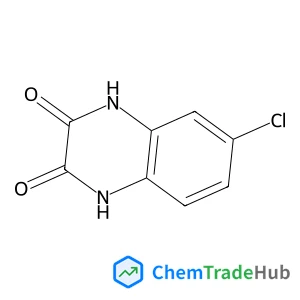
6-CHLORO-2,3-DIOXO-1,2,3,4-TETRAHYDROQUINOXALINE, 97
CAS Number:
169-14-2
Molecular Formula:
C8H5ClN2O2

6-Bromo-3,4-dihydro-2H-1,4-benzoxazine hydrochloride (1:1)
CAS Number:
1260803-10-8
Molecular Formula:
C8H9BrClNO

Recommended Suppliers





Disclaimer
This page provides academic journal information for reference and research purposes only. We are not affiliated with any journal publishers and do not handle publication submissions. For publication-related inquiries, please contact the respective journal publishers directly.
If you notice any inaccuracies in the information displayed, please contact us at support@chemtradehub.com. We will promptly review and address your concerns.