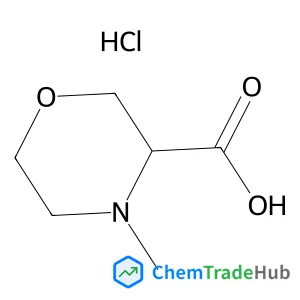
4-Methyl-3-morpholinecarboxylic acid hydrochloride (1:1)
CAS Number:
1240518-90-4
Molecular Formula:
C6H12ClNO3
Zhi Yu, Youngju Lee, Xu Wang, Bing Zhao, Young Mee Jung
A rapid and highly sensitive bicinchoninic acid (BCA) reagent-based protein quantitation tool was developed using competitive resonance Raman (RR) and surface-enhanced resonance Raman scattering (SERRS) methods. A chelation reaction between BCA and Cu+, which is reduced by protein in an alkaline environment, is exploited to create a BCA–Cu+ complex that has strong RR and SERRS activities. Using these methods, protein concentrations in solutions can be quantitatively measured at concentrations as low as 50 μg mL−1 and 10 pg mL−1. There are many advantages of using RR and SERRS-based assays. These assays exhibit a much wider linear concentration range and provide an additional one (RR method) to four (SERRS method) orders of magnitude increase in detection limits relative to UV-based methods. Protein-to-protein variation is determined using a reference to a standard curve at concentrations of BSA that exhibits excellent recoveries. These novel methods are extremely accurate in detecting total protein concentrations in solution. This improvement in protein detection sensitivity could yield advances in the biological sciences and medical diagnostic field and extend the applications of reagent-based protein assay techniques.
Man Wang, Qirui Xiang, Wen Si, Ran Song, Daoshan Yang, Ming Li, Jian Lv
DOI: 10.1039/D1QO00996F
Kennosuke Itoh, Mukund P. Sibi
DOI: 10.1039/C8OB01010B
Hai-Shan Jin, Ya-Zhen Du, Qing-Yang Zhao, Li-Ming Zhao
DOI: 10.1039/D1QO01001H
Rajesh Kuppusamy, Muhammad Yasir, Eugene Yee, Mark Willcox, David StC. Black, Naresh Kumar
DOI: 10.1039/C8OB01699B
Dan Zhao, Jingyan Luo, Lu Liu
DOI: 10.1039/D1QO01184G
Anasztázia Hetényi, Edit Wéber, Titanilla Szögi, Lívia Fülöp
DOI: 10.1039/C8OB01322E
Chen Zhang
DOI: 10.1039/C8OB01397G
Ting Qi, Shuai Fu, Xiang Zhang, Ting-Hao Liu, Qing-Zhu Li, Chuan Gou, Jun-Long Li
DOI: 10.1039/D1QO01071A
Zhi-Peng Wang, Yun He
DOI: 10.1039/C8OB01558A
4-Nitrophenyl phosphate disodium salt hexahydrate is primarily used as a substra...
2-(Trifluoromethyl)-1,3-oxazole-4-carboxylic Acid (CAS: 1060816-01-4) is widely ...
2-Fluoro-4-biphenylcarboxylic acid should be stored in a cool, dry place at room...
Prednisolone-21-Carboxylic Acid is primarily used in the pharmaceutical industry...
4-(Hydrazinomethyl)-1,2,3-benzenetriol (CAS: 3614-72-0) should be stored in a co...
4-Amino-1-methyl-1H-pyrazole-5-carboxylic acid hydrochloride (CAS: 92534-70-8) i...
Dehydropachymic acid (CAS: 77012-31-8) is regulated by various agencies. It fall...
The market and research trends for 6-[(2,2-Dimethylpropanoyl)amino]nicotinic aci...
1,10-Phenanthroline-2,9-dicarbaldehyde should be stored in a cool, dry place awa...
5-Carbamoyl-11-oxo-10,11-dihydro-5H-dibenzo[b,f]azepin-10-yl acetate can be synt...

Analyst publishes analytical and bioanalytical research that reports premier fundamental discoveries and inventions, and the applications of those discoveries, unconfined by traditional discipline barriers.
![[(1S,2S,3R,4S,7R,9S,10S,12R,15S)-4,12-Diacetyloxy-15-[(2R,3S)-3-benzamido-3-phenyl-2-(2,2,2-trichloroethoxycarbonyloxy)propanoyl]oxy-1,9-dihydroxy-10,14,17,17-tetramethyl-11-oxo-6-oxatetracyclo[11.3.1.03,10.04,7]heptadec-13-en-2-yl] benzoate structure](https://static.chemtradehub.com/structs/100/100431-55-8-7104.webp "[(1S,2S,3R,4S,7R,9S,10S,12R,15S)-4,12-Diacetyloxy-15-[(2R,3S)-3-benzamido-3-phenyl-2-(2,2,2-trichloroethoxycarbonyloxy)propanoyl]oxy-1,9-dihydroxy-10,14,17,17-tetramethyl-11-oxo-6-oxatetracyclo[11.3.1.03,10.04,7]heptadec-13-en-2-yl] benzoate structure")