












Multicompartment morphologies self-assembled from fluorinated ABC triblock terpolymers: the effects of flexible and rigid hydrophobic moieties
Literature Information
Publication Date
2016-01-21
DOI
10.1039/C5PY02017D
Impact Factor
5.582
Authors
Sen Li, Jinlin He, Mingzu Zhang, Hairong Wang, Peihong Ni
View Original
Abstract
This paper is aimed at comparing the effects of flexible and rigid blocks on the morphologies of multicompartment aggregates self-assembled from two kinds of fluorinated ABC triblock terpolymers, in which polyisobutylene (PIB) with a low glass transition temperature (Tg ∼ −67 °C) and polystyrene (PS) with high Tg (∼100 °C) were selected as the flexible and rigid blocks, respectively. The fluorinated triblock terpolymers (abbreviated as PIB-b-PDMAEMA-b-POFPMA and PS-b-PDMAEMA-b-POFPMA, respectively) with similar relative block lengths were synthesized via consecutive oxyanion-initiated polymerization (OIP) of 2-N,N-(dimethylamino)ethyl methacrylate (DMAEMA) and 2,2,3,3,4,4,5,5-octafluoropentyl methacrylate (OFPMA) using pre-functionalized PIB-O−K+ or PS-O−K+ as the macroinitiators. These terpolymers could self-assemble in aqueous solution since the PDMAEMA block is hydrophilic, PIB and PS blocks are hydrophobic, while the POFPMA block is both hydrophobic and lipophobic. The self-assembly behavior was analyzed by transmission electron microscopy (TEM). It has been demonstrated that PIB-b-PDMAEMA-b-POFPMA with the flexible PIB block could self-assemble into four types of reproducible nanostructures with the increase of polymer concentrations, including multicompartment micelles, fiber-like aggregates, nanotubules and rod-like aggregates. More interestingly, a uniform zig-zag pattern was observed on the surface of these rod-like aggregates after the solution was maintained without stirring for one week. In contrast, for the PS-b-PDMAEMA-b-POFPMA system containing a rigid PS block, the similar morphologies were rarely observed, except for spherical, hamburger and flower-like multicompartment nanostructures. The present work reveals that the flexibility or rigidity of the hydrophobic segment as well as the polymer concentration exerts a big influence on both the self-assembly behavior and formation of diversified morphologies.
Related Literature
Plasmonic properties of regiospecific core–satellite assemblies of gold nanostars and nanospheres
A. Swarnapali D. S. Indrasekara, Roney Thomas
2014-10-31
Paper
DOI: 10.1039/C4CP04517C
Gold and silver nanoparticle monomers are non-SERS-active: a negative experimental study with silica-encapsulated Raman-reporter-coated metal colloids
Yuying Zhang, Bernd Walkenfort, Jun Hee Yoon, Sebastian Schlücker, Wei Xie
2014-12-01
Paper
DOI: 10.1039/C4CP05073H
Tailoring plasmonic properties of gold nanohole arrays for surface-enhanced Raman scattering
Peng Zheng, Savan Suri, Nianqiang Wu
2015-01-08
Paper
DOI: 10.1039/C4CP05291A
Mechanistic insights into perovskite photoluminescence enhancement: light curing with oxygen can boost yield thousandfold
Yuxi Tian, Maximilian Peter, Eva Unger, Mohamed Abdellah, Kaibo Zheng, Tõnu Pullerits, Arkady Yartsev, Villy Sundström, Ivan G. Scheblykin
2015-08-27
Paper
DOI: 10.1039/C5CP04410C
The water-catalyzed mechanism of the ring-opening reaction of glucose
Wojciech Plazinski, Anita Plazinska, Mateusz Drach
2015-07-22
Paper
DOI: 10.1039/C5CP03357H
Enhanced-fluorescence correlation spectroscopy at micro-molar dye concentration around a single gold nanorod
Saumyakanti Khatua, Haifeng Yuan, Michel Orrit
2014-09-01
Paper
DOI: 10.1039/C4CP03057E
Waveguide-coupled directional Raman radiation for surface analysis
Chen Chen, Jin-Yang Li, Li Wang, Dan-Feng Lu, Zhi-Mei Qi
2015-01-30
Paper
DOI: 10.1039/C4CP05092D
Boron nitride zigzag nanoribbons: optimal thermoelectric systems
2015-07-27
Paper
DOI: 10.1039/C5CP03570H
Tandem mass spectrometry and infrared spectroscopy as a tool to identify peptide oxidized residues
2015-08-10
Paper
DOI: 10.1039/C5CP03223G
Composition-dependent band gaps and indirect–direct band gap transitions of group-IV semiconductor alloys
Zhen Zhu, Jiamin Xiao, Haibin Sun, Yue Hu, Ronggen Cao, Yin Wang, Li Zhao, Jun Zhuang
2015-07-15
Paper
DOI: 10.1039/C5CP02558C
You might also like
Compound Q&A
Is 2-(2-chloroacetamido)-3-phenylpropanoic acid (CAS: 7765-11-9) safe?
2-(2-Chloroacetamido)-3-phenylpropanoic acid (CAS: 7765-11-9) is generally consi...
7765-11-92-(2-chloroacetamido...
Compound Q&A
Is 2-(Benzyloxy)-5-bromobenzoic acid (CAS: 62176-31-2) safe?
2-(Benzyloxy)-5-bromobenzoic acid can be handled safely if appropriate precautio...
62176-31-22-(Benzyloxy)-5-brom...
Compound Q&A
What is (4-Methyl-1,2,5-oxadiazol-3-yl)methanamine hydrochloride (CAS: 1159825-48-5)?
(4-Methyl-1,2,5-oxadiazol-3-yl)methanamine hydrochloride is a chemical compound ...
1159825-48-5(4-Methyl-1,2,5-oxad...
Compound Q&A
What is 2-(5-Hexylthiophen-2-yl)-4,4,5,5-tetramethyl-1,3,2-dioxaborolane (CAS: 917985-54-7)?
2-(5-Hexylthiophen-2-yl)-4,4,5,5-tetramethyl-1,3,2-dioxaborolane (CAS: 917985-54...
917985-54-72-(5-Hexylthiophen-2...
Compound Q&A
Are there alternatives to 4-(8-Methyl-9H-1,3-dioxolo[4,5-h][2,3]benzodiazepin-5-yl)benzenamine (CAS: 102771-26-6) in synthesis?
While 4-(8-Methyl-9H-1,3-dioxolo[4,5-h][2,3]benzodiazepin-5-yl)benzenamine (CAS:...
102771-26-64-(8-Methyl-9H-1,3-d...
Compound Q&A
What is the market or research trend for tert-butyl 3-hydroxy-4,5,7,8-tetrahydro-2H-pyrazolo[3,4-d]azepine-6-carboxylate (CAS: 851376-80-2)?
The market for tert-butyl 3-hydroxy-4,5,7,8-tetrahydro-2H-pyrazolo[3,4-d]azepine...
851376-80-2tert-butyl 3-hydroxy...
Compound Q&A
How should waste containing 3,5-Diamino-1H-pyrazole-4-carbonitrile (CAS: 6844-58-2) be handled?
Waste containing 3,5-Diamino-1H-pyrazole-4-carbonitrile (CAS: 6844-58-2) should ...
6844-58-23,5-Diamino-1H-pyraz...
Compound Q&A
How is (6-Fluoro-3-pyridinyl)boronic acid (CAS: 351019-18-6) typically synthesized?
(6-Fluoro-3-pyridinyl)boronic acid can be synthesized through the reaction of 6-...
351019-18-6(6-Fluoro-3-pyridiny...
Compound Q&A
What industries use Dibenzyl carbonimidoylbiscarbamate (CAS: 10065-79-9)?
Dibenzyl carbonimidoylbiscarbamate (CAS: 10065-79-9) finds applications in vario...
10065-79-9Dibenzyl carbonimido...
Compound Q&A
What is the market or research trend for (beta,beta,2,3,4,5,6-~2~H_7_)Phenylalanine (CAS: 74228-83-4)?
The market for (beta,beta,2,3,4,5,6-~2~H_7_)Phenylalanine (CAS: 74228-83-4) is g...
74228-83-4(beta,beta,2,3,4,5,6...
Source Journal
Polymer Chemistry

CiteScore:
8.6
Self-citation Rate:
7.3%
Articles per Year:
457
Polymer Chemistry welcomes submissions in all areas of polymer science that have a strong focus on macromolecular chemistry. Manuscripts may cover a broad range of fields, yet no direct application focus is required.
Recommended Compounds
![2-(5-Bromo-1H-pyrrolo[2,3-B]pyridin-3-YL)acetic acid structure](https://static.chemtradehub.com/structs/106/1060795-03-0-0589.webp "2-(5-Bromo-1H-pyrrolo[2,3-B]pyridin-3-YL)acetic acid structure")
2-(5-Bromo-1H-pyrrolo[2,3-B]pyridin-3-YL)acetic acid
CAS Number:
1060795-03-0
Molecular Formula:
C9H7BrN2O2
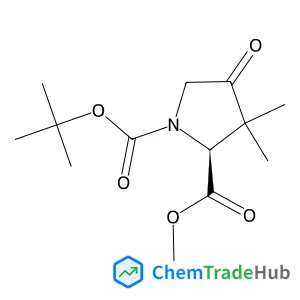
2-Methyl 1-(2-methyl-2-propanyl) (2S)-3,3-dimethyl-4-oxo-1,2-pyrrolidinedicarboxylate
CAS Number:
478698-30-5
Molecular Formula:
C13H21NO5
![[3-Fluoro-4-(1-pyrrolidinylcarbonyl)phenyl]boronic acid structure](https://static.chemtradehub.com/structs/874/874289-09-5-e3d4.webp "[3-Fluoro-4-(1-pyrrolidinylcarbonyl)phenyl]boronic acid structure")
[3-Fluoro-4-(1-pyrrolidinylcarbonyl)phenyl]boronic acid
CAS Number:
874289-09-5
Molecular Formula:
C11H13BFNO3
Recommended Suppliers





Disclaimer
This page provides academic journal information for reference and research purposes only. We are not affiliated with any journal publishers and do not handle publication submissions. For publication-related inquiries, please contact the respective journal publishers directly.
If you notice any inaccuracies in the information displayed, please contact us at support@chemtradehub.com. We will promptly review and address your concerns.