


Tandem mass spectrometry and infrared spectroscopy as a tool to identify peptide oxidized residues
Literature Information
Publication Date
2015-08-10
DOI
10.1039/C5CP03223G
Impact Factor
3.676
Authors
View Original
Abstract
The final products obtained by the oxidation of small model peptides containing the thioether function, either methionine or S-methyl cysteine, have been characterized by tandem mass spectrometry and IR Multiple Photon Dissociation (IRMPD) spectroscopy. The modified positions have been clearly identified by the CID-MS2 fragmentation mass spectra with or without loss of sulfenic acid, as well as by the vibrational signature of the sulfoxide bond at around 1000 cm−1. The oxidation of the thioether function did not lead to the same products in these model peptides. The sulfoxide and sulfone (to a lesser extent) have been clearly identified as final products of the oxidation of S-methyl-glutathione (GS-Me). Decarboxylation or hydrogen loss are the major oxidation pathways in GS-Me, while they have not been observed in tryptophan–methionine and methionine–tryptophan (Trp–Met and Met–Trp). Interestingly, tryptophan is oxidized in the dipeptide Met–Trp, while that is not the case in the reverse sequence (Trp–Met).
Recommended Journals

Molecular Pharmacology

Pure and Applied Chemistry

European Journal of Wood and Wood Products

Science Progress

Kinetics and Catalysis

Journal of Organometallic Chemistry

Journal of Physics and Chemistry of Solids

Proceedings of the National Academy of Sciences of the United States of America

Pharmacological Reviews

Russian Chemical Reviews
Related Literature
Synthesis of photolabile protecting group (PPG) protected uronic acid building blocks: applications in carbohydrate synthesis with the assistance of a continuous flow photoreactor
Varsha Tiwari, Adesh Kumar Singh, Priyanka Chaudhary, Peter H. Seeberger, Jeyakumar Kandasamy
2019-10-14
Research Article
DOI: 10.1039/C9QO01010F
A [4 + 1] annulation of ortho-electrophile-substituted para-quinone methides for the synthesis of indanes and isoindolines
Ziwen Feng, Zhenbo Yuan, Xiaobin Zhao, Yue Huang, Hequan Yao
2019-09-02
Research Article
DOI: 10.1039/C9QO00977A
Platinum(ii)-catalyzed dehydrative C3-benzylation of electron-deficient indoles with benzyl alcohols
Hidemasa Hikawa, Yuuki Matsuura, Shoko Kikkawa, Isao Azumaya
2019-07-17
Research Article
DOI: 10.1039/C9QO00831D
Correction: A formal [4 + 2] cycloaddition of sulfur-containing alkylidene heterocycles with allenic compounds
Vojtěch Dočekal, Bedřich Formánek, Ivana Císařová, Jan Veselý
2019-10-16
Correction
DOI: 10.1039/C9QO90096A
Asymmetric domino 1,6-addition/annulation reaction of 3-cyano-4-alkenyl-2H-chromen-2-ones with isatin-derived MBH carbonates: enantioselective synthesis of 3,3′-cyclopentenylspirooxindoles bearing 2H-chromen-2-ones
Zhen-Hua Wang, Chuan-Wen Lei, Xia-Yan Zhang, Yong You, Jian-Qiang Zhao
2019-08-14
Research Article
DOI: 10.1039/C9QO00890J
Clavipines A–C, antiproliferative meroterpenoids with a fused azepine skeleton from the basidiomycete Clitocybe clavipes
Zhaocui Sun, Nailiang Zhu, Man Zhou, Xiaowei Huo, Haifeng Wu, Yu Tian, Junshan Yang, Guoxu Ma, Yan-Long Yang, Xudong Xu
2019-09-30
Research Article
DOI: 10.1039/C9QO01005J
Officinalins A and B, a pair of C23 terpenoid epimers with a tetracyclic 6/7/5/5 system from Salvia officinalis
Ling-Nan Li, Xiao-Qin Liu, Dong-Rong Zhu, Chen Chen, Yao-Lan Lin, Wen-Li Wang, Li Zhu, Jian-Guang Luo, Ling-Yi Kong
2019-08-21
Research Article
DOI: 10.1039/C9QO00861F
Pd/P/dba-Promoted cascade annulations to produce fused medium-sized sulfoximine polyheterocycles
Xiaoyan Chen, Hao Zhou, Zhiyuan Chen
2019-08-29
Research Article
DOI: 10.1039/C9QO00880B
Visible-light promoted sulfonamidation of enol acetates to α-amino ketones based on redox-neutral photocatalysis
Lin Wang, Pi Cheng, Xinhao Wang, Wei Wang, Jianguo Zeng, Yun Liang, Oliver Reiser
2019-10-02
Research Article
DOI: 10.1039/C9QO01119F
You might also like
Compound Q&A
Is 6-(3-Fluorophenyl)picolinic acid (CAS: 887982-40-3) safe?
6-(3-Fluorophenyl)picolinic acid is generally considered safe for laboratory use...
887982-40-36-(3-Fluorophenyl)pi...
Compound Q&A
What industries use (3R)-3-Pyrrolidinol (CAS: 2799-21-5)?
(3R)-3-Pyrrolidinol is used in the pharmaceutical industry as a precursor for dr...
2799-21-5(3R)-3-Pyrrolidinol
Compound Q&A
What precautions should be taken when handling (4R,5R)-4,5-Diethoxycarbonyl-2,2-dimethyldioxolane (CAS: 59779-75-8)?
When handling (4R,5R)-4,5-Diethoxycarbonyl-2,2-dimethyldioxolane (CAS: 59779-75-...
59779-75-8(4R,5R)-4,5-Diethoxy...
Compound Q&A
How is 1-(6-Chloroimidazo[1,2-b]pyridazin-3-yl)ethanone (CAS: 90734-71-7) typically synthesized?
1-(6-Chloroimidazo[1,2-b]pyridazin-3-yl)ethanone is often synthesized via a mult...
90734-71-71-(6-Chloroimidazo[1...
Compound Q&A
What is the market or research trend for N-Ethyl-3,4-dimethylbenzylamine (CAS: 39180-83-1)?
The market for N-Ethyl-3,4-dimethylbenzylamine (CAS: 39180-83-1) remains steady,...
39180-83-1N-Ethyl-3,4-dimethyl...
Compound Q&A
What is Tert-butyl 3-(pyrrolidin-1-yl)azetidine-1-carboxylate (CAS: 1019008-21-9)?
Tert-butyl 3-(pyrrolidin-1-yl)azetidine-1-carboxylate is a chemical compound wit...
1019008-21-9Tert-butyl 3-(pyrrol...
Compound Q&A
What regulatory guidelines apply to 1-Bromo-3-chloro-2,4-dimethoxybenzene (CAS: 1228956-93-1)?
1-Bromo-3-chloro-2,4-dimethoxybenzene (CAS: 1228956-93-1) falls under the classi...
1228956-93-11-Bromo-3-chloro-2,4...
Compound Q&A
Is 8-Bromo-2-methyl-3,4-dihydroisoquinolin-1(2H)-one (CAS: 1368622-07-4) safe?
The safety of 8-Bromo-2-methyl-3,4-dihydroisoquinolin-1(2H)-one (CAS: 1368622-07...
1368622-07-48-Bromo-2-methyl-3,4...
Compound Q&A
Is Benzyl [(3S)-2,6-dioxo-3-piperidinyl]carbamate (CAS: 22785-43-9) safe?
Benzyl [(3S)-2,6-dioxo-3-piperidinyl]carbamate is generally safe when handled wi...
22785-43-9Benzyl [(3S)-2,6-dio...
Compound Q&A
How should 1-{[4-(4,4,5,5-Tetramethyl-1,3,2-dioxaborolan-2-yl)phenyl]sulfonyl}pyrrolidine (CAS: 928657-21-0) be stored?
1-{[4-(4,4,5,5-Tetramethyl-1,3,2-dioxaborolan-2-yl)phenyl]sulfonyl}pyrrolidine s...
928657-21-01-{[4-(4,4,5,5-Tetra...
Source Journal
Physical Chemistry Chemical Physics

CiteScore:
5.5
Self-citation Rate:
10.3%
Articles per Year:
3036
Physical Chemistry Chemical Physics (PCCP) is an international journal co-owned by 19 physical chemistry and physics societies from around the world. This journal publishes original, cutting-edge research in physical chemistry, chemical physics and biophysical chemistry. To be suitable for publication in PCCP, articles must include significant innovation and/or insight into physical chemistry; this is the most important criterion that reviewers and Editors will judge against when evaluating submissions. The journal has a broad scope and welcomes contributions spanning experiment, theory, computation and data science. Topical coverage includes spectroscopy, dynamics, kinetics, statistical mechanics, thermodynamics, electrochemistry, catalysis, surface science, quantum mechanics, quantum computing and machine learning. Interdisciplinary research areas such as polymers and soft matter, materials, nanoscience, energy, surfaces/interfaces, and biophysical chemistry are welcomed if they demonstrate significant innovation and/or insight into physical chemistry. Joined experimental/theoretical studies are particularly appreciated when complementary and based on up-to-date approaches.
Recommended Compounds
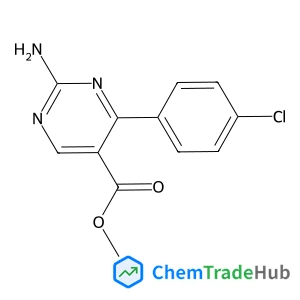
Methyl 2-amino-4-(4-chlorophenyl)-5-pyrimidinecarboxylate
CAS Number:
1133115-56-6
Molecular Formula:
C12H10ClN3O2
![5-Bromo-3-isopropyl-1H-pyrrolo[2,3-b]pyridine structure](https://static.chemtradehub.com/structs/125/1256819-54-1-8620.webp "5-Bromo-3-isopropyl-1H-pyrrolo[2,3-b]pyridine structure")
Recommended Suppliers





Disclaimer
This page provides academic journal information for reference and research purposes only. We are not affiliated with any journal publishers and do not handle publication submissions. For publication-related inquiries, please contact the respective journal publishers directly.
If you notice any inaccuracies in the information displayed, please contact us at support@chemtradehub.com. We will promptly review and address your concerns.