


Gold and silver nanoparticle monomers are non-SERS-active: a negative experimental study with silica-encapsulated Raman-reporter-coated metal colloids
Literature Information
Publication Date
2014-12-01
DOI
10.1039/C4CP05073H
Impact Factor
3.676
Authors
Yuying Zhang, Bernd Walkenfort, Jun Hee Yoon, Sebastian Schlücker, Wei Xie
View Original
Abstract
Noble metal nanoparticles (NPs) are the most commonly employed plasmonic substrates in surface-enhanced Raman scattering (SERS) experiments. Computer simulations show that monomers of Ag and Au nanocrystals (“spherical” NPs) do not exhibit a notable plasmonic enhancement, i.e., they are essentially non-SERS-active. However, in experiments, SERS enhanced by spherical NP colloids has been frequently reported. This implies that the monomers do not have strong SERS activity, but detectable enhancement should more or less be there. Because of the gap between theory and practice, it is important to demonstrate experimentally how SERS-active the metal colloid actually is and, in case a SERS signal is observed, where it originates from. In particular the aggregation of the colloid, induced by high centrifugal forces in washing steps or due to a harsh ionic environment of the suspension medium, should be controlled since it is the very high SERS activity of NP clusters which dominates the overall SERS signal of the colloid. We report here the experimental evaluation of the SERS activity of 80 nm Au and Ag NP monomers. Instead of showing fancy nanostructures and super SERS enhancement, we present the method on how to obtain negative experimental data. In this approach, no SERS signal was obtained from the colloid with a Raman reporter on the metal surface when the NPs were encapsulated carefully within a thick silica shell. Without silica encapsulation, if a very low centrifugation speed is used for the washing steps, only a negligible SERS signal can be detected even at very high NP concentrations. In contrast, strong SERS signals can be detected when the NPs are suspended in acidic solutions. These results indicate that Au and Ag NP monomers essentially exhibit no SERS activity of practical relevance.
Recommended Journals

Kinetics and Catalysis

Molecular Pharmacology

Nature

Fibre Chemistry

Helvetica Chimica Acta

Organic Preparations and Procedures International

Journal of Organometallic Chemistry

European Journal of Wood and Wood Products

Planta Medica

Proceedings of the National Academy of Sciences of the United States of America
Related Literature
Long-range Li ion diffusion in NASICON-type Li1.5Al0.5Ge1.5(PO4)3 (LAGP) studied by 7Li pulsed-gradient spin-echo NMR
Kikuko Hayamizu
2017-08-14
Paper
DOI: 10.1039/C7CP03647G
Mechanism of gas-phase ozonolysis of sabinene in the atmosphere
2017-08-16
Paper
DOI: 10.1039/C7CP03216A
Piezoelectricity enhancement and bandstructure modification of atomic defect-mediated MoS2 monolayer
Sheng Yu, Quinton Rice, Tikaram Neupane, Bagher Tabibi, Qiliang Li, Felix Jaetae Seo
2017-08-15
Paper
DOI: 10.1039/C7CP04385F
Hysteresis and bonding reconstruction in the pressure-induced B3–B1 phase transition of 3C-SiC
Miguel A. Salvadó, R. Franco, Pilar Pertierra, T. Ouahrani, J. M. Recio
2017-08-09
Paper
DOI: 10.1039/C7CP03732E
Metal-doped ceria nanoparticles: stability and redox processes
Alberto Figueroba, Albert Bruix, Gábor Kovács
2017-07-25
Paper
DOI: 10.1039/C7CP02820B
Tunable interaction between metal clusters and graphene
Paulo Piquini, Alex A. Schmidt, Marcelo A. Kuroda
2017-08-10
Paper
DOI: 10.1039/C7CP04615D
Sum frequency generation vibrational spectroscopy of methacrylate-based functional monomers at the hydrophilic solid–liquid interface
Narendra M. Adhikari, Uvinduni I. Premadasa, Katherine L. A. Cimatu
2017-07-26
Paper
DOI: 10.1039/C7CP03113K
Analyzing the dependence of oxygen incorporation current density on overpotential and oxygen partial pressure in mixed conducting oxide electrodes
Zixuan Guan, Di Chen, William C. Chueh
2017-08-08
Paper
DOI: 10.1039/C7CP03654J
Investigation of electronic transport under mechanical strain in a molecular junction composed of a polyyne bridge connected to SWCNT electrodes
S. M. Corrêa, D. F. S. Ferreira, M. R. S. Siqueira, J. C. Reis-Silva, J. F. P. Leal, C. A. B. da Silva, Jr, J. Del Nero
2017-07-31
Paper
DOI: 10.1039/C7CP03080K
You might also like
Compound Q&A
Is 6-(3-Fluorophenyl)picolinic acid (CAS: 887982-40-3) safe?
6-(3-Fluorophenyl)picolinic acid is generally considered safe for laboratory use...
887982-40-36-(3-Fluorophenyl)pi...
Compound Q&A
What industries use (3R)-3-Pyrrolidinol (CAS: 2799-21-5)?
(3R)-3-Pyrrolidinol is used in the pharmaceutical industry as a precursor for dr...
2799-21-5(3R)-3-Pyrrolidinol
Compound Q&A
What precautions should be taken when handling (4R,5R)-4,5-Diethoxycarbonyl-2,2-dimethyldioxolane (CAS: 59779-75-8)?
When handling (4R,5R)-4,5-Diethoxycarbonyl-2,2-dimethyldioxolane (CAS: 59779-75-...
59779-75-8(4R,5R)-4,5-Diethoxy...
Compound Q&A
How is 1-(6-Chloroimidazo[1,2-b]pyridazin-3-yl)ethanone (CAS: 90734-71-7) typically synthesized?
1-(6-Chloroimidazo[1,2-b]pyridazin-3-yl)ethanone is often synthesized via a mult...
90734-71-71-(6-Chloroimidazo[1...
Compound Q&A
What is the market or research trend for N-Ethyl-3,4-dimethylbenzylamine (CAS: 39180-83-1)?
The market for N-Ethyl-3,4-dimethylbenzylamine (CAS: 39180-83-1) remains steady,...
39180-83-1N-Ethyl-3,4-dimethyl...
Compound Q&A
What is Tert-butyl 3-(pyrrolidin-1-yl)azetidine-1-carboxylate (CAS: 1019008-21-9)?
Tert-butyl 3-(pyrrolidin-1-yl)azetidine-1-carboxylate is a chemical compound wit...
1019008-21-9Tert-butyl 3-(pyrrol...
Compound Q&A
What regulatory guidelines apply to 1-Bromo-3-chloro-2,4-dimethoxybenzene (CAS: 1228956-93-1)?
1-Bromo-3-chloro-2,4-dimethoxybenzene (CAS: 1228956-93-1) falls under the classi...
1228956-93-11-Bromo-3-chloro-2,4...
Compound Q&A
Is 8-Bromo-2-methyl-3,4-dihydroisoquinolin-1(2H)-one (CAS: 1368622-07-4) safe?
The safety of 8-Bromo-2-methyl-3,4-dihydroisoquinolin-1(2H)-one (CAS: 1368622-07...
1368622-07-48-Bromo-2-methyl-3,4...
Compound Q&A
Is Benzyl [(3S)-2,6-dioxo-3-piperidinyl]carbamate (CAS: 22785-43-9) safe?
Benzyl [(3S)-2,6-dioxo-3-piperidinyl]carbamate is generally safe when handled wi...
22785-43-9Benzyl [(3S)-2,6-dio...
Compound Q&A
How should 1-{[4-(4,4,5,5-Tetramethyl-1,3,2-dioxaborolan-2-yl)phenyl]sulfonyl}pyrrolidine (CAS: 928657-21-0) be stored?
1-{[4-(4,4,5,5-Tetramethyl-1,3,2-dioxaborolan-2-yl)phenyl]sulfonyl}pyrrolidine s...
928657-21-01-{[4-(4,4,5,5-Tetra...
Source Journal
Physical Chemistry Chemical Physics

CiteScore:
5.5
Self-citation Rate:
10.3%
Articles per Year:
3036
Physical Chemistry Chemical Physics (PCCP) is an international journal co-owned by 19 physical chemistry and physics societies from around the world. This journal publishes original, cutting-edge research in physical chemistry, chemical physics and biophysical chemistry. To be suitable for publication in PCCP, articles must include significant innovation and/or insight into physical chemistry; this is the most important criterion that reviewers and Editors will judge against when evaluating submissions. The journal has a broad scope and welcomes contributions spanning experiment, theory, computation and data science. Topical coverage includes spectroscopy, dynamics, kinetics, statistical mechanics, thermodynamics, electrochemistry, catalysis, surface science, quantum mechanics, quantum computing and machine learning. Interdisciplinary research areas such as polymers and soft matter, materials, nanoscience, energy, surfaces/interfaces, and biophysical chemistry are welcomed if they demonstrate significant innovation and/or insight into physical chemistry. Joined experimental/theoretical studies are particularly appreciated when complementary and based on up-to-date approaches.
Recommended Compounds
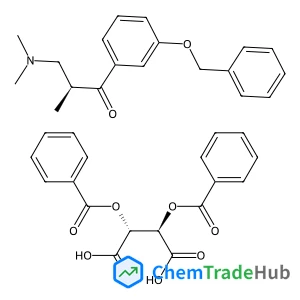
(S)-1-(3-(Benzyloxy)phenyl)-3-(dimethylamino)-2-methylpropan-1-one (2r,3r)-2,3-bis(benzoyloxy)succinate
CAS Number:
1004315-81-4
Molecular Formula:
C37H37NO10
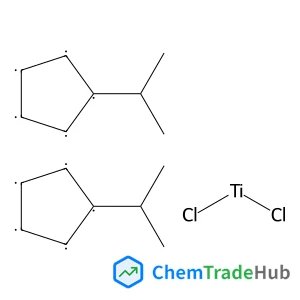
BIS(I-PROPYLCYCLOPENTADIENYL)TITANIUM DICHLORIDE
CAS Number:
12130-65-3
Molecular Formula:
C16H22Cl2Ti
![1-Benzyl-1,7-diazaspiro[4.4]nonane dihydrochloride structure](https://static.chemtradehub.com/structs/115/1159822-71-5-0320.webp "1-Benzyl-1,7-diazaspiro[4.4]nonane dihydrochloride structure")
1-Benzyl-1,7-diazaspiro[4.4]nonane dihydrochloride
CAS Number:
1159822-71-5
Molecular Formula:
C14H22Cl2N2
Recommended Suppliers





Disclaimer
This page provides academic journal information for reference and research purposes only. We are not affiliated with any journal publishers and do not handle publication submissions. For publication-related inquiries, please contact the respective journal publishers directly.
If you notice any inaccuracies in the information displayed, please contact us at support@chemtradehub.com. We will promptly review and address your concerns.