












Synthesis of 9,9′-spirobifluorene-based conjugated microporous polymers by FeCl3-mediated polymerization
Literature Information
Publication Date
2015-12-28
DOI
10.1039/C5PY01900A
Impact Factor
5.582
Authors
Arindam Modak, Yoshifumi Maegawa, Yasutomo Goto, Shinji Inagaki
View Original
Abstract
An easy, safe and low-cost synthesis of conjugated microporous polymers and related carbonized microporous materials is highly desirable for practical use. Here, we report the synthesis of 9,9′-spirobifluorene-based conjugated microporous organic polymers (COPs) starting from unsubstituted spirobifluorene using an inexpensive FeCl3 mediator. Three kinds of COPs, synthesized by FeCl3-mediated oxidative polymerization, Friedel–Crafts polymerization, and competitive oxidative/Friedel–Crafts polymerization of the spirobifluorene precursor, showed large surface areas (940–1980 m2 g−1) and high micropore volumes (0.5–0.9 cm3 g−1). The COPs synthesized by competitive oxidative/Friedel–Crafts polymerization were found to show a high gas uptake ability which is almost comparable to that of the previously reported spirobifluorene-based microporous organic polymers prepared by Yamamoto polymerization using an expensive Ni catalyst. The COPs were easily transformed into microporous carbons by direct carbonization without the addition of any activating agents. The carbonization process enhanced the gas uptake ability of the COPs at low pressure (1 atm), although the surface area and micropore volume were almost unchanged or slightly decreased. The FeCl3-mediated competitive oxidative/Friedel–Crafts polymerization of non-functionalized aromatics would be a useful synthetic approach for an easy, safe and low-cost synthesis of conjugated microporous polymers.
Recommended Journals
Related Literature
Two-step mechanism in cationic lipoplex formation as observed by dynamic light scattering, dielectric relaxation and circular dichroism methods
2002-05-13
Paper
DOI: 10.1039/B110503E
Dealumination of zeolite beta by acid leaching: a new insight with two-dimensional multi-quantum and cross polarization 27Al MAS NMR
Dominique M. Roberge, Heike Hausmann, Wolfgang F. Hölderich
2002-05-20
Paper
DOI: 10.1039/B110679C
A spectroscopic and computational exploration of tryptophan–water cluster structures in the gas phase
Lavina C. Snoek, Romano T. Kroemer, John P. Simons
2002-04-22
Paper
DOI: 10.1039/B200059H
Mechanism of the reaction of OH radicals with acetone and acetaldehyde at 251 and 296 K
Geoffrey S. Tyndall, John J. Orlando, Timothy J. Wallington, Michael D. Hurley, Masashi Goto, Masahiro Kawasaki
2002-04-25
Paper
DOI: 10.1039/B111195G
Surface reactivity of prereduced rare earth oxides with nitric oxide: New approach for NO decomposition
Masaaki Haneda, Yoshiaki Kintaichi, Hideaki Hamada
2002-05-17
Paper
DOI: 10.1039/B201340A
Space-resolved fluorescence properties of phenolphthalein-hydrotalcite nanocomposites
L. Latterini, F. Elisei, G. G. Aloisi, U. Costantino, M. Nocchetti
2002-05-07
Paper
DOI: 10.1039/B201167K
Formation and degradation of hydrocarbons in high-temperature reactions
Editorial
DOI: 10.1039/B204334N
Development of kinetic models for the formation and degradation of unsaturated hydrocarbons at high temperature
2002-05-02
Paper
DOI: 10.1039/B110563A
Micellar aggregation of sulfonate surfactants studied by electron paramagnetic resonance of a cationic nitroxide: an experimental and computational approach
A. M. Tedeschi, G. D'Errico, E. Busi, R. Basosi, V. Barone
2002-04-25
Paper
DOI: 10.1039/B106833D
Kinetics of gas phase reactions of OH and Cl with aromatic aldehydes
2002-04-23
Paper
DOI: 10.1039/B200609J
You might also like
Compound Q&A
How should waste containing (6-Bromo-2-naphthyl)oxy](dimethyl)(2-methyl-2-propanyl)silane be handled?
Waste containing (6-Bromo-2-naphthyl)oxy](dimethyl)(2-methyl-2-propanyl)silane (...
100751-65-3[(6-Bromo-2-naphthyl...
Compound Q&A
How is 7-Fluoro-4-isoquinolinecarboxylic acid (CAS: 1841081-40-0) typically synthesized?
7-Fluoro-4-isoquinolinecarboxylic acid can be synthesized via a multi-step proce...
1841081-40-07-Fluoro-4-isoquinol...
Compound Q&A
What are the physical and chemical properties of 2,3,5,6-Tetrabromothieno[3,2-b]thiophene (CAS: 124638-53-5)?
2,3,5,6-Tetrabromothieno[3,2-b]thiophene is a crystalline compound with a high m...
124638-53-52,3,5,6-Tetrabromoth...
Compound Q&A
Is 1-[4-(Benzylamino)-7,8-dihydro-5H-pyrano[4,3-d]pyrimidin-2-yl]-2-methyl-1H-indole-4-carboxamide (CAS: 1542705-92-9) safe?
1-[4-(Benzylamino)-7,8-dihydro-5H-pyrano[4,3-d]pyrimidin-2-yl]-2-methyl-1H-indol...
1542705-92-91-[4-(Benzylamino)-7...
Compound Q&A
What is the market or research trend for imidazo[5,1-d]-1,2,3,5-tetrazine-8-carboxylic acid, 3,4-dihydro-3-methyl-4-oxo- (CAS: 113942-30-6)?
The market for imidazo[5,1-d]-1,2,3,5-tetrazine-8-carboxylic acid, 3,4-dihydro-3...
113942-30-6Imidazo[5,1-d]-1,2,3...
Compound Q&A
What is 3-(Triisopropylsilyl)propiolaldehyde (CAS: 163271-80-5)?
3-(Triisopropylsilyl)propiolaldehyde is a synthetic organic compound with the CA...
163271-80-53-(Triisopropylsilyl...
Compound Q&A
What regulatory guidelines apply to 6-Nitro-2H-1,4-benzoxazin-3(4H)-one (CAS: 81721-87-1)?
6-Nitro-2H-1,4-benzoxazin-3(4H)-one (CAS: 81721-87-1) is subject to various regu...
81721-87-16-Nitro-2H-1,4-benzo...
Compound Q&A
How should waste containing (3-Fluorophenyl)(4-{[(2-methyl-2-propanyl)oxy]carbonyl}-1-piperazinyl)acetic acid (CAS: 885272-91-3) be handled?
Waste containing (3-Fluorophenyl)(4-{[(2-methyl-2-propanyl)oxy]carbonyl}-1-piper...
885272-91-3(3-Fluorophenyl)(4-{...
Compound Q&A
What are the physical and chemical properties of N,N'-4,4'-Biphenyldiyldiisonicotinamide (CAS: 55119-40-9)?
N,N'-4,4'-Biphenyldiyldiisonicotinamide is a white crystalline solid with a mole...
55119-40-9N,N'-4,4'-Biphenyldi...
Compound Q&A
What industries use 6-Bromo-8-fluoro-2-quinazolinol (CAS: 1036756-15-6)?
6-Bromo-8-fluoro-2-quinazolinol is primarily used in the pharmaceutical industry...
1036756-15-66-Bromo-8-fluoro-2-q...
Source Journal
Polymer Chemistry

CiteScore:
8.6
Self-citation Rate:
7.3%
Articles per Year:
457
Polymer Chemistry welcomes submissions in all areas of polymer science that have a strong focus on macromolecular chemistry. Manuscripts may cover a broad range of fields, yet no direct application focus is required.
Recommended Compounds
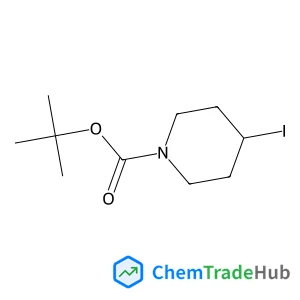
2-Methyl-2-propanyl 4-iodo-1-piperidinecarboxylate
CAS Number:
301673-14-3
Molecular Formula:
C10H18INO2
![(2S)-2-({[(2-Methyl-2-propanyl)oxy]carbonyl}amino)-4-pentynoic acid structure](https://static.chemtradehub.com/structs/630/63039-48-5-b66d.webp "(2S)-2-({[(2-Methyl-2-propanyl)oxy]carbonyl}amino)-4-pentynoic acid structure")
(2S)-2-({[(2-Methyl-2-propanyl)oxy]carbonyl}amino)-4-pentynoic acid
CAS Number:
63039-48-5
Molecular Formula:
C10H15NO4

Recommended Suppliers





Disclaimer
This page provides academic journal information for reference and research purposes only. We are not affiliated with any journal publishers and do not handle publication submissions. For publication-related inquiries, please contact the respective journal publishers directly.
If you notice any inaccuracies in the information displayed, please contact us at support@chemtradehub.com. We will promptly review and address your concerns.