












Two-step mechanism in cationic lipoplex formation as observed by dynamic light scattering, dielectric relaxation and circular dichroism methods
Literature Information
Publication Date
2002-05-13
DOI
10.1039/B110503E
Impact Factor
3.676
Authors
View Original
Abstract
We employed dynamic light scattering, radiowave dielectric spectroscopy and circular dichroism measurements to reveal the structural features of complexes formed in the interaction between DNA and cationic liposomes. Two distinct types of complexes form in these systems, as the charge ratio increases. They are: (i) DNA-coated liposomes, where the DNA binds electrostatically to the outside of the cationic lipid vesicle, (ii) multilamellar complexes followed by rupture and reorganization of the bilayer structure or clusters of DNA-coated vesicles with alternating sheets of DNA and lipid bilayers. The knowledge of the complex morphology occurring in lipid-DNA lipoplex formation could provide insight for the development of efficient artificial delivery systems in genetic engineering and gene therapy.
Related Literature
A unified understanding of magnetorheological elastomers for rapid and extreme stiffness tuning
Ella T. Williams, Nathan Lazarus
2023-10-02
Paper
DOI: 10.1039/D3LP00109A
Chitosan/PVA-supported silver nanoparticles for azo dyes removal: fabrication, characterization, and assessment of antioxidant activity
Ismet Meydan, Aysenur Aygun, Rima Nour Elhouda Tiri, Tugba Gur, Yılmaz Kocak, Hamdullah Seckin, Fatih Sen
2023-11-22
Paper
DOI: 10.1039/D3VA00224A
Unravelling the influence of side-chain symmetry on device performance: insights from isoindigo-based polymers in thin-film transistors
Anita Hu, Audithya Nyayachavadi, Max Weires, Garima Garg, Sihong Wang, Simon Rondeau-Gagné
2023-08-22
Paper
DOI: 10.1039/D3LP00104K
Cyclic ketal bridged bisepoxides: enabling the design of degradable epoxy-amine thermosets for carbon fiber composite applications
Benjamin M. Alameda, Margaret S. Kumler, J. Scott Murphy, Jeffrey S. Aguinaga, Derek L. Patton
2023-08-17
Paper
DOI: 10.1039/D3LP00095H
A review on polyhydroxyalkanoate (PHA) production through the use of lignocellulosic biomass
Deepak Kumar, B. V. Ramarao
2023-09-20
Critical Review
DOI: 10.1039/D3SU00126A
Optimizing the electronic configuration of h-BN for boosting the photocatalytic transformation of acid gases under visible light
Libin Zeng, Jiali Wang, Can Yang
2023-11-14
Paper
DOI: 10.1039/D3VA00239J
Superior single- and multi-component siloxane removal from water using a faulted silica DON zeolite adsorbent
Dariana R. Vega-Santander, Rodinson Arrieta-Pérez, Daniela Rivera-Mirabal, Gabriela Del Valle-Pérez, Miguel Sepúlveda-Pagán, Juan C. Muñoz-Senmache, Yomaira J. Pagán-Torres, Arturo J. Hernández-Maldonado
2023-11-10
Paper
DOI: 10.1039/D3VA00282A
Activating iodine redox by enabling single-atom coordination to dormant nitrogen sites to realize durable zinc–iodine batteries
Jisung Lee, Wooseok Lee, Seungho Back, Seung Yeop Yi, Seongseop Kim, Joonhee Moon, Dong-Yeun Koh, Kyeounghak Kim, Seoin Back, Jinwoo Lee
2023-11-07
Paper
DOI: 10.1039/D3EY00228D
Radical polymers in optoelectronic and spintronic applications
Hyunki Yeo, Suman Debnath, Baiju P. Krishnan
2023-12-20
Perspective
DOI: 10.1039/D3LP00213F
You might also like
Compound Q&A
How should waste containing (6-Bromo-2-naphthyl)oxy](dimethyl)(2-methyl-2-propanyl)silane be handled?
Waste containing (6-Bromo-2-naphthyl)oxy](dimethyl)(2-methyl-2-propanyl)silane (...
100751-65-3[(6-Bromo-2-naphthyl...
Compound Q&A
How is 7-Fluoro-4-isoquinolinecarboxylic acid (CAS: 1841081-40-0) typically synthesized?
7-Fluoro-4-isoquinolinecarboxylic acid can be synthesized via a multi-step proce...
1841081-40-07-Fluoro-4-isoquinol...
Compound Q&A
What are the physical and chemical properties of 2,3,5,6-Tetrabromothieno[3,2-b]thiophene (CAS: 124638-53-5)?
2,3,5,6-Tetrabromothieno[3,2-b]thiophene is a crystalline compound with a high m...
124638-53-52,3,5,6-Tetrabromoth...
Compound Q&A
Is 1-[4-(Benzylamino)-7,8-dihydro-5H-pyrano[4,3-d]pyrimidin-2-yl]-2-methyl-1H-indole-4-carboxamide (CAS: 1542705-92-9) safe?
1-[4-(Benzylamino)-7,8-dihydro-5H-pyrano[4,3-d]pyrimidin-2-yl]-2-methyl-1H-indol...
1542705-92-91-[4-(Benzylamino)-7...
Compound Q&A
What is the market or research trend for imidazo[5,1-d]-1,2,3,5-tetrazine-8-carboxylic acid, 3,4-dihydro-3-methyl-4-oxo- (CAS: 113942-30-6)?
The market for imidazo[5,1-d]-1,2,3,5-tetrazine-8-carboxylic acid, 3,4-dihydro-3...
113942-30-6Imidazo[5,1-d]-1,2,3...
Compound Q&A
What is 3-(Triisopropylsilyl)propiolaldehyde (CAS: 163271-80-5)?
3-(Triisopropylsilyl)propiolaldehyde is a synthetic organic compound with the CA...
163271-80-53-(Triisopropylsilyl...
Compound Q&A
What regulatory guidelines apply to 6-Nitro-2H-1,4-benzoxazin-3(4H)-one (CAS: 81721-87-1)?
6-Nitro-2H-1,4-benzoxazin-3(4H)-one (CAS: 81721-87-1) is subject to various regu...
81721-87-16-Nitro-2H-1,4-benzo...
Compound Q&A
How should waste containing (3-Fluorophenyl)(4-{[(2-methyl-2-propanyl)oxy]carbonyl}-1-piperazinyl)acetic acid (CAS: 885272-91-3) be handled?
Waste containing (3-Fluorophenyl)(4-{[(2-methyl-2-propanyl)oxy]carbonyl}-1-piper...
885272-91-3(3-Fluorophenyl)(4-{...
Compound Q&A
What are the physical and chemical properties of N,N'-4,4'-Biphenyldiyldiisonicotinamide (CAS: 55119-40-9)?
N,N'-4,4'-Biphenyldiyldiisonicotinamide is a white crystalline solid with a mole...
55119-40-9N,N'-4,4'-Biphenyldi...
Compound Q&A
What industries use 6-Bromo-8-fluoro-2-quinazolinol (CAS: 1036756-15-6)?
6-Bromo-8-fluoro-2-quinazolinol is primarily used in the pharmaceutical industry...
1036756-15-66-Bromo-8-fluoro-2-q...
Source Journal
Physical Chemistry Chemical Physics

CiteScore:
5.5
Self-citation Rate:
10.3%
Articles per Year:
3036
Physical Chemistry Chemical Physics (PCCP) is an international journal co-owned by 19 physical chemistry and physics societies from around the world. This journal publishes original, cutting-edge research in physical chemistry, chemical physics and biophysical chemistry. To be suitable for publication in PCCP, articles must include significant innovation and/or insight into physical chemistry; this is the most important criterion that reviewers and Editors will judge against when evaluating submissions. The journal has a broad scope and welcomes contributions spanning experiment, theory, computation and data science. Topical coverage includes spectroscopy, dynamics, kinetics, statistical mechanics, thermodynamics, electrochemistry, catalysis, surface science, quantum mechanics, quantum computing and machine learning. Interdisciplinary research areas such as polymers and soft matter, materials, nanoscience, energy, surfaces/interfaces, and biophysical chemistry are welcomed if they demonstrate significant innovation and/or insight into physical chemistry. Joined experimental/theoretical studies are particularly appreciated when complementary and based on up-to-date approaches.
Recommended Compounds
![2-{[4-(2-Methoxyethyl)phenoxy]methyl}oxirane structure](https://static.chemtradehub.com/structs/567/56718-70-8-f037.webp "2-{[4-(2-Methoxyethyl)phenoxy]methyl}oxirane structure")

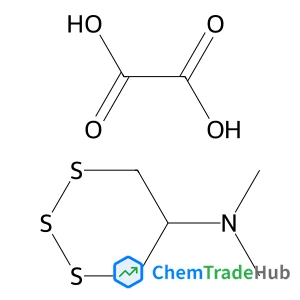
Oxalic acid compound with cyclohexylsulfamothioic O-acid (11)
CAS Number:
31895-22-4
Molecular Formula:
C7H13NO4S3
Recommended Suppliers





Disclaimer
This page provides academic journal information for reference and research purposes only. We are not affiliated with any journal publishers and do not handle publication submissions. For publication-related inquiries, please contact the respective journal publishers directly.
If you notice any inaccuracies in the information displayed, please contact us at support@chemtradehub.com. We will promptly review and address your concerns.