













Micellar aggregation of sulfonate surfactants studied by electron paramagnetic resonance of a cationic nitroxide: an experimental and computational approach
Literature Information
Publication Date
2002-04-25
DOI
10.1039/B106833D
Impact Factor
3.676
Authors
A. M. Tedeschi, G. D'Errico, E. Busi, R. Basosi, V. Barone
View Original
Abstract
The micellization process of three sulfonate surfactants [CH3(CH2)n−1SO3Na (n = 6,8,10), CnSO3Na] has been studied by electron paramagnetic resonance (EPR) spectroscopy by employing TEMPO-choline [4-(N,N-dimethyl-N-(2-hydroxyethyl))ammonium-2,2,6,6-tetramethylpiperidine-1-oxyl chloride, TC) as a spin label. The dependence of both the nitrogen isotropic hyperfine coupling constant (〈AN〉) and the correlation time (τC) of the label on the surfactant molality have been analysed. In order to allow a correct interpretation of the experimental evidence a preliminary study on the factors influencing the EPR spectrum of TC in solution has been performed. EPR spectra of TC in various solvents show that the 〈AN〉 value increases with increasing the solvent polarity and, especially, H-bonding ability. The experimental values have been compared with those obtained by a composite ab initio computational approach, in which 〈AN〉 is determined by a suitable combination of post-Hartree–Fock and density functional calculations. Solvent effects are modelled by using the polarizable continuum model (PCM) and, for solvents with H-bonding ability, by including a few explicit solvent molecules. The experimental and computed values are in good agreement, confirming the reliability of the adopted computational strategy. The effect of the ionic strength on the EPR spectrum of TC in NaCl and Na2SO4 aqueous solution has been also investigated, finding that the 〈AN〉 value is almost constant, whereas τC increases with the electrolyte molality. In surfactants' aqueous solution, both 〈AN〉 and τC of TC, plotted as a function of the surfactant molality, show a slope change, corresponding to the critical micellar composition (c.m.c.). The τC increase can be interpreted in terms of a reduction of the label mobility determined by the strong electrostatic interaction between the TC positive charge and the anionic micelles' surface. The 〈AN〉 decrease can be ascribed to the embedding of the NO moiety of TC in the outer part of the micellar hydrophobic core. By comparing the data collected for the different surfactants, it can be seen that the variation of both τC and 〈AN〉 upon micellization increases with the surfactant chain length. This evidence can be interpreted in terms of an increasing strength of the TC-micelle surface interaction, and of an increasing hydrophobic behaviour of the outer part of the micellar core in which the NO moiety of TC is solubilized. The TC affinity for the micellar pseudo-phase has been estimated by evaluating the distribution coefficient, Kd, of the spin label between the micelles and the aqueous medium. The Kd value increases with the length of the surfactant hydrophobic chain.
Related Literature
Selective decomposition of nucleic acids by laser irradiation on probe-tethered gold nanoparticles in solution
Yoshihiro Takeda, Tamotsu Kondow, Fumitaka Mafuné
2010-11-01
Paper
DOI: 10.1039/C0CP00770F
Extra-framework aluminium species in hydrated faujasitezeolite as investigated by two-dimensional solid-state NMR spectroscopy and theoretical calculations
Shenhui Li, Anmin Zheng, Yongchao Su, Hanjun Fang, Wanling Shen, Zhiwu Yu, Lei Chen, Feng Deng
2010-02-24
Paper
DOI: 10.1039/B915401A
Thermal hysteresis of Morin transition in hematite particles
L. Suber, P. Imperatori, A. Mari, G. Marchegiani, M. Vasquez Mansilla, D. Fiorani, W. R. Plunkett, D. Rinaldi, C. Cannas, G. Ennas
2010-05-18
Paper
DOI: 10.1039/B925371H
2D IRphoton echo of azido-probes for biomolecular dynamics
Matthew J. Tucker, Xin Sonia Gai, Edward E. Fenlon, Scott H. Brewer, Robin M. Hochstrasser
2010-12-02
Paper
DOI: 10.1039/C0CP01625J
Monodisperse Pt3Conanoparticles as electrocatalyst: the effects of particle size and pretreatment on electrocatalytic reduction of oxygen
Chao Wang, Guofeng Wang, Dennis van der Vliet, Kee-Chul Chang, Nenad M. Markovic, Vojislav R. Stamenkovic
2010-06-04
Paper
DOI: 10.1039/C000822B
Photoelectron spectroscopy of homogeneous nucleic acid base dimer anions
Yeon Jae Ko, Haopeng Wang, Rui Cao, Dunja Radisic, Soren N. Eustis, Sarah T. Stokes, Svetlana Lyapustina, Shan Xi Tian, Kit H. Bowen
2010-02-11
Paper
DOI: 10.1039/B924950H
On the different roles of anions and cations in the solvation of enzymes in ionic liquids
Marco Klähn, Geraldine S. Lim, Abirami Seduraman, Ping Wu
2010-12-06
Paper
DOI: 10.1039/C0CP01509A
Characterization and mechanism study of micrometer-sized secondary assembly of β-cyclodextrin
Yifeng He, Xinghai Shen, Qingde Chen, Hongcheng Gao
2010-10-29
Paper
DOI: 10.1039/C0CP00899K
You might also like
Compound Q&A
How should waste containing (6-Bromo-2-naphthyl)oxy](dimethyl)(2-methyl-2-propanyl)silane be handled?
Waste containing (6-Bromo-2-naphthyl)oxy](dimethyl)(2-methyl-2-propanyl)silane (...
100751-65-3[(6-Bromo-2-naphthyl...
Compound Q&A
How is 7-Fluoro-4-isoquinolinecarboxylic acid (CAS: 1841081-40-0) typically synthesized?
7-Fluoro-4-isoquinolinecarboxylic acid can be synthesized via a multi-step proce...
1841081-40-07-Fluoro-4-isoquinol...
Compound Q&A
What are the physical and chemical properties of 2,3,5,6-Tetrabromothieno[3,2-b]thiophene (CAS: 124638-53-5)?
2,3,5,6-Tetrabromothieno[3,2-b]thiophene is a crystalline compound with a high m...
124638-53-52,3,5,6-Tetrabromoth...
Compound Q&A
Is 1-[4-(Benzylamino)-7,8-dihydro-5H-pyrano[4,3-d]pyrimidin-2-yl]-2-methyl-1H-indole-4-carboxamide (CAS: 1542705-92-9) safe?
1-[4-(Benzylamino)-7,8-dihydro-5H-pyrano[4,3-d]pyrimidin-2-yl]-2-methyl-1H-indol...
1542705-92-91-[4-(Benzylamino)-7...
Compound Q&A
What is the market or research trend for imidazo[5,1-d]-1,2,3,5-tetrazine-8-carboxylic acid, 3,4-dihydro-3-methyl-4-oxo- (CAS: 113942-30-6)?
The market for imidazo[5,1-d]-1,2,3,5-tetrazine-8-carboxylic acid, 3,4-dihydro-3...
113942-30-6Imidazo[5,1-d]-1,2,3...
Compound Q&A
What is 3-(Triisopropylsilyl)propiolaldehyde (CAS: 163271-80-5)?
3-(Triisopropylsilyl)propiolaldehyde is a synthetic organic compound with the CA...
163271-80-53-(Triisopropylsilyl...
Compound Q&A
What regulatory guidelines apply to 6-Nitro-2H-1,4-benzoxazin-3(4H)-one (CAS: 81721-87-1)?
6-Nitro-2H-1,4-benzoxazin-3(4H)-one (CAS: 81721-87-1) is subject to various regu...
81721-87-16-Nitro-2H-1,4-benzo...
Compound Q&A
How should waste containing (3-Fluorophenyl)(4-{[(2-methyl-2-propanyl)oxy]carbonyl}-1-piperazinyl)acetic acid (CAS: 885272-91-3) be handled?
Waste containing (3-Fluorophenyl)(4-{[(2-methyl-2-propanyl)oxy]carbonyl}-1-piper...
885272-91-3(3-Fluorophenyl)(4-{...
Compound Q&A
What are the physical and chemical properties of N,N'-4,4'-Biphenyldiyldiisonicotinamide (CAS: 55119-40-9)?
N,N'-4,4'-Biphenyldiyldiisonicotinamide is a white crystalline solid with a mole...
55119-40-9N,N'-4,4'-Biphenyldi...
Compound Q&A
What industries use 6-Bromo-8-fluoro-2-quinazolinol (CAS: 1036756-15-6)?
6-Bromo-8-fluoro-2-quinazolinol is primarily used in the pharmaceutical industry...
1036756-15-66-Bromo-8-fluoro-2-q...
Source Journal
Physical Chemistry Chemical Physics

CiteScore:
5.5
Self-citation Rate:
10.3%
Articles per Year:
3036
Physical Chemistry Chemical Physics (PCCP) is an international journal co-owned by 19 physical chemistry and physics societies from around the world. This journal publishes original, cutting-edge research in physical chemistry, chemical physics and biophysical chemistry. To be suitable for publication in PCCP, articles must include significant innovation and/or insight into physical chemistry; this is the most important criterion that reviewers and Editors will judge against when evaluating submissions. The journal has a broad scope and welcomes contributions spanning experiment, theory, computation and data science. Topical coverage includes spectroscopy, dynamics, kinetics, statistical mechanics, thermodynamics, electrochemistry, catalysis, surface science, quantum mechanics, quantum computing and machine learning. Interdisciplinary research areas such as polymers and soft matter, materials, nanoscience, energy, surfaces/interfaces, and biophysical chemistry are welcomed if they demonstrate significant innovation and/or insight into physical chemistry. Joined experimental/theoretical studies are particularly appreciated when complementary and based on up-to-date approaches.
Recommended Compounds


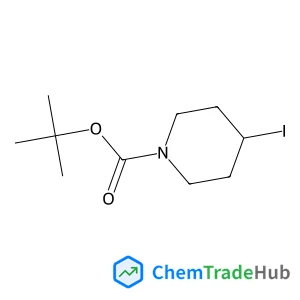
2-Methyl-2-propanyl 4-iodo-1-piperidinecarboxylate
CAS Number:
301673-14-3
Molecular Formula:
C10H18INO2
Recommended Suppliers



Disclaimer
This page provides academic journal information for reference and research purposes only. We are not affiliated with any journal publishers and do not handle publication submissions. For publication-related inquiries, please contact the respective journal publishers directly.
If you notice any inaccuracies in the information displayed, please contact us at support@chemtradehub.com. We will promptly review and address your concerns.