













Space-resolved fluorescence properties of phenolphthalein-hydrotalcite nanocomposites
Literature Information
Publication Date
2002-05-07
DOI
10.1039/B201167K
Impact Factor
3.676
Authors
L. Latterini, F. Elisei, G. G. Aloisi, U. Costantino, M. Nocchetti
View Original
Abstract
Phenolphthalein has been included into Zn–Al hydrotalcite-like compounds by taking advantage of the “memory effect” of hydrotalcites. In particular [Zn0.65Al0.35(OH)2] (CO3)0.1750.5H2O was calcined at 500 °C and the obtained mixture of Zn and Al oxides was dispersed in an aqueous alcohol solution containing 7 × 10⁻² mol dm−3 phenolphthalein. The reconstruction of the layered hydrotalcite structure in the presence of the dye yielded formation of the composites in which phenolphthalein is intercalated in the interlayer region and/or adsorbed on the layer surface. Two samples were studied, the first, obtained at 25 °C, contained 0.17 mmol g−1 of phenolphthalein, mainly adsorbed on the surface, the second, obtained at 60 °C, contained 0.3 mmol g−1, in part intercalated. The samples were characterized by their X-ray diffraction patterns, specific surface areas and scanning electron micrographs. The photophysical characterisation of the bulk samples was based on the determination of their reflectance absorption and fluorescence spectra, the fluorescence lifetimes and fluorescence anisotropy. The results indicated different properties of the lowest singlet excited state of the adsorbed and intercalated dye. The space-resolved fluorescence images and fluorescence spectra obtained by confocal fluorescence spectroscopy of the two samples gave valuable information on the dye distribution and on the nature of the interactions between the dye and the inorganic matrix.
Recommended Journals
Related Literature
Removal of estrogens from aqueous solutions using 3D-printed polymers
Janne Frimodig, Matti Haukka
2023-11-03
Paper
DOI: 10.1039/D3VA00159H
Enhanced H2 production at the atomic Ni–Ce interface following methanol steam reforming
Yaqi Hu, Zhong Liang, Yabin Zhang
2023-11-10
Paper
DOI: 10.1039/D3EY00225J
A comprehensive review on removal of environmental pollutants using a surfactant based remediation process
Neha Saxena, Md Merajul Islam, Sainu Baliyan, Deepa Sharma
2023-07-10
Tutorial Review
DOI: 10.1039/D2SU00069E
Chitosan/PVA-supported silver nanoparticles for azo dyes removal: fabrication, characterization, and assessment of antioxidant activity
Ismet Meydan, Aysenur Aygun, Rima Nour Elhouda Tiri, Tugba Gur, Yılmaz Kocak, Hamdullah Seckin, Fatih Sen
2023-11-22
Paper
DOI: 10.1039/D3VA00224A
Selective catalytic reduction of NOx with NH3 over copper-based catalysts: recent advances and future prospects
Guoquan Liu, He Zhang, Yi Li, Pengfei Wang, Sihui Zhan
2023-11-07
Minireview
DOI: 10.1039/D3EY00210A
Polyamidoxime (PAO) granules for solar-enhanced uranium extraction from seawater
Xue Zhang, Qianhong Gao, Dadong Shao
2023-11-24
Paper
DOI: 10.1039/D3VA00179B
Porous bioelectronic substrates for simple electrochemical conjugation and subsequent, controlled electrochemical release of antisense oligonucleotide drug
Devon T. Bryant, Alireza Akbarinejad, Lisa I. Pilkington, Anthony R. J. Phillips
2023-08-28
Paper
DOI: 10.1039/D3LP00047H
Assessing sources and fractions of metals associated with environmental plastics: a case study in Lake Como (Italy)
Stefano Carnati, Andrea Pozzi, Davide Spanu, Damiano Monticelli, Roberta Bettinetti, Ginevra Boldrocchi
2023-11-06
Paper
DOI: 10.1039/D3VA00254C
You might also like
Compound Q&A
How should waste containing (6-Bromo-2-naphthyl)oxy](dimethyl)(2-methyl-2-propanyl)silane be handled?
Waste containing (6-Bromo-2-naphthyl)oxy](dimethyl)(2-methyl-2-propanyl)silane (...
100751-65-3[(6-Bromo-2-naphthyl...
Compound Q&A
How is 7-Fluoro-4-isoquinolinecarboxylic acid (CAS: 1841081-40-0) typically synthesized?
7-Fluoro-4-isoquinolinecarboxylic acid can be synthesized via a multi-step proce...
1841081-40-07-Fluoro-4-isoquinol...
Compound Q&A
What are the physical and chemical properties of 2,3,5,6-Tetrabromothieno[3,2-b]thiophene (CAS: 124638-53-5)?
2,3,5,6-Tetrabromothieno[3,2-b]thiophene is a crystalline compound with a high m...
124638-53-52,3,5,6-Tetrabromoth...
Compound Q&A
Is 1-[4-(Benzylamino)-7,8-dihydro-5H-pyrano[4,3-d]pyrimidin-2-yl]-2-methyl-1H-indole-4-carboxamide (CAS: 1542705-92-9) safe?
1-[4-(Benzylamino)-7,8-dihydro-5H-pyrano[4,3-d]pyrimidin-2-yl]-2-methyl-1H-indol...
1542705-92-91-[4-(Benzylamino)-7...
Compound Q&A
What is the market or research trend for imidazo[5,1-d]-1,2,3,5-tetrazine-8-carboxylic acid, 3,4-dihydro-3-methyl-4-oxo- (CAS: 113942-30-6)?
The market for imidazo[5,1-d]-1,2,3,5-tetrazine-8-carboxylic acid, 3,4-dihydro-3...
113942-30-6Imidazo[5,1-d]-1,2,3...
Compound Q&A
What is 3-(Triisopropylsilyl)propiolaldehyde (CAS: 163271-80-5)?
3-(Triisopropylsilyl)propiolaldehyde is a synthetic organic compound with the CA...
163271-80-53-(Triisopropylsilyl...
Compound Q&A
What regulatory guidelines apply to 6-Nitro-2H-1,4-benzoxazin-3(4H)-one (CAS: 81721-87-1)?
6-Nitro-2H-1,4-benzoxazin-3(4H)-one (CAS: 81721-87-1) is subject to various regu...
81721-87-16-Nitro-2H-1,4-benzo...
Compound Q&A
How should waste containing (3-Fluorophenyl)(4-{[(2-methyl-2-propanyl)oxy]carbonyl}-1-piperazinyl)acetic acid (CAS: 885272-91-3) be handled?
Waste containing (3-Fluorophenyl)(4-{[(2-methyl-2-propanyl)oxy]carbonyl}-1-piper...
885272-91-3(3-Fluorophenyl)(4-{...
Compound Q&A
What are the physical and chemical properties of N,N'-4,4'-Biphenyldiyldiisonicotinamide (CAS: 55119-40-9)?
N,N'-4,4'-Biphenyldiyldiisonicotinamide is a white crystalline solid with a mole...
55119-40-9N,N'-4,4'-Biphenyldi...
Compound Q&A
What industries use 6-Bromo-8-fluoro-2-quinazolinol (CAS: 1036756-15-6)?
6-Bromo-8-fluoro-2-quinazolinol is primarily used in the pharmaceutical industry...
1036756-15-66-Bromo-8-fluoro-2-q...
Source Journal
Physical Chemistry Chemical Physics

CiteScore:
5.5
Self-citation Rate:
10.3%
Articles per Year:
3036
Physical Chemistry Chemical Physics (PCCP) is an international journal co-owned by 19 physical chemistry and physics societies from around the world. This journal publishes original, cutting-edge research in physical chemistry, chemical physics and biophysical chemistry. To be suitable for publication in PCCP, articles must include significant innovation and/or insight into physical chemistry; this is the most important criterion that reviewers and Editors will judge against when evaluating submissions. The journal has a broad scope and welcomes contributions spanning experiment, theory, computation and data science. Topical coverage includes spectroscopy, dynamics, kinetics, statistical mechanics, thermodynamics, electrochemistry, catalysis, surface science, quantum mechanics, quantum computing and machine learning. Interdisciplinary research areas such as polymers and soft matter, materials, nanoscience, energy, surfaces/interfaces, and biophysical chemistry are welcomed if they demonstrate significant innovation and/or insight into physical chemistry. Joined experimental/theoretical studies are particularly appreciated when complementary and based on up-to-date approaches.
Recommended Compounds


![2-{[4-(2-Methoxyethyl)phenoxy]methyl}oxirane structure](https://static.chemtradehub.com/structs/567/56718-70-8-f037.webp "2-{[4-(2-Methoxyethyl)phenoxy]methyl}oxirane structure")
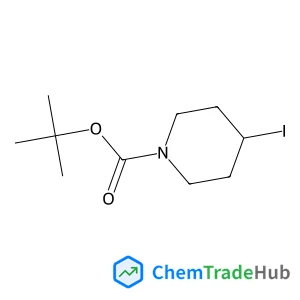
2-Methyl-2-propanyl 4-iodo-1-piperidinecarboxylate
CAS Number:
301673-14-3
Molecular Formula:
C10H18INO2
Recommended Suppliers






Disclaimer
This page provides academic journal information for reference and research purposes only. We are not affiliated with any journal publishers and do not handle publication submissions. For publication-related inquiries, please contact the respective journal publishers directly.
If you notice any inaccuracies in the information displayed, please contact us at support@chemtradehub.com. We will promptly review and address your concerns.