












Hydride-exchange reactions between NADH and NAD+ model compounds under non-steady-state conditions. Apparent and real kinetic isotope effects
Literature Information
Publication Date
2002-11-22
DOI
10.1039/B208186E
Impact Factor
3.876
Authors
Yun Lu, Yixing Zhao, Kishan L. Handoo, Vernon D. Parker
View Original
Abstract
The kinetics of the hydride exchange reaction between NADH model compound 10-methyl-9,10-dihydroacridine (MAH) and 1-benzyl-3-cyanoquinolinium (BQCN+) ion in acetonitrile were studied at temperatures ranging from 291 to 325 K. The extent of reaction–time profiles during the first half-lives are compared with theoretical data for the simple single-step mechanism and a 2-step mechanism involving initial donor/acceptor complex formation followed by unimolecular hydride transfer. The profiles for the reactions of MAH deviate significantly from those expected for the simple single-step mechanism with the deviation increasing with increasing temperature. The deviation from simple mechanism behavior is much less pronounced for the reactions of 10-methyl-9,10-dihydroacridine-10,10-d2 (MAD) which gives rise to extent of reaction dependent apparent kinetic isotope effects (KIEapp). Excellent fits of the experimental extent of reaction–time profiles with theoretical data for the 2-step mechanism, in the pre-steady-state time period, were observed in all cases. Resolution of the kinetics of the hydride exchange reaction into the microscopic rate constants over the entire temperature range resulted in real kinetic isotope effects for the hydride transfer step ranging from 40 (291 K) to 8.2 (325 K). That the reaction involves significant hydride tunnelling was verified by the magnitudes of the Arrhenius parameters; EaD − EaH = 8.7 kcal mol−1 and AD/AH = 8 × 10⁴. An electron donor acceptor complex (λmax = 526 nm) was observed to be a reaction intermediate. Theoretical extent of reaction–time profile data are discussed for the case where a reaction intermediate is formed in a non-productive side equilibrium as compared to the case where it is a real intermediate on the reaction coordinate between reactants and products. The common assumption that the two cases are kinetically indistinguishable is shown to be incorrect.
Related Literature
Site-specific characterization and quantitation of N-glycopeptides in PKM2 knockout breast cancer cells using DiLeu isobaric tags enabled by electron-transfer/higher-energy collision dissociation (EThcD)
Zhengwei Chen, Qing Yu, Ling Hao, Fabao Liu, Jillian Johnson, Zichuan Tian, W. John Kao, Wei Xu
2018-03-23
Paper
DOI: 10.1039/C8AN00216A
Multimodal imaging of undecalcified tissue sections by MALDI MS and μXRF
Anastasiya Svirkova, Anna Turyanskaya, Lukas Perneczky, Christina Streli, Martina Marchetti-Deschmann
2018-04-16
Paper
DOI: 10.1039/C8AN00313K
Raman imaging of heme metabolism in situ in macrophages and Kupffer cells
2018-06-05
Paper
DOI: 10.1039/C8AN00282G
Ratiometric fluorescence detection of trace water in organic solvents based on aggregation-induced emission enhanced Cu nanoclusters
Shanliang Song, Yuping Zhang, Yizhou Yang, Chuanxi Wang, Ying Zhou, Chuan Zhang, Yueqi Zhao, Minghui Yang, Quan Lin
2018-05-22
Paper
DOI: 10.1039/C8AN00450A
Recent advances in ambient mass spectrometry of trace explosives
Thomas P. Forbes, Edward Sisco
2018-04-06
Critical Review
DOI: 10.1039/C7AN02066J
Reconstituting donor T cells increase their biomass following hematopoietic stem cell transplantation
Roy T. Sabo
2018-03-23
Communication
DOI: 10.1039/C8AN00148K
An asymmetric fitting function for condensed-phase Raman spectroscopy
Vitaly I. Korepanov, Daria M. Sedlovets
2018-05-09
Paper
DOI: 10.1039/C8AN00710A
You might also like
Compound Q&A
What is the market or research trend for N-(4-Methoxybenzyl)-2-pyridinamine (CAS: 52818-63-0)?
N-(4-Methoxybenzyl)-2-pyridinamine (CAS: 52818-63-0) is increasingly being used ...
52818-63-0N-(4-Methoxybenzyl)-...
Compound Q&A
What precautions should be taken when handling Ethyl 4-(2-chlorophenyl)-1,3-thiazole-2-carboxylate (CAS: 1050507-06-6)?
When handling Ethyl 4-(2-chlorophenyl)-1,3-thiazole-2-carboxylate, appropriate p...
1050507-06-6Ethyl 4-(2-chlorophe...
Compound Q&A
What regulatory guidelines apply to diethyldiselane (CAS: 628-39-7)?
Diethyldiselane (CAS: 628-39-7) is classified under the Globally Harmonized Syst...
628-39-7Diethyldiselane
Compound Q&A
What is the market or research trend for oxocopper (CAS: 12053-18-8)?
The market for oxocopper (CAS: 12053-18-8) is primarily driven by its use in cat...
12053-18-8oxocopper; oxo-(oxoc...
Compound Q&A
What is the market or research trend for 5-{[(2-Methyl-2-propanyl)oxy]carbonyl}-5-azaspiro[2.4]heptane-7-carboxylic acid?
The market for 5-{[(2-Methyl-2-propanyl)oxy]carbonyl}-5-azaspiro[2.4]heptane-7-c...
1268519-54-55-{[(2-Methyl-2-prop...
Compound Q&A
What is 2-(1-Pyrrolidinyl)-4-pyridinamine (CAS: 35981-63-6)?
2-(1-Pyrrolidinyl)-4-pyridinamine is a chemical compound with the CAS number 359...
35981-63-62-(1-Pyrrolidinyl)-4...
Compound Q&A
What are the physical and chemical properties of 2-(3-Pyridinyl)-1-azabicyclo[2.2.2]octane (CAS: 91556-75-1)?
2-(3-Pyridinyl)-1-azabicyclo[2.2.2]octane (CAS: 91556-75-1) is a crystalline sol...
91556-75-12-(3-Pyridinyl)-1-az...
Compound Q&A
How is (S)-Alpha-allyl-proline hydrochloride (CAS: 129704-91-2) typically synthesized?
(S)-Alpha-allyl-proline hydrochloride is usually synthesized via a Wittig reacti...
129704-91-2(S)-Alpha-allyl-prol...
Compound Q&A
What is 3-Methyl-1,2-oxazole-5-carboxylic acid (CAS: 4857-42-5)?
3-Methyl-1,2-oxazole-5-carboxylic acid (CAS: 4857-42-5) is an organic compound w...
4857-42-53-Methyl-1,2-oxazole...
Compound Q&A
How is Lys-SMCC-DM1 (CAS: 1281816-04-3) typically synthesized?
Lys-SMCC-DM1 is synthesized via a multi-step process involving the coupling of S...
1281816-04-3Lys-SMCC-DM1
Source Journal
Organic & Biomolecular Chemistry

CiteScore:
3.4
Self-citation Rate:
10.3%
Articles per Year:
1041
Organic & Biomolecular Chemistry (OBC) publishes original and high impact research and reviews in organic chemistry. We welcome research that shows new or significantly improved protocols or methodologies in total synthesis, synthetic methodology or physical and theoretical organic chemistry as well as research that shows a significant advance in the organic chemistry or molecular design aspects of chemical biology, catalysis, supramolecular and macromolecular chemistry, theoretical chemistry, mechanism-oriented physical organic chemistry, medicinal chemistry or natural products. Articles published in the journal should report new work which makes a highly-significant impact in the field. Routine and incremental work is generally not suitable for publication in the journal. More details about key areas of our scope are below. In all cases authors should include in their article clear rationale for why their research has been carried out.
Recommended Compounds
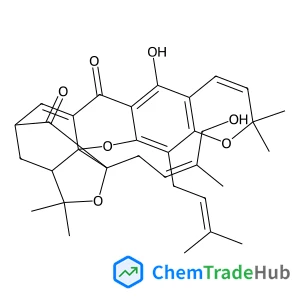

(3alpha,5beta,6alpha,7alpha)-6-Ethylcholane-3,7,24-triol
CAS Number:
1537866-49-1
Molecular Formula:
C26H46O3

Recommended Suppliers




Disclaimer
This page provides academic journal information for reference and research purposes only. We are not affiliated with any journal publishers and do not handle publication submissions. For publication-related inquiries, please contact the respective journal publishers directly.
If you notice any inaccuracies in the information displayed, please contact us at support@chemtradehub.com. We will promptly review and address your concerns.