


The making of ring currents
Literature Information
Publication Date
2016-01-11
DOI
10.1039/C5CP07250F
Impact Factor
3.676
Authors
Guglielmo Monaco, Riccardo Zanasi
View Original
Abstract
Benzene, planar cyclooctatetraene, and borazine have been taken into account as archetypal aromatic, anti-aromatic, and non-aromatic systems. Then, the making of the π-electron diatropic ring current of benzene, huge paratropic ring current of planar cyclooctatetraene, and weak diatropic ring current of borazine, has been monitored by means of DFT calculations of current density maps and bond current strengths along a concerted, highly symmetric reaction pathway for the trimerization and tetramerization of acetylene to benzene and planar cyclooctatetraene and the trimerization of the simplest iminoborane (BH2N) to borazine. Besides, a simple model is presented that permits to infer the presence of a ring current only on account of the sum of homotropic local vortices. The model works satisfactorily for borazine and surely as well for benzene with a substantial difference. On the one hand, for borazine, the evolution of the current density along the formation reaction can be recast summing three virtually unchanged diatropic current loops with respect to parent iminoborane molecules. On the other hand, the benzene ring current is an emerging property that can be re-elaborated as the sum of three diatropic current loops of increased diatropicity with respect to parent acetylene molecules, i.e., the radius of the maximum current increases form 0.76 to 0.97 Å and the current strength increases from 3.6 to 6.7 nA T−1. In these terms, the difference between the aromatic benzene and non-aromatic borazine can be understood as the attitude of the acetylene molecules to form always wider and stronger current loops as they get closer, a behavior not shared by the iminoborane molecules. For planar cyclooctatetraene, the paratropic circulation arising from the HOMO–LUMO transition makes the model inapplicable, since the initial hypothesis of homotropic circulations over the reaction coordinate is violated. In a sense, the fact that the model works only for a bit of the planar cyclooctatetraene formation reaction is itself distinctive of the anti-aromatic magnetic response.
Recommended Journals

Russian Journal of Applied Chemistry

Russian Chemical Bulletin

Chemical Communications

Current Opinion in Solid State & Materials Science

Russian Journal of General Chemistry

New Journal of Chemistry

Current Opinion in Colloid & Interface Science

Chemistry Education Research and Practice

Nature Medicine

Acta Materialia
Related Literature
One-pot synthesis of amphiphilic multiblock poly(2-oxazoline)s via para-fluoro-thiol click reactions
Tieshuai Zhao, Ben Drain, Gokhan Yilmaz, C. Remzi Becer
2021-09-20
Paper
DOI: 10.1039/D1PY00944C
Screening RAFT agents and photocatalysts to mediate PET-RAFT polymerization using a high throughput approach
Gervase Ng, Kenward Jung, Jun Li, Chenyu Wu, Liwen Zhang, Cyrille Boyer
2021-10-27
Paper
DOI: 10.1039/D1PY01258D
Tellurophene-containing π-conjugated polymers with unique heteroatom–heteroatom interactions by post-element-transformation of an organotitanium polymer
Hiroki Nishiyama, Feng Zheng, Shinsuke Inagi, Hiroyuki Fueno, Ikuyoshi Tomita
2020-07-07
Communication
DOI: 10.1039/D0PY00724B
On the limitations of cationic polymerization of vinyl monomers in aqueous dispersed media
Aurélie Destephen
2021-11-01
Paper
DOI: 10.1039/D1PY01046H
Chiral amines as initiators for ROP and their chiral induction on poly(2-aminoisobutyric acid) chains
Matthias Rohmer, Özgün Ucak, Rahul Fredrick, Wolfgang H. Binder
2021-09-29
Paper
DOI: 10.1039/D1PY01021B
Recent developments in stimuli-responsive luminescent polymers composed of boron compounds
Shunichiro Ito, Masayuki Gon, Kazuo Tanaka, Yoshiki Chujo
2021-10-01
Review Article
DOI: 10.1039/D1PY01170G
Facile preparation of polycarbonates from bio-based eugenol and 2-methoxy-4-vinylphenol
Mengqian Huang, De Bai, Qin Chen, Changbo Zhao, Tianhua Ren, Caijuan Huang, Michael North, Haibo Xie
2020-06-30
Communication
DOI: 10.1039/D0PY00291G
Facile synthesis of well-controlled poly(1-vinyl imidazole) by the RAFT process
Bo Fan, Jing Wan, Alasdair McKay, Zhenyuan Qu, San H. Thang
2020-07-28
Paper
DOI: 10.1039/D0PY00985G
High chemical recyclability of vinyl lactone acrylic bioplastics
Reid A. Gilsdorf, Matthew A. Nicki, Eugene Y.-X. Chen
2020-07-01
Paper
DOI: 10.1039/D0PY00786B
You might also like
Compound Q&A
What is the market or research trend for N-(4-Methoxybenzyl)-2-pyridinamine (CAS: 52818-63-0)?
N-(4-Methoxybenzyl)-2-pyridinamine (CAS: 52818-63-0) is increasingly being used ...
52818-63-0N-(4-Methoxybenzyl)-...
Compound Q&A
What precautions should be taken when handling Ethyl 4-(2-chlorophenyl)-1,3-thiazole-2-carboxylate (CAS: 1050507-06-6)?
When handling Ethyl 4-(2-chlorophenyl)-1,3-thiazole-2-carboxylate, appropriate p...
1050507-06-6Ethyl 4-(2-chlorophe...
Compound Q&A
What regulatory guidelines apply to diethyldiselane (CAS: 628-39-7)?
Diethyldiselane (CAS: 628-39-7) is classified under the Globally Harmonized Syst...
628-39-7Diethyldiselane
Compound Q&A
What is the market or research trend for oxocopper (CAS: 12053-18-8)?
The market for oxocopper (CAS: 12053-18-8) is primarily driven by its use in cat...
12053-18-8oxocopper; oxo-(oxoc...
Compound Q&A
What is the market or research trend for 5-{[(2-Methyl-2-propanyl)oxy]carbonyl}-5-azaspiro[2.4]heptane-7-carboxylic acid?
The market for 5-{[(2-Methyl-2-propanyl)oxy]carbonyl}-5-azaspiro[2.4]heptane-7-c...
1268519-54-55-{[(2-Methyl-2-prop...
Compound Q&A
What is 2-(1-Pyrrolidinyl)-4-pyridinamine (CAS: 35981-63-6)?
2-(1-Pyrrolidinyl)-4-pyridinamine is a chemical compound with the CAS number 359...
35981-63-62-(1-Pyrrolidinyl)-4...
Compound Q&A
What are the physical and chemical properties of 2-(3-Pyridinyl)-1-azabicyclo[2.2.2]octane (CAS: 91556-75-1)?
2-(3-Pyridinyl)-1-azabicyclo[2.2.2]octane (CAS: 91556-75-1) is a crystalline sol...
91556-75-12-(3-Pyridinyl)-1-az...
Compound Q&A
How is (S)-Alpha-allyl-proline hydrochloride (CAS: 129704-91-2) typically synthesized?
(S)-Alpha-allyl-proline hydrochloride is usually synthesized via a Wittig reacti...
129704-91-2(S)-Alpha-allyl-prol...
Compound Q&A
What is 3-Methyl-1,2-oxazole-5-carboxylic acid (CAS: 4857-42-5)?
3-Methyl-1,2-oxazole-5-carboxylic acid (CAS: 4857-42-5) is an organic compound w...
4857-42-53-Methyl-1,2-oxazole...
Compound Q&A
How is Lys-SMCC-DM1 (CAS: 1281816-04-3) typically synthesized?
Lys-SMCC-DM1 is synthesized via a multi-step process involving the coupling of S...
1281816-04-3Lys-SMCC-DM1
Source Journal
Physical Chemistry Chemical Physics

CiteScore:
5.5
Self-citation Rate:
10.3%
Articles per Year:
3036
Physical Chemistry Chemical Physics (PCCP) is an international journal co-owned by 19 physical chemistry and physics societies from around the world. This journal publishes original, cutting-edge research in physical chemistry, chemical physics and biophysical chemistry. To be suitable for publication in PCCP, articles must include significant innovation and/or insight into physical chemistry; this is the most important criterion that reviewers and Editors will judge against when evaluating submissions. The journal has a broad scope and welcomes contributions spanning experiment, theory, computation and data science. Topical coverage includes spectroscopy, dynamics, kinetics, statistical mechanics, thermodynamics, electrochemistry, catalysis, surface science, quantum mechanics, quantum computing and machine learning. Interdisciplinary research areas such as polymers and soft matter, materials, nanoscience, energy, surfaces/interfaces, and biophysical chemistry are welcomed if they demonstrate significant innovation and/or insight into physical chemistry. Joined experimental/theoretical studies are particularly appreciated when complementary and based on up-to-date approaches.
Recommended Compounds
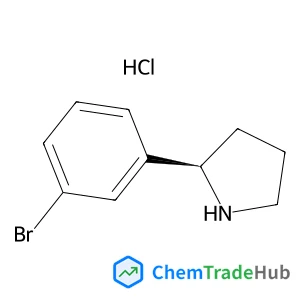
(2R)-2-(3-Bromophenyl)pyrrolidine hydrochloride (1:1)
CAS Number:
1391550-13-2
Molecular Formula:
C10H13BrClN
![N-{15-[(2,5-Dioxo-1-pyrrolidinyl)oxy]-15-oxo-3,6,9,12-tetraoxapentadec-1-yl}-2-(2-propyn-1-yloxy)acetamide structure](https://static.chemtradehub.com/structs/210/2101206-92-0-2eb5.webp "N-{15-[(2,5-Dioxo-1-pyrrolidinyl)oxy]-15-oxo-3,6,9,12-tetraoxapentadec-1-yl}-2-(2-propyn-1-yloxy)acetamide structure")
N-{15-[(2,5-Dioxo-1-pyrrolidinyl)oxy]-15-oxo-3,6,9,12-tetraoxapentadec-1-yl}-2-(2-propyn-1-yloxy)acetamide
CAS Number:
2101206-92-0
Molecular Formula:
C20H30N2O10
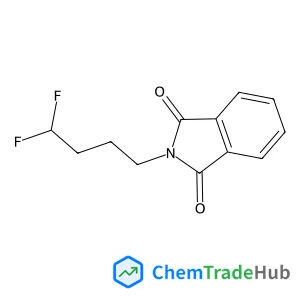
2-(4,4-Difluorobutyl)-1H-isoindole-1,3(2H)-dione
CAS Number:
1265341-14-7
Molecular Formula:
C12H11F2NO2
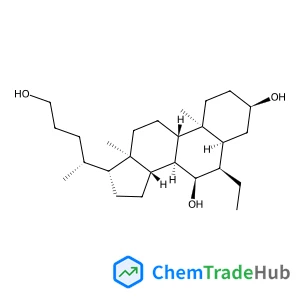
(3alpha,5beta,6alpha,7alpha)-6-Ethylcholane-3,7,24-triol
CAS Number:
1537866-49-1
Molecular Formula:
C26H46O3
Recommended Suppliers




Disclaimer
This page provides academic journal information for reference and research purposes only. We are not affiliated with any journal publishers and do not handle publication submissions. For publication-related inquiries, please contact the respective journal publishers directly.
If you notice any inaccuracies in the information displayed, please contact us at support@chemtradehub.com. We will promptly review and address your concerns.