












Facile synthesis of well-controlled poly(1-vinyl imidazole) by the RAFT process
Literature Information
Publication Date
2020-07-28
DOI
10.1039/D0PY00985G
Impact Factor
5.582
Authors
Bo Fan, Jing Wan, Alasdair McKay, Zhenyuan Qu, San H. Thang
View Original
Abstract
Poly(vinyl imidazole)s, which contain heterocyclic aromatic rings on the polymer side chains, are of increasing interest for a wide variety of applications ranging from catalysis, polymeric ionic liquids to membrane material. However, the controlled radical polymerization of vinyl imidazoles, including 1-vinyl imidazole (1VIM), 2-vinyl imidazole (2VIM) and 4-vinyl imidazole (4VIM), proved to be extremely challenging in the past decades. Here, we demonstrate, for the first time, that well-controlled and low dispersity (Đ as low as 1.05) poly(1VIM) could be synthesized via RAFT polymerization by using acetic acid as a special solvent. Acetic acid not only works as a solvent that allows homogeneous polymerization, it also protonates 1VIM, thereby, allowing the stabilization of propagating radicals during polymerization. To verify the efficacy of the RAFT polymerization of 1VIM in acetic acid, various polymerization parameters including different RAFT agents, initiator and monomer concentrations, temperatures, etc. had been examined. Moreover, detailed kinetic studies revealed a linear, pseudo-first-order polymerization behavior of 1VIM in acetic acid, and the apparent rate constants were calculated. Furthermore, the living characteristic of this RAFT process was demonstrated by chain extension with n-butyl acrylate (nBA) and N,N-dimethyl acrylamide (DMA) to form respective block copolymers with low dispersities. Overall, the synthesis of well-controlled poly(1VIM) is expected to greatly expand the design and utility of vinyl imidazole-based materials and their applications in catalysis, membrane material, heavy metal removal, fuel cells and many other fields.
Related Literature
Virtual staining of colon cancer tissue by label-free Raman micro-spectroscopy
D. Petersen, L. Mavarani, D. Niedieker, E. Freier, A. Tannapfel, C. Kötting, K. Gerwert, S. F. El-Mashtoly
2016-11-03
Paper
DOI: 10.1039/C6AN02072K
Nicotinamide adenine dinucleotide detection based on silver nanoclusters stabilized by a dumbbell-shaped probe
Hong-Ya Wang, Jin-Liang Ma, Bin-Cheng Yin
2017-04-12
Paper
DOI: 10.1039/C7AN00293A
Monitoring the biochemical alterations in hypertension affected salivary gland tissues using Fourier transform infrared hyperspectral imaging
Shaiju S. Nazeer, Rarinthorn Samrid, David Perez-Guaita, Parichat Prachaney, Kowit Chaisiwamongkol, Poungrat Pakdeechote, Bayden R. Wood
2017-01-25
Paper
DOI: 10.1039/C6AN02074G
Dicarboxylic acids as pH sensors for hyperpolarized 13C magnetic resonance spectroscopic imaging
C. Taglang, C. von Morze, J. E. Blecha, J. W. Gordon, R. Sriram, D. B. Vigneron, H. F. VanBrocklin, D. M. Wilson, R. R. Flavell
2017-03-13
Communication
DOI: 10.1039/C7AN00076F
Development of a high throughput (HT) Raman spectroscopy method for rapid screening of liquid blood plasma from prostate cancer patients
Jane Bryant, John Armstrong, Mary Dunne, Marie Finn
2016-12-13
Paper
DOI: 10.1039/C6AN02100J
Digital enzyme assay using attoliter droplet array
Takao Ono, Takanori Ichiki
2018-09-17
Paper
DOI: 10.1039/C8AN01152D
You might also like
Compound Q&A
What is the market or research trend for N-(4-Methoxybenzyl)-2-pyridinamine (CAS: 52818-63-0)?
N-(4-Methoxybenzyl)-2-pyridinamine (CAS: 52818-63-0) is increasingly being used ...
52818-63-0N-(4-Methoxybenzyl)-...
Compound Q&A
What precautions should be taken when handling Ethyl 4-(2-chlorophenyl)-1,3-thiazole-2-carboxylate (CAS: 1050507-06-6)?
When handling Ethyl 4-(2-chlorophenyl)-1,3-thiazole-2-carboxylate, appropriate p...
1050507-06-6Ethyl 4-(2-chlorophe...
Compound Q&A
What regulatory guidelines apply to diethyldiselane (CAS: 628-39-7)?
Diethyldiselane (CAS: 628-39-7) is classified under the Globally Harmonized Syst...
628-39-7Diethyldiselane
Compound Q&A
What is the market or research trend for oxocopper (CAS: 12053-18-8)?
The market for oxocopper (CAS: 12053-18-8) is primarily driven by its use in cat...
12053-18-8oxocopper; oxo-(oxoc...
Compound Q&A
What is the market or research trend for 5-{[(2-Methyl-2-propanyl)oxy]carbonyl}-5-azaspiro[2.4]heptane-7-carboxylic acid?
The market for 5-{[(2-Methyl-2-propanyl)oxy]carbonyl}-5-azaspiro[2.4]heptane-7-c...
1268519-54-55-{[(2-Methyl-2-prop...
Compound Q&A
What is 2-(1-Pyrrolidinyl)-4-pyridinamine (CAS: 35981-63-6)?
2-(1-Pyrrolidinyl)-4-pyridinamine is a chemical compound with the CAS number 359...
35981-63-62-(1-Pyrrolidinyl)-4...
Compound Q&A
What are the physical and chemical properties of 2-(3-Pyridinyl)-1-azabicyclo[2.2.2]octane (CAS: 91556-75-1)?
2-(3-Pyridinyl)-1-azabicyclo[2.2.2]octane (CAS: 91556-75-1) is a crystalline sol...
91556-75-12-(3-Pyridinyl)-1-az...
Compound Q&A
How is (S)-Alpha-allyl-proline hydrochloride (CAS: 129704-91-2) typically synthesized?
(S)-Alpha-allyl-proline hydrochloride is usually synthesized via a Wittig reacti...
129704-91-2(S)-Alpha-allyl-prol...
Compound Q&A
What is 3-Methyl-1,2-oxazole-5-carboxylic acid (CAS: 4857-42-5)?
3-Methyl-1,2-oxazole-5-carboxylic acid (CAS: 4857-42-5) is an organic compound w...
4857-42-53-Methyl-1,2-oxazole...
Compound Q&A
How is Lys-SMCC-DM1 (CAS: 1281816-04-3) typically synthesized?
Lys-SMCC-DM1 is synthesized via a multi-step process involving the coupling of S...
1281816-04-3Lys-SMCC-DM1
Source Journal
Polymer Chemistry

CiteScore:
8.6
Self-citation Rate:
7.3%
Articles per Year:
457
Polymer Chemistry welcomes submissions in all areas of polymer science that have a strong focus on macromolecular chemistry. Manuscripts may cover a broad range of fields, yet no direct application focus is required.
Recommended Compounds
![1,10-bis(3,5-dimethylphenyl)-12-hydroxy-4,5,6,7-tetrahydroiindeno[7,1-de:1',7'-fg][1,3,2]dioxaphosphocine 12-oxide structure](https://static.chemtradehub.com/structs/141/1412439-82-7-b9a9.webp "1,10-bis(3,5-dimethylphenyl)-12-hydroxy-4,5,6,7-tetrahydroiindeno[7,1-de:1',7'-fg][1,3,2]dioxaphosphocine 12-oxide structure")
1,10-bis(3,5-dimethylphenyl)-12-hydroxy-4,5,6,7-tetrahydroiindeno[7,1-de:1',7'-fg][1,3,2]dioxaphosphocine 12-oxide
CAS Number:
1412439-82-7
Molecular Formula:
C33H31O4P
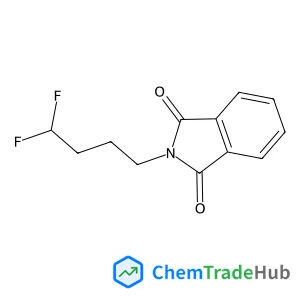
2-(4,4-Difluorobutyl)-1H-isoindole-1,3(2H)-dione
CAS Number:
1265341-14-7
Molecular Formula:
C12H11F2NO2
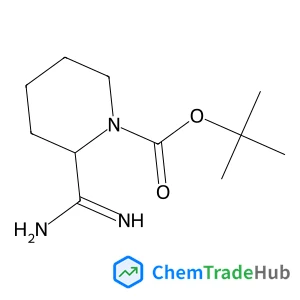
2-Methyl-2-propanyl 2-carbamimidoyl-1-piperidinecarboxylate
CAS Number:
1258640-98-0
Molecular Formula:
C11H21N3O2
![(2R,6S)-6-[(Benzyloxy)methyl]-4-{[(2-methyl-2-propanyl)oxy]carbonyl}-2-morpholinecarboxylic acid structure](https://static.chemtradehub.com/structs/109/1093085-91-6-3382.webp "(2R,6S)-6-[(Benzyloxy)methyl]-4-{[(2-methyl-2-propanyl)oxy]carbonyl}-2-morpholinecarboxylic acid structure")
(2R,6S)-6-[(Benzyloxy)methyl]-4-{[(2-methyl-2-propanyl)oxy]carbonyl}-2-morpholinecarboxylic acid
CAS Number:
1093085-91-6
Molecular Formula:
C18H25NO6
Recommended Suppliers





Disclaimer
This page provides academic journal information for reference and research purposes only. We are not affiliated with any journal publishers and do not handle publication submissions. For publication-related inquiries, please contact the respective journal publishers directly.
If you notice any inaccuracies in the information displayed, please contact us at support@chemtradehub.com. We will promptly review and address your concerns.