












Inhibition mechanism of SAHA in HDAC: a revisit
Literature Information
Publication Date
2015-10-08
DOI
10.1039/C5CP05633K
Impact Factor
3.676
Authors
Jingwei Zhou, Ruibo Wu
View Original
Abstract
SAHA (vorinostat, Merck) is a famous clinical drug for zinc-containing histone deacetylase (HDAC) targets against cancer and several other human disorders, whose inhibition mechanism (namely the protonation mechanism) upon binding to HDAC has been debated for more than ten years. It is very challenging to verify experimentally and is still controversial theoretically. The popular “Class-dependent” (namely “Tyr-dependent”) hypothesis is that the deprotonation of SAHA is mostly regulated by the conserved Tyr308 in class I HDAC while it is replaced by the His843 in class IIa HDAC. Herein, by elaborate QM(DFT)/MM MD simulations, we exclude the prevalent “Class-dependent” mechanism and advance a novel “Metal-dependent” mechanism, where the remote second metal site (K+ in most HDAC and Ca2+ in HDAC2) determines the protonation of SAHA. This proof-of-principle “Metal-dependent” mechanism opens up a new avenue to utilize the second metal site for isoform-selective inhibitor design.
Related Literature
Bis(N-acylated imidazolin-2-imine) nickel catalyzed norbornene copolymerization with methyl acrylate
Hu Zhang, Ru Xiao, Zhengguo Cai
2020-07-28
Paper
DOI: 10.1039/D0PY00857E
Semiaromatic polyamides with enhanced charge carrier mobility
Bilal Özen, Nicolas Candau, Cansel Temiz, Ferdinand C. Grozema, Grégory Stoclet, Christopher J. G. Plummer, Holger Frauenrath
2021-11-10
Paper
DOI: 10.1039/D1PY01203G
Sustainable synthesis of CO2-derived polycarbonates from d-xylose
David K. Tran, Ahmed Z. Rashad, Donald J. Darensbourg
2021-09-10
Communication
DOI: 10.1039/D1PY00784J
Imidazole based dual photo/thermal initiators for highly efficient radical polymerization under air with a metal-free approach‡
2021-10-22
Communication
DOI: 10.1039/D1PY01079D
Tunable hydantoin and base binary organocatalysts in ring-opening polymerizations
Lei Zhang, Fangyuan Zhou, Zhenjiang Li, Bo Liu, Rui Yan, Jie Li, Yongzhu Hu, Chan Zhang, Zikun Luo, Kai Guo
2020-07-28
Paper
DOI: 10.1039/D0PY00812E
The influences of monomer structure and solvent on the radical copolymerization of tertiary amine and PEGylated methacrylates
Priscila Quiñonez-Angulo, Robin A. Hutchinson, Ángel Licea-Claveríe, Enrique Saldívar-Guerra, Iván Zapata-González
2021-08-24
Paper
DOI: 10.1039/D1PY00750E
Aqueous copper-mediated reversible deactivation radical polymerization (RDRP) utilizing polyetheramine derived initiators‡
Jirui Zhang, Evelina Liarou, James Town, Yongguang Li, Alan M. Wemyss, David M. Haddleton
2020-08-03
Paper
DOI: 10.1039/D0PY00555J
Role of thiol oxidation by air in the mechanism of the self-initiated thermal thiol–ene polymerization
2021-10-29
Paper
DOI: 10.1039/D1PY01301G
Thermoresponsive polymers as macromolecular coordination ligands: complexation-dependence of thermally induced aggregation in aqueous solution
Maximilian Felix Toni Meier, Franck Thetiot, Narsimhulu Pittala, Ingo Lieberwirth, Cleiton Kunzler, Smail Triki, Ulrich Jonas
2021-08-13
Paper
DOI: 10.1039/D1PY00847A
Aluminum-catalyzed statistical copolymerization of mono-, tri- and penta-fluorophenyl glycidyl ether with ethylene oxide and epichlorohydrin
Fang Guo, Ming Deng, Fan Li, Shoulong Chen
2021-09-06
Paper
DOI: 10.1039/D1PY00938A
You might also like
Compound Q&A
What is the market or research trend for N-(4-Methoxybenzyl)-2-pyridinamine (CAS: 52818-63-0)?
N-(4-Methoxybenzyl)-2-pyridinamine (CAS: 52818-63-0) is increasingly being used ...
52818-63-0N-(4-Methoxybenzyl)-...
Compound Q&A
What precautions should be taken when handling Ethyl 4-(2-chlorophenyl)-1,3-thiazole-2-carboxylate (CAS: 1050507-06-6)?
When handling Ethyl 4-(2-chlorophenyl)-1,3-thiazole-2-carboxylate, appropriate p...
1050507-06-6Ethyl 4-(2-chlorophe...
Compound Q&A
What regulatory guidelines apply to diethyldiselane (CAS: 628-39-7)?
Diethyldiselane (CAS: 628-39-7) is classified under the Globally Harmonized Syst...
628-39-7Diethyldiselane
Compound Q&A
What is the market or research trend for oxocopper (CAS: 12053-18-8)?
The market for oxocopper (CAS: 12053-18-8) is primarily driven by its use in cat...
12053-18-8oxocopper; oxo-(oxoc...
Compound Q&A
What is the market or research trend for 5-{[(2-Methyl-2-propanyl)oxy]carbonyl}-5-azaspiro[2.4]heptane-7-carboxylic acid?
The market for 5-{[(2-Methyl-2-propanyl)oxy]carbonyl}-5-azaspiro[2.4]heptane-7-c...
1268519-54-55-{[(2-Methyl-2-prop...
Compound Q&A
What is 2-(1-Pyrrolidinyl)-4-pyridinamine (CAS: 35981-63-6)?
2-(1-Pyrrolidinyl)-4-pyridinamine is a chemical compound with the CAS number 359...
35981-63-62-(1-Pyrrolidinyl)-4...
Compound Q&A
What are the physical and chemical properties of 2-(3-Pyridinyl)-1-azabicyclo[2.2.2]octane (CAS: 91556-75-1)?
2-(3-Pyridinyl)-1-azabicyclo[2.2.2]octane (CAS: 91556-75-1) is a crystalline sol...
91556-75-12-(3-Pyridinyl)-1-az...
Compound Q&A
How is (S)-Alpha-allyl-proline hydrochloride (CAS: 129704-91-2) typically synthesized?
(S)-Alpha-allyl-proline hydrochloride is usually synthesized via a Wittig reacti...
129704-91-2(S)-Alpha-allyl-prol...
Compound Q&A
What is 3-Methyl-1,2-oxazole-5-carboxylic acid (CAS: 4857-42-5)?
3-Methyl-1,2-oxazole-5-carboxylic acid (CAS: 4857-42-5) is an organic compound w...
4857-42-53-Methyl-1,2-oxazole...
Compound Q&A
How is Lys-SMCC-DM1 (CAS: 1281816-04-3) typically synthesized?
Lys-SMCC-DM1 is synthesized via a multi-step process involving the coupling of S...
1281816-04-3Lys-SMCC-DM1
Source Journal
Physical Chemistry Chemical Physics

CiteScore:
5.5
Self-citation Rate:
10.3%
Articles per Year:
3036
Physical Chemistry Chemical Physics (PCCP) is an international journal co-owned by 19 physical chemistry and physics societies from around the world. This journal publishes original, cutting-edge research in physical chemistry, chemical physics and biophysical chemistry. To be suitable for publication in PCCP, articles must include significant innovation and/or insight into physical chemistry; this is the most important criterion that reviewers and Editors will judge against when evaluating submissions. The journal has a broad scope and welcomes contributions spanning experiment, theory, computation and data science. Topical coverage includes spectroscopy, dynamics, kinetics, statistical mechanics, thermodynamics, electrochemistry, catalysis, surface science, quantum mechanics, quantum computing and machine learning. Interdisciplinary research areas such as polymers and soft matter, materials, nanoscience, energy, surfaces/interfaces, and biophysical chemistry are welcomed if they demonstrate significant innovation and/or insight into physical chemistry. Joined experimental/theoretical studies are particularly appreciated when complementary and based on up-to-date approaches.
Recommended Compounds
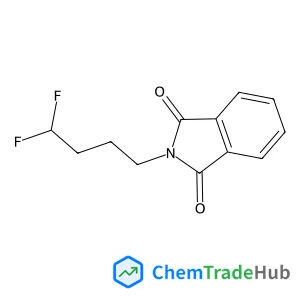
2-(4,4-Difluorobutyl)-1H-isoindole-1,3(2H)-dione
CAS Number:
1265341-14-7
Molecular Formula:
C12H11F2NO2
![1,10-bis(3,5-dimethylphenyl)-12-hydroxy-4,5,6,7-tetrahydroiindeno[7,1-de:1',7'-fg][1,3,2]dioxaphosphocine 12-oxide structure](https://static.chemtradehub.com/structs/141/1412439-82-7-b9a9.webp "1,10-bis(3,5-dimethylphenyl)-12-hydroxy-4,5,6,7-tetrahydroiindeno[7,1-de:1',7'-fg][1,3,2]dioxaphosphocine 12-oxide structure")
1,10-bis(3,5-dimethylphenyl)-12-hydroxy-4,5,6,7-tetrahydroiindeno[7,1-de:1',7'-fg][1,3,2]dioxaphosphocine 12-oxide
CAS Number:
1412439-82-7
Molecular Formula:
C33H31O4P

Recommended Suppliers





Disclaimer
This page provides academic journal information for reference and research purposes only. We are not affiliated with any journal publishers and do not handle publication submissions. For publication-related inquiries, please contact the respective journal publishers directly.
If you notice any inaccuracies in the information displayed, please contact us at support@chemtradehub.com. We will promptly review and address your concerns.