












Tunable hydantoin and base binary organocatalysts in ring-opening polymerizations
Literature Information
Publication Date
2020-07-28
DOI
10.1039/D0PY00812E
Impact Factor
5.582
Authors
Lei Zhang, Fangyuan Zhou, Zhenjiang Li, Bo Liu, Rui Yan, Jie Li, Yongzhu Hu, Chan Zhang, Zikun Luo, Kai Guo
View Original
Abstract
A (thio)hydantoin (HHyd) and organic superbase binary cocatalyst is illustrated as a tunable catalytic tool that enabled the efficient ring-opening polymerization (ROP) of various cyclic ester monomers. A series of designed HHyd molecules with diverse substitutions on the imidazolidine-2,4-dione ring at N1, N3, C5, and C2 allowed the fine tuning of the acidity, steric demand, and nucleophilicity of the (thio)hydantoinate cocatalyst. A partner organic superbase abstracted either the N1–H or N3–H proton of HHyd, leading to a conjugate acid acting as a H-bond donor in electrophilic activations. Commercial Brønsted organic bases, including tertiary amines, amidines, guanidines, and phosphazene, were evaluated for HHyd/base cocatalysis. The amidine DBU and guanidines TMG, TBD, and MTBD were screened as effective bases. Two minimal hydantoins, 1,5,5-trimethylimidazolidine-2,4-dione (HHyd2) and 3,5,5-trimethylimidazolidine-2,4-dione (HHyd3), partnered with DBU showed optimal performances, with near-quantitative conversions and narrow dispersities, in the ROPs of various cyclic ester monomers. HHyd2/DBU obviated the potential for epimerization and/or transesterification in the ROP of L-lactide (LLA). The controlled/living nature of the ROP of trimethylene carbonate (TMC) was validated. ROPs of TMC in solvents at room temperature and in bulk at 90 °C were successful: a short reaction time (6 h vs. 0.5 h), high conversion (92% vs. 97%), and narrow dispersity (1.13 vs. 1.12) were observed (solvent vs. bulk). Homopolymers and diblock copolymers of P(TMC-b-LLA) were prepared. The controlled/living nature of the ROPs was supported through kinetics and chain extension experiments, and MALDI-ToF-MS characterizations. A cooperative activation mechanism was proposed and validated using NMR titrations, in which the hydantoinate activated the chain end and the conjugate acid activated the monomer. The high relative cell viability (>90%) of poly(trimethylene carbonate) samples containing the cocatalyst HHyd2/DBU tested via MTT assays on HaCat cells confirmed the desirable biosafety and biocompatibility.
Related Literature
Structuring polarity-inverted TBA to G-quadruplex for selective recognition of planarity of natural isoquinoline alkaloids
Yufeng Zhou, Yali Yu, Longlong Gao, Yifan Fei, Ting Ye, Qiusha Li, Xiaoshun Zhou, Ning Gan, Yong Shao
2018-08-28
Paper
DOI: 10.1039/C8AN01561A
Effects and controls of capacitive hysteresis in ionic liquid electrochemical measurements
Anthony J. Lucio, Scott K. Shaw
2018-08-29
Paper
DOI: 10.1039/C8AN01085D
A ratiometric Raman probe for live-cell imaging of hydrogen sulfide in mitochondria by stimulated Raman scattering
Chen Zeng, Fanghao Hu, Rong Long, Wei Min
2018-09-03
Communication
DOI: 10.1039/C8AN00910D
Near infrared spectroscopic assessment of developing engineered tissues: correlations with compositional and mechanical properties
Arash Hanifi, Uday Palukuru, Cushla McGoverin, Michael Shockley, Eliot Frank, Alan Grodzinsky, Richard G. Spencer, Nancy Pleshko
2016-12-08
Paper
DOI: 10.1039/C6AN02167K
Effects of nilotinib on leukaemia cells using vibrational microspectroscopy and cell cloning
M. R. Siddique, A. V. Rutter, K. Wehbe, G. Cinque, G. Bellisola
2016-12-08
Paper
DOI: 10.1039/C6AN01914E
Diatoms response to salinity changes: investigations using single pulse and cross polarisation magic angle spinning 29Si NMR spectra
M. R. Johnston, J. R. Gascooke, A. V. Ellis, S. C. Leterme
2018-09-05
Paper
DOI: 10.1039/C8AN00948A
Recent advances in cataluminescence-based optical sensing systems
Si Wang, Zhiqin Yuan, Lijuan Zhang, Yanjun Lin, Chao Lu
2017-03-08
Tutorial Review
DOI: 10.1039/C7AN00091J
On-line coupling between capillary electrophoresis and microscale thermophoresis (CE–MST); the proof-of-concept
Paweł M. Nowak, Michał Woźniakiewicz
2018-09-07
Communication
DOI: 10.1039/C8AN01191E
Detection of chemical warfare agent simulants and hydrolysis products in biological samples by paper spray mass spectrometry
Josiah McKenna, Elizabeth S. Dhummakupt, Theresa Connell, Paul S. Demond, Dennis B. Miller, J. Michael Nilles, Nicholas E. Manicke, Trevor Glaros
2017-03-17
Paper
DOI: 10.1039/C7AN00144D
Determination of the transfer function of an atmospheric pressure drift tube ion mobility spectrometer for nanoparticle measurements
David T. Buckley, Christopher J. Hogan, Jr.
2017-04-25
Paper
DOI: 10.1039/C7AN00328E
You might also like
Compound Q&A
What is the market or research trend for N-(4-Methoxybenzyl)-2-pyridinamine (CAS: 52818-63-0)?
N-(4-Methoxybenzyl)-2-pyridinamine (CAS: 52818-63-0) is increasingly being used ...
52818-63-0N-(4-Methoxybenzyl)-...
Compound Q&A
What precautions should be taken when handling Ethyl 4-(2-chlorophenyl)-1,3-thiazole-2-carboxylate (CAS: 1050507-06-6)?
When handling Ethyl 4-(2-chlorophenyl)-1,3-thiazole-2-carboxylate, appropriate p...
1050507-06-6Ethyl 4-(2-chlorophe...
Compound Q&A
What regulatory guidelines apply to diethyldiselane (CAS: 628-39-7)?
Diethyldiselane (CAS: 628-39-7) is classified under the Globally Harmonized Syst...
628-39-7Diethyldiselane
Compound Q&A
What is the market or research trend for oxocopper (CAS: 12053-18-8)?
The market for oxocopper (CAS: 12053-18-8) is primarily driven by its use in cat...
12053-18-8oxocopper; oxo-(oxoc...
Compound Q&A
What is the market or research trend for 5-{[(2-Methyl-2-propanyl)oxy]carbonyl}-5-azaspiro[2.4]heptane-7-carboxylic acid?
The market for 5-{[(2-Methyl-2-propanyl)oxy]carbonyl}-5-azaspiro[2.4]heptane-7-c...
1268519-54-55-{[(2-Methyl-2-prop...
Compound Q&A
What is 2-(1-Pyrrolidinyl)-4-pyridinamine (CAS: 35981-63-6)?
2-(1-Pyrrolidinyl)-4-pyridinamine is a chemical compound with the CAS number 359...
35981-63-62-(1-Pyrrolidinyl)-4...
Compound Q&A
What are the physical and chemical properties of 2-(3-Pyridinyl)-1-azabicyclo[2.2.2]octane (CAS: 91556-75-1)?
2-(3-Pyridinyl)-1-azabicyclo[2.2.2]octane (CAS: 91556-75-1) is a crystalline sol...
91556-75-12-(3-Pyridinyl)-1-az...
Compound Q&A
How is (S)-Alpha-allyl-proline hydrochloride (CAS: 129704-91-2) typically synthesized?
(S)-Alpha-allyl-proline hydrochloride is usually synthesized via a Wittig reacti...
129704-91-2(S)-Alpha-allyl-prol...
Compound Q&A
What is 3-Methyl-1,2-oxazole-5-carboxylic acid (CAS: 4857-42-5)?
3-Methyl-1,2-oxazole-5-carboxylic acid (CAS: 4857-42-5) is an organic compound w...
4857-42-53-Methyl-1,2-oxazole...
Compound Q&A
How is Lys-SMCC-DM1 (CAS: 1281816-04-3) typically synthesized?
Lys-SMCC-DM1 is synthesized via a multi-step process involving the coupling of S...
1281816-04-3Lys-SMCC-DM1
Source Journal
Polymer Chemistry

CiteScore:
8.6
Self-citation Rate:
7.3%
Articles per Year:
457
Polymer Chemistry welcomes submissions in all areas of polymer science that have a strong focus on macromolecular chemistry. Manuscripts may cover a broad range of fields, yet no direct application focus is required.
Recommended Compounds
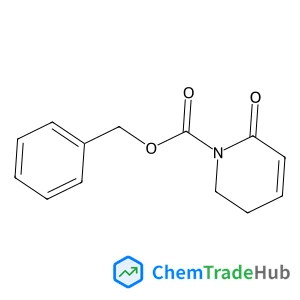
Benzyl 6-oxo-3,6-dihydro-1(2H)-pyridinecarboxylate
CAS Number:
725746-35-0
Molecular Formula:
C13H13NO3
![1-(1-Benzyl-1,2,3,6-tetrahydropyridin-4-yl)-1H-benzo[d]imidazol-2(3H)-one structure](https://static.chemtradehub.com/structs/603/60373-71-9-7dfb.webp "1-(1-Benzyl-1,2,3,6-tetrahydropyridin-4-yl)-1H-benzo[d]imidazol-2(3H)-one structure")
1-(1-Benzyl-1,2,3,6-tetrahydropyridin-4-yl)-1H-benzo[d]imidazol-2(3H)-one
CAS Number:
60373-71-9
Molecular Formula:
C19H19N3O
![1-{3-[4-Amino-3-(4-phenoxyphenyl)-1H-pyrazolo[3,4-d]pyrimidin-1-yl]-1-piperidinyl}-2,3-dihydroxy-1-propanone structure](https://static.chemtradehub.com/structs/122/1226872-27-0-e037.webp "1-{3-[4-Amino-3-(4-phenoxyphenyl)-1H-pyrazolo[3,4-d]pyrimidin-1-yl]-1-piperidinyl}-2,3-dihydroxy-1-propanone structure")
1-{3-[4-Amino-3-(4-phenoxyphenyl)-1H-pyrazolo[3,4-d]pyrimidin-1-yl]-1-piperidinyl}-2,3-dihydroxy-1-propanone
CAS Number:
1226872-27-0
Molecular Formula:
C25H26N6O4
Recommended Suppliers






Disclaimer
This page provides academic journal information for reference and research purposes only. We are not affiliated with any journal publishers and do not handle publication submissions. For publication-related inquiries, please contact the respective journal publishers directly.
If you notice any inaccuracies in the information displayed, please contact us at support@chemtradehub.com. We will promptly review and address your concerns.