












Enhanced field-emission of silver nanoparticle–graphene oxide decorated ZnO nanowire arrays
Literature Information
Publication Date
2015-11-02
DOI
10.1039/C5CP05036G
Impact Factor
3.676
Authors
Guojing Wang, Jiecui Liao, Chienhua Chen, Shasha Lv, Chuanqing Shi
View Original
Abstract
This work presents a new method to improve the field emission (FE) properties of semiconductors decorated with low-cost graphene oxide (GO) nanosheets and trace amounts of noble metal. The Ag/GO/ZnO composite emitter exhibited efficient FE properties with a low turn-on field of 1.4 V μm−1 and a high field enhancement factor of 7018. The excellent FE properties of the Ag/GO/ZnO composite can be attributed to the tunneling effect of electrons through the heterojunction. The FE properties of the Ag/GO/ZnO composite are slightly better than those of the Ag/ZnO composite which forms an energy well that collects electrons on interfaces when an electric field is applied. This behavior is associated with heterostructures that offer more contact points and protrusions between ZnO nanowire arrays (NWAs) and Ag/GO, which leads to easier electron transfer. High-resolution transmission electron microscopy (HRTEM) and X-ray photoelectron spectroscopy (XPS) were employed to characterise the connection and evolution of the ZnO NWAs and Ag/GO composites.
Related Literature
Azodicarboxylate-free esterification with triphenylphosphine mediated by flavin and visible light: method development and stereoselectivity control
Michal März, Michal Kohout, Tomáš Neveselý, Josef Chudoba, Dorota Prukała, Stanislaw Niziński, Marek Sikorski, Gotard Burdziński, Radek Cibulka
2018-09-03
Paper
DOI: 10.1039/C8OB01822G
Fluorinated triazole-containing sphingosine analogues. Syntheses and in vitro evaluation as SPHK inhibitors
Margarita Escudero-Casao, Adrià Cardona, Raúl Beltrán-Debón, Yolanda Díaz, M. Isabel Matheu, Sergio Castillón
2018-09-24
Paper
DOI: 10.1039/C8OB01867G
Synthesis of 2-trifluoromethylquinolines through rhodium-catalysed redox-neutral [3 + 3] annulation between anilines and CF3-ynones using traceless directing groups
Haichao Huang, Hailong Wang, Chao Gong, Zhenjing Zhuang, Wenmin Feng, Si-Hai Wu, Lianhui Wang
2021-11-29
Research Article
DOI: 10.1039/D1QO01478A
Synthesis and application of a new chiral monodentate spiro phosphoramidite ligand based on hexamethyl-1,1′-spirobiindane backbone in asymmetric hydroamination/arylation of alkenes
Huanyu Shan, Rihuang Pan, Xufeng Lin
2018-08-16
Communication
DOI: 10.1039/C8OB01785A
Eugenunilones A–H: rearranged sesquiterpenoids from Eugenia uniflora
Mu Chen, Jia-Qing Cao, Song Ang, Ting-Ni Zeng, Ni-Ping Li, Tang-Jia Yang, Jun-Shan Liu, Yan Wu, Wen-Cai Ye, Lei Wang
2021-12-03
Research Article
DOI: 10.1039/D1QO01629F
Optimized synthesis and indium complex formation with the bifunctional chelator NODIA-Me
Jason P. Holland, Harald Scherer, Stephan Maus, Tobias Stemler, Hendrik Bohnenberger, Samer Ezziddin, Philipp Kurz
2018-09-24
Paper
DOI: 10.1039/C8OB01981A
Alkali-metal ion catalysis and inhibition in nucleophilic displacement reactions at carbon, phosphorus and sulfur centres. IX.p-Nitrophenyl diphenyl phosphate‡
Ruby Nagelkerke, Gregory R. J. Thatcher, Erwin Buncel
2002-12-03
Paper
DOI: 10.1039/B208408B
Functionalization of diazotetronic acid and application in a stereoselective modular synthesis of pulvinone, aspulvinones A–E, G, Q and their analogues
Amarender Manchoju, Ritesh A. Annadate, Lise Desquien, Sunil V. Pansare
2018-08-10
Paper
DOI: 10.1039/C8OB01511B
An effective preparation of both 1,3-diketones and nitriles from alkynones with oximes as hydroxide sources
Pei Chen, Qian-Qian Zhang, Jia Guo, Lu-Lu Chen, Yan-Bo Wang, Xiao Zhang
2018-09-03
Paper
DOI: 10.1039/C8OB01861H
Synthesis of functionalized 2,5-dihydropyrrole derivatives via a convenient [3 + 2] annulation of azomethine ylides with allenoates
Zhusheng Huang, Zonghao Dai, Jin Zhu, Fulai Yang, Qingfa Zhou
2018-08-28
Communication
DOI: 10.1039/C8OB01946K
You might also like
Compound Q&A
Is 6-(3-Fluorophenyl)picolinic acid (CAS: 887982-40-3) safe?
6-(3-Fluorophenyl)picolinic acid is generally considered safe for laboratory use...
887982-40-36-(3-Fluorophenyl)pi...
Compound Q&A
What industries use (3R)-3-Pyrrolidinol (CAS: 2799-21-5)?
(3R)-3-Pyrrolidinol is used in the pharmaceutical industry as a precursor for dr...
2799-21-5(3R)-3-Pyrrolidinol
Compound Q&A
What precautions should be taken when handling (4R,5R)-4,5-Diethoxycarbonyl-2,2-dimethyldioxolane (CAS: 59779-75-8)?
When handling (4R,5R)-4,5-Diethoxycarbonyl-2,2-dimethyldioxolane (CAS: 59779-75-...
59779-75-8(4R,5R)-4,5-Diethoxy...
Compound Q&A
How is 1-(6-Chloroimidazo[1,2-b]pyridazin-3-yl)ethanone (CAS: 90734-71-7) typically synthesized?
1-(6-Chloroimidazo[1,2-b]pyridazin-3-yl)ethanone is often synthesized via a mult...
90734-71-71-(6-Chloroimidazo[1...
Compound Q&A
What is the market or research trend for N-Ethyl-3,4-dimethylbenzylamine (CAS: 39180-83-1)?
The market for N-Ethyl-3,4-dimethylbenzylamine (CAS: 39180-83-1) remains steady,...
39180-83-1N-Ethyl-3,4-dimethyl...
Compound Q&A
What is Tert-butyl 3-(pyrrolidin-1-yl)azetidine-1-carboxylate (CAS: 1019008-21-9)?
Tert-butyl 3-(pyrrolidin-1-yl)azetidine-1-carboxylate is a chemical compound wit...
1019008-21-9Tert-butyl 3-(pyrrol...
Compound Q&A
What regulatory guidelines apply to 1-Bromo-3-chloro-2,4-dimethoxybenzene (CAS: 1228956-93-1)?
1-Bromo-3-chloro-2,4-dimethoxybenzene (CAS: 1228956-93-1) falls under the classi...
1228956-93-11-Bromo-3-chloro-2,4...
Compound Q&A
Is 8-Bromo-2-methyl-3,4-dihydroisoquinolin-1(2H)-one (CAS: 1368622-07-4) safe?
The safety of 8-Bromo-2-methyl-3,4-dihydroisoquinolin-1(2H)-one (CAS: 1368622-07...
1368622-07-48-Bromo-2-methyl-3,4...
Compound Q&A
Is Benzyl [(3S)-2,6-dioxo-3-piperidinyl]carbamate (CAS: 22785-43-9) safe?
Benzyl [(3S)-2,6-dioxo-3-piperidinyl]carbamate is generally safe when handled wi...
22785-43-9Benzyl [(3S)-2,6-dio...
Compound Q&A
How should 1-{[4-(4,4,5,5-Tetramethyl-1,3,2-dioxaborolan-2-yl)phenyl]sulfonyl}pyrrolidine (CAS: 928657-21-0) be stored?
1-{[4-(4,4,5,5-Tetramethyl-1,3,2-dioxaborolan-2-yl)phenyl]sulfonyl}pyrrolidine s...
928657-21-01-{[4-(4,4,5,5-Tetra...
Source Journal
Physical Chemistry Chemical Physics

CiteScore:
5.5
Self-citation Rate:
10.3%
Articles per Year:
3036
Physical Chemistry Chemical Physics (PCCP) is an international journal co-owned by 19 physical chemistry and physics societies from around the world. This journal publishes original, cutting-edge research in physical chemistry, chemical physics and biophysical chemistry. To be suitable for publication in PCCP, articles must include significant innovation and/or insight into physical chemistry; this is the most important criterion that reviewers and Editors will judge against when evaluating submissions. The journal has a broad scope and welcomes contributions spanning experiment, theory, computation and data science. Topical coverage includes spectroscopy, dynamics, kinetics, statistical mechanics, thermodynamics, electrochemistry, catalysis, surface science, quantum mechanics, quantum computing and machine learning. Interdisciplinary research areas such as polymers and soft matter, materials, nanoscience, energy, surfaces/interfaces, and biophysical chemistry are welcomed if they demonstrate significant innovation and/or insight into physical chemistry. Joined experimental/theoretical studies are particularly appreciated when complementary and based on up-to-date approaches.
Recommended Compounds
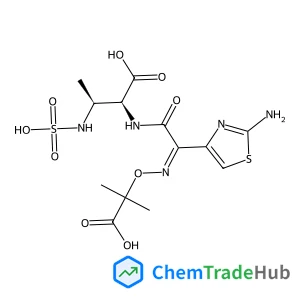
Aztreonam USP Related Compound A (Open-ring Aztreonam)
CAS Number:
87500-74-1
Molecular Formula:
C13H19N5O9S2
![2-Methyl-2-propanyl [(2S)-1-hydroxy-3-(4-hydroxyphenyl)-2-propanyl]carbamate structure](https://static.chemtradehub.com/structs/833/83345-46-4-eec2.webp "2-Methyl-2-propanyl [(2S)-1-hydroxy-3-(4-hydroxyphenyl)-2-propanyl]carbamate structure")
2-Methyl-2-propanyl [(2S)-1-hydroxy-3-(4-hydroxyphenyl)-2-propanyl]carbamate
CAS Number:
83345-46-4
Molecular Formula:
C14H21NO4
Recommended Suppliers





Disclaimer
This page provides academic journal information for reference and research purposes only. We are not affiliated with any journal publishers and do not handle publication submissions. For publication-related inquiries, please contact the respective journal publishers directly.
If you notice any inaccuracies in the information displayed, please contact us at support@chemtradehub.com. We will promptly review and address your concerns.