












In situ spectroelectrochemical and theoretical study on the oxidation of a 4H-imidazole-ruthenium dye adsorbed on nanocrystalline TiO2 thin film electrodes
Literature Information
Publication Date
2015-10-19
DOI
10.1039/C5CP04484G
Impact Factor
3.676
Authors
Stephan Kupfer, Thomas Bocklitz, Julien Guthmuller, Sven Rau
View Original
Abstract
Terpyridine 4H-imidazole-ruthenium(II) complexes are considered promising candidates for use as sensitizers in dye sensitized solar cells (DSSCs) by displaying broad absorption in the visible range, where the dominant absorption features are due to metal-to-ligand charge transfer (MLCT) transitions. The ruthenium(III) intermediates resulting from photoinduced MLCT transitions are essential intermediates in the photoredox-cycle of the DSSC. However, their photophysics is much less studied compared to the ruthenium(II) parent systems. To this end, the structural alterations accompanying one-electron oxidation of the RuIm dye series (including a non-carboxylic RuIm precursor, and, carboxylic RuImCOO in solution and anchored to a nanocrystalline TiO2 film) are investigated via in situ experimental and theoretical UV-Vis absorption and resonance Raman (RR) spectroelectrochemistry. The excellent agreement between the experimental and the TDDFT spectra derived in this work allows for an in-depth assignment of UV-Vis and RR spectral features of the dyes. A concordant pronounced wavelength dependence with respect to the charge transfer character has been observed for the model system RuIm, and both RuImCOO in solution and attached on the TiO2 surface. Excitation at long wavelengths leads to the population of ligand-to-metal charge transfer states, i.e. photoreduction of the central ruthenium(III) ion, while high-energy excitation features an intra-ligand charge transfer state localized on the 4H-imidazole moiety. Therefore, these 4H-imidazole ruthenium complexes investigated here are potential multi-photoelectron donors. One electron is donated from MLCT states, and additionally, the 4H-imidazole ligand reveals electron-donating character with a significant contribution to the excited states of the ruthenium(III) complexes upon blue-light irradiation.
Related Literature
Effects of various Cu(0), Fe(0), and proanthocyanidin reducing agents on Fe(iii)-catalysed ATRP for the synthesis of PMMA block copolymers and their self-assembly behaviours
Yi-Shen Huang, Han-Yu Hsueh, Junko Aimi, Li-Chieh Chou, Yu-Chi Lu, Chung-Chi Wang, Kuo-Yu Chen, Chih-Feng Huang
2020-06-18
Paper
DOI: 10.1039/D0PY00658K
Eco-friendly functional two-component flame-retardant waterborne polyurethane coatings: a review
Haosheng Pang, Yunjun Luo, Bing Zhang
2021-09-06
Review Article
DOI: 10.1039/D1PY00920F
Highly branched polymethacrylates prepared efficiently: brancher-directed topology and application performance
Hong-Mei Yang, Zhi-Hao Chen, Jun-Fang Li, Xiu-Li Sun, Xiao-Yan Wang, Yong Tang
2021-11-02
Paper
DOI: 10.1039/D1PY01273H
Ring opening polymerization of macrocyclic oligoesters derived from renewable sources
Antxon Martínez de Ilarduya, Sebastián Muñoz Guerra
2020-03-17
Review Article
DOI: 10.1039/D0PY00258E
PNIPAM-immobilized gold-nanoparticles with colorimetric temperature-sensing and reusable temperature-switchable catalysis properties
Si Wu, Lei Lei, Yuzheng Xia, Susan Oliver, Xiaonong Chen, Cyrille Boyer, Zhiyong Nie, Shuxian Shi
2021-11-12
Paper
DOI: 10.1039/D1PY01180D
Well-defined cyclic polymer synthesis via an efficient etherification-based bimolecular ring-closure strategy
Sandeep Sharma, Konstantinos Ntetsikas, Viko Ladelta, Saibal Bhaumik, Nikos Hadjichristidis
2021-10-28
Paper
DOI: 10.1039/D1PY01337H
Multi-responsive poly(oligo(ethylene glycol)methyl methacrylate)-co-poly(2-(diisopropylamino)ethyl methacrylate) hyperbranched copolymers via reversible addition fragmentation chain transfer polymerization
Dimitrios Selianitis, Stergios Pispas
2021-11-03
Paper
DOI: 10.1039/D1PY01320C
Unprecedentedly high active organocatalysts for the copolymerization of carbonyl sulfide and propylene oxide: steric hindrance effect of tertiary amines
Jiraya Kiriratnikom, Xin-Chen Yue, Jia-Liang Yang, Ying Wang, Shuo-Hong Chen, Ke-Ke Zhang, Cheng-Jian Zhang, Munir Ullah Khan
2021-08-23
Paper
DOI: 10.1039/D1PY01013A
Tellurophene-containing π-conjugated polymers with unique heteroatom–heteroatom interactions by post-element-transformation of an organotitanium polymer
Hiroki Nishiyama, Feng Zheng, Shinsuke Inagi, Hiroyuki Fueno, Ikuyoshi Tomita
2020-07-07
Communication
DOI: 10.1039/D0PY00724B
You might also like
Compound Q&A
What is the market or research trend for N-(4-Methoxybenzyl)-2-pyridinamine (CAS: 52818-63-0)?
N-(4-Methoxybenzyl)-2-pyridinamine (CAS: 52818-63-0) is increasingly being used ...
52818-63-0N-(4-Methoxybenzyl)-...
Compound Q&A
What precautions should be taken when handling Ethyl 4-(2-chlorophenyl)-1,3-thiazole-2-carboxylate (CAS: 1050507-06-6)?
When handling Ethyl 4-(2-chlorophenyl)-1,3-thiazole-2-carboxylate, appropriate p...
1050507-06-6Ethyl 4-(2-chlorophe...
Compound Q&A
What regulatory guidelines apply to diethyldiselane (CAS: 628-39-7)?
Diethyldiselane (CAS: 628-39-7) is classified under the Globally Harmonized Syst...
628-39-7Diethyldiselane
Compound Q&A
What is the market or research trend for oxocopper (CAS: 12053-18-8)?
The market for oxocopper (CAS: 12053-18-8) is primarily driven by its use in cat...
12053-18-8oxocopper; oxo-(oxoc...
Compound Q&A
What is the market or research trend for 5-{[(2-Methyl-2-propanyl)oxy]carbonyl}-5-azaspiro[2.4]heptane-7-carboxylic acid?
The market for 5-{[(2-Methyl-2-propanyl)oxy]carbonyl}-5-azaspiro[2.4]heptane-7-c...
1268519-54-55-{[(2-Methyl-2-prop...
Compound Q&A
What is 2-(1-Pyrrolidinyl)-4-pyridinamine (CAS: 35981-63-6)?
2-(1-Pyrrolidinyl)-4-pyridinamine is a chemical compound with the CAS number 359...
35981-63-62-(1-Pyrrolidinyl)-4...
Compound Q&A
What are the physical and chemical properties of 2-(3-Pyridinyl)-1-azabicyclo[2.2.2]octane (CAS: 91556-75-1)?
2-(3-Pyridinyl)-1-azabicyclo[2.2.2]octane (CAS: 91556-75-1) is a crystalline sol...
91556-75-12-(3-Pyridinyl)-1-az...
Compound Q&A
How is (S)-Alpha-allyl-proline hydrochloride (CAS: 129704-91-2) typically synthesized?
(S)-Alpha-allyl-proline hydrochloride is usually synthesized via a Wittig reacti...
129704-91-2(S)-Alpha-allyl-prol...
Compound Q&A
What is 3-Methyl-1,2-oxazole-5-carboxylic acid (CAS: 4857-42-5)?
3-Methyl-1,2-oxazole-5-carboxylic acid (CAS: 4857-42-5) is an organic compound w...
4857-42-53-Methyl-1,2-oxazole...
Compound Q&A
How is Lys-SMCC-DM1 (CAS: 1281816-04-3) typically synthesized?
Lys-SMCC-DM1 is synthesized via a multi-step process involving the coupling of S...
1281816-04-3Lys-SMCC-DM1
Source Journal
Physical Chemistry Chemical Physics

CiteScore:
5.5
Self-citation Rate:
10.3%
Articles per Year:
3036
Physical Chemistry Chemical Physics (PCCP) is an international journal co-owned by 19 physical chemistry and physics societies from around the world. This journal publishes original, cutting-edge research in physical chemistry, chemical physics and biophysical chemistry. To be suitable for publication in PCCP, articles must include significant innovation and/or insight into physical chemistry; this is the most important criterion that reviewers and Editors will judge against when evaluating submissions. The journal has a broad scope and welcomes contributions spanning experiment, theory, computation and data science. Topical coverage includes spectroscopy, dynamics, kinetics, statistical mechanics, thermodynamics, electrochemistry, catalysis, surface science, quantum mechanics, quantum computing and machine learning. Interdisciplinary research areas such as polymers and soft matter, materials, nanoscience, energy, surfaces/interfaces, and biophysical chemistry are welcomed if they demonstrate significant innovation and/or insight into physical chemistry. Joined experimental/theoretical studies are particularly appreciated when complementary and based on up-to-date approaches.
Recommended Compounds
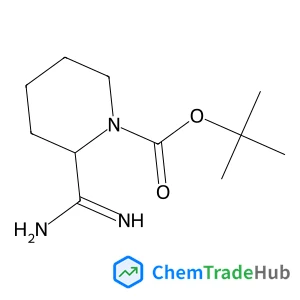
2-Methyl-2-propanyl 2-carbamimidoyl-1-piperidinecarboxylate
CAS Number:
1258640-98-0
Molecular Formula:
C11H21N3O2
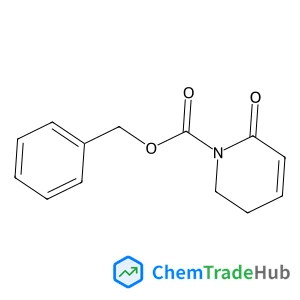
Benzyl 6-oxo-3,6-dihydro-1(2H)-pyridinecarboxylate
CAS Number:
725746-35-0
Molecular Formula:
C13H13NO3

(3alpha,5beta,6alpha,7alpha)-6-Ethylcholane-3,7,24-triol
CAS Number:
1537866-49-1
Molecular Formula:
C26H46O3
Recommended Suppliers




Disclaimer
This page provides academic journal information for reference and research purposes only. We are not affiliated with any journal publishers and do not handle publication submissions. For publication-related inquiries, please contact the respective journal publishers directly.
If you notice any inaccuracies in the information displayed, please contact us at support@chemtradehub.com. We will promptly review and address your concerns.