












Effects of various Cu(0), Fe(0), and proanthocyanidin reducing agents on Fe(iii)-catalysed ATRP for the synthesis of PMMA block copolymers and their self-assembly behaviours
Literature Information
Publication Date
2020-06-18
DOI
10.1039/D0PY00658K
Impact Factor
5.582
Authors
Yi-Shen Huang, Han-Yu Hsueh, Junko Aimi, Li-Chieh Chou, Yu-Chi Lu, Chung-Chi Wang, Kuo-Yu Chen, Chih-Feng Huang
View Original
Abstract
We applied environmentally friendly ferric complexes (i.e., FeCl3/PPh3) to one of the most widely-used controlled/living polymerizations (CRP), atom transfer radical polymerisation (ATRP), for the preparation of well-defined poly(methyl methacrylate) (PMMA) homo- and block (co)polymers. Iron-catalysed supplemental activator and reducing agent (SARA) and activators regenerated by electron transfer (ARGET) ATRPs were investigated using cost-effective Cu(0), Fe(0), and the natural antioxidant proanthocyanidins (PC) as reducing agents. With different ratios of Fe(III)/Cu(0) and Fe(III)/Fe(0) for ATRPs of MMA, the former exhibited fast apparent reaction rates (kapps >3 × 10⁻⁵ s−1), but showed large PDI values (>1.6); the latter exhibited moderate kapps ( = ca. 7 × 10⁻⁶–3 × 10⁻⁵ s−1) with low PDI values (<1.45), indicating that moderate reactions could avoid the occurrence of undesired side reactions. In the case of Fe(III)/PC, interestingly, moderate kapps ( = ca. 3 × 10⁻⁶–8 × 10⁻⁶ s−1) with low PDI values (<1.30) were obtained. Through UV–Vis measurements and additional chain extension of MMA, the effective reduction of PC on Fe(III) was obviously observed and resulted in high chain functionality of the PMMA–Br macroinitiator. Subsequently, two more chain extensions of PMMA–Br with n-butyl methacrylate (BMA) and benzyl methacrylate (BzMA) were conducted to obtain well-defined PMMA100-b-PBMA537 (Mn,NMR = 86 300; PDI = 1.25) and PMMA100-b-PBzMA649 (Mn,NMR = 124 200; PDI = 1.35) block copolymers (BCPs). Their thermal properties were characterized by thermogravimetric analysis (TGA) and differential scanning calorimetry (DSC). The segmental segregation was characterized by small-angle X-ray scattering (SAXS) and atomic force microscopy (AFM). Interestingly, microphase separation was observed only in the PMMA100-b-PBMA537 BCP with an upper critical ordering temperature (UCOT) behaviour and acquired spherical nanostructure (d = ca. 25 nm). We thus demonstrate a “green” ATRP method mainly using the natural product PC to reduce the FeCl3/PPh3 complex for the preparation of well-defined polymethacrylate-based BCPs.
Related Literature
Structuring polarity-inverted TBA to G-quadruplex for selective recognition of planarity of natural isoquinoline alkaloids
Yufeng Zhou, Yali Yu, Longlong Gao, Yifan Fei, Ting Ye, Qiusha Li, Xiaoshun Zhou, Ning Gan, Yong Shao
2018-08-28
Paper
DOI: 10.1039/C8AN01561A
NIR two-photon fluorescent probe for biothiol detection and imaging of living cells in vivo
Xiang Xia, Ying Qian
2018-09-20
Paper
DOI: 10.1039/C8AN01605D
Digital enzyme assay using attoliter droplet array
Takao Ono, Takanori Ichiki
2018-09-17
Paper
DOI: 10.1039/C8AN01152D
Determination of the transfer function of an atmospheric pressure drift tube ion mobility spectrometer for nanoparticle measurements
David T. Buckley, Christopher J. Hogan, Jr.
2017-04-25
Paper
DOI: 10.1039/C7AN00328E
Real time plasmonic qPCR: how fast is ultra-fast? 30 cycles in 54 seconds
Philip J. R. Roche, Mohamed Najih, Seung S. Lee, Lenore K. Beitel, Matthew L. Carnevale, Andrew G. Kirk
2017-04-12
Paper
DOI: 10.1039/C7AN00304H
Simultaneous viscosity and density measurement of small volumes of liquids using a vibrating microcantilever
A. F. Payam, W. Trewby, K. Voïtchovsky
2017-03-20
Paper
DOI: 10.1039/C6AN02674E
The mechanism and conformational changes of polybrominated diphenyl ethers to TTR by fluorescence spectroscopy, molecular simulation, and quantum chemistry
Jie Xu, Yuchen Wei, Wu Yang, Lulu Yang, Zhongsheng Yi
2018-09-03
Paper
DOI: 10.1039/C8AN00435H
You might also like
Compound Q&A
What is the market or research trend for N-(4-Methoxybenzyl)-2-pyridinamine (CAS: 52818-63-0)?
N-(4-Methoxybenzyl)-2-pyridinamine (CAS: 52818-63-0) is increasingly being used ...
52818-63-0N-(4-Methoxybenzyl)-...
Compound Q&A
What precautions should be taken when handling Ethyl 4-(2-chlorophenyl)-1,3-thiazole-2-carboxylate (CAS: 1050507-06-6)?
When handling Ethyl 4-(2-chlorophenyl)-1,3-thiazole-2-carboxylate, appropriate p...
1050507-06-6Ethyl 4-(2-chlorophe...
Compound Q&A
What regulatory guidelines apply to diethyldiselane (CAS: 628-39-7)?
Diethyldiselane (CAS: 628-39-7) is classified under the Globally Harmonized Syst...
628-39-7Diethyldiselane
Compound Q&A
What is the market or research trend for oxocopper (CAS: 12053-18-8)?
The market for oxocopper (CAS: 12053-18-8) is primarily driven by its use in cat...
12053-18-8oxocopper; oxo-(oxoc...
Compound Q&A
What is the market or research trend for 5-{[(2-Methyl-2-propanyl)oxy]carbonyl}-5-azaspiro[2.4]heptane-7-carboxylic acid?
The market for 5-{[(2-Methyl-2-propanyl)oxy]carbonyl}-5-azaspiro[2.4]heptane-7-c...
1268519-54-55-{[(2-Methyl-2-prop...
Compound Q&A
What is 2-(1-Pyrrolidinyl)-4-pyridinamine (CAS: 35981-63-6)?
2-(1-Pyrrolidinyl)-4-pyridinamine is a chemical compound with the CAS number 359...
35981-63-62-(1-Pyrrolidinyl)-4...
Compound Q&A
What are the physical and chemical properties of 2-(3-Pyridinyl)-1-azabicyclo[2.2.2]octane (CAS: 91556-75-1)?
2-(3-Pyridinyl)-1-azabicyclo[2.2.2]octane (CAS: 91556-75-1) is a crystalline sol...
91556-75-12-(3-Pyridinyl)-1-az...
Compound Q&A
How is (S)-Alpha-allyl-proline hydrochloride (CAS: 129704-91-2) typically synthesized?
(S)-Alpha-allyl-proline hydrochloride is usually synthesized via a Wittig reacti...
129704-91-2(S)-Alpha-allyl-prol...
Compound Q&A
What is 3-Methyl-1,2-oxazole-5-carboxylic acid (CAS: 4857-42-5)?
3-Methyl-1,2-oxazole-5-carboxylic acid (CAS: 4857-42-5) is an organic compound w...
4857-42-53-Methyl-1,2-oxazole...
Compound Q&A
How is Lys-SMCC-DM1 (CAS: 1281816-04-3) typically synthesized?
Lys-SMCC-DM1 is synthesized via a multi-step process involving the coupling of S...
1281816-04-3Lys-SMCC-DM1
Source Journal
Polymer Chemistry

CiteScore:
8.6
Self-citation Rate:
7.3%
Articles per Year:
457
Polymer Chemistry welcomes submissions in all areas of polymer science that have a strong focus on macromolecular chemistry. Manuscripts may cover a broad range of fields, yet no direct application focus is required.
Recommended Compounds
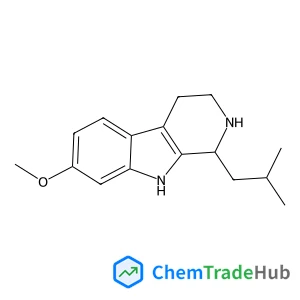
1-Isobutyl-7-methoxy-2,3,4,9-tetrahydro-1H-beta-carboline
CAS Number:
175975-76-5
Molecular Formula:
C16H22N2O
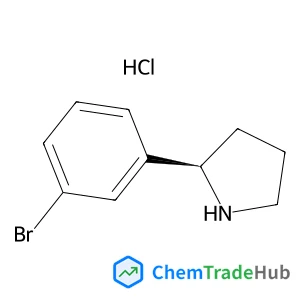
(2R)-2-(3-Bromophenyl)pyrrolidine hydrochloride (1:1)
CAS Number:
1391550-13-2
Molecular Formula:
C10H13BrClN
Recommended Suppliers






Disclaimer
This page provides academic journal information for reference and research purposes only. We are not affiliated with any journal publishers and do not handle publication submissions. For publication-related inquiries, please contact the respective journal publishers directly.
If you notice any inaccuracies in the information displayed, please contact us at support@chemtradehub.com. We will promptly review and address your concerns.