


Ion segregation in an ionic liquid confined within chitosan based chemical ionogels
Literature Information
Publication Date
2015-08-10
DOI
10.1039/C5CP04198H
Impact Factor
3.676
Authors
A. Guyomard-Lack, N. Buchtová, B. Humbert, J. Le Bideau
View Original
Abstract
Ionogels based on in situ crosslinking of chitosan in the ionic liquid 1-ethyl-3-methylimidazolium acetate (EMIm Ac) are synthesized, and studied from macroscopic properties to preferred interactions at the host matrix/EMIm Ac interface. It is highlighted that the imidazolium cations of the ionic liquid (IL) show preferred interactions with the chitosan host matrix. This exemplifies how the confinement of ILs, through an interface effect, can induce the breakdown of aggregated regions found systematically in bulk ILs and can increase the fragility of ILs. These biopolymer based ionogels could find application as biosensors and in the field of energy.
Recommended Journals

Pure and Applied Chemistry

Pharmacological Reviews

Molecular Pharmacology

European Journal of Wood and Wood Products

Science Progress

Journal of Catalysis

Organic Preparations and Procedures International

Proceedings of the National Academy of Sciences of the United States of America

Planta Medica

Journal of Organometallic Chemistry
Related Literature
Palladium-catalyzed synthesis of benzoxazoles by the cleavage reaction of carbon–carbon triple bonds with o-aminophenol
Ying Liang, Heng-Shan Wang, Ying-Ming Pan
2014-01-17
Communication
DOI: 10.1039/C3GC42499E
Solvent-free γ-valerolactone hydrogenation to 2-methyltetrahydrofuran catalysed by Ru/C: a reaction network analysis
Mohammad G. Al-Shaal, Adam Dzierbinski, Regina Palkovits
2013-12-12
Paper
DOI: 10.1039/C3GC41803K
A procedure for the preparation of Ti-Beta zeolites for catalytic epoxidation with hydrogen peroxide
Bo Tang, Weili Dai, Naijia Guan, Landong Li, Michael Hunger
2014-01-20
Paper
DOI: 10.1039/C3GC42534G
Clean and efficient assembly of functionalized benzofuro[2,3-c]pyridines via metal-free one-pot domino reactions
Yin Rao, Zhexian Li, Guodong Yin
2014-01-10
Paper
DOI: 10.1039/C3GC42234H
Strategy of fabrication of controlled thermosetting gel based on soybean oil towards supercritical carbon dioxide foaming
Hong Liu, Zhong Yuan Lu
2013-10-15
Paper
DOI: 10.1039/C3GC41506F
Design and evaluation of switchable-hydrophilicity solvents
Jesse R. Vanderveen, Jeremy Durelle, Philip G. Jessop
2013-12-18
Paper
DOI: 10.1039/C3GC42164C
Catalyst- and solvent-free, pot, atom and step economic synthesis of tetrahydroquinazolines by an aza-Diels–Alder reaction strategy
Debajyoti Bhuyan, Rupam Sarma, Yuvaraj Dommaraju, Dipak Prajapati
2014-01-02
Communication
DOI: 10.1039/C3GC42389A
Highly efficient and selective photocatalytic hydrogenation of functionalized nitrobenzenes
Xiu-Jie Yang, Bin Chen, Li-Qiang Zheng, Li-Zhu Wu
2013-11-05
Communication
DOI: 10.1039/C3GC42042F
Aerobic oxidation of isosorbide and isomannide employing TEMPO/laccase
Johannes Gross, Katharina Tauber, Michael Fuchs, Nina G. Schmidt, Aashrita Rajagopalan, Kurt Faber, Walter M. F. Fabian, Jan Pfeffer, Thomas Haas, Wolfgang Kroutil
2014-01-30
Communication
DOI: 10.1039/C3GC41855C
An eco-friendly three-component regio- and stereoselective synthesis of highly functionalized dihydroindeno[1,2-b]pyrroles under grinding
Sivasubramanian Muthusaravanan, Chinnathambi Sasikumar, Balasubramanian Devi Bala, Subbu Perumal
2013-11-21
Paper
DOI: 10.1039/C3GC42150C
You might also like
Compound Q&A
What precautions should be taken when handling 4-Methyl-6-(trifluoromethyl)quinoline (CAS: 40716-16-3)?
When handling 4-Methyl-6-(trifluoromethyl)quinoline (CAS: 40716-16-3), safety go...
40716-16-34-Methyl-6-(trifluor...
Compound Q&A
What is 4-(3,5-Difluorophenyl)aniline (CAS: 405058-00-6)?
4-(3,5-Difluorophenyl)aniline is an aromatic organic compound with the CAS numbe...
405058-00-64-(3,5-Difluoropheny...
Compound Q&A
How is 5-{[4-(Trifluoromethyl)phenyl]sulfanyl}-1,2,3-thiadiazole-4-carboxylic acid (CAS: 338982-07-3) typically synthesized?
5-{[4-(Trifluoromethyl)phenyl]sulfanyl}-1,2,3-thiadiazole-4-carboxylic acid can ...
338982-07-35-{[4-(Trifluorometh...
Compound Q&A
What is the market or research trend for 4-Benzylaniline hydrochloride (CAS: 6317-57-3)?
The market for 4-Benzylaniline hydrochloride (CAS: 6317-57-3) is steadily growin...
6317-57-34-Benzylaniline hydr...
Compound Q&A
Is [3-(Diethylsulfamoyl)phenyl]boronic acid (CAS: 871329-58-7) safe?
[3-(Diethylsulfamoyl)phenyl]boronic acid is generally considered safe when handl...
871329-58-7[3-(Diethylsulfamoyl...
Compound Q&A
What are the main uses of 3-Bromo-2,5-dimethoxyaniline (CAS: 115929-62-9)?
3-Bromo-2,5-dimethoxyaniline is mainly used in the pharmaceutical and chemical i...
115929-62-93-Bromo-2,5-dimethox...
Compound Q&A
What regulatory guidelines apply to N-Methyl-1-(5-methyl-1H-indol-3-yl)methanamine (CAS: 915922-67-7)?
N-Methyl-1-(5-methyl-1H-indol-3-yl)methanamine (CAS: 915922-67-7) is subject to ...
915922-67-7N-Methyl-1-(5-methyl...
Compound Q&A
What industries use Carbamic acid, N-[(5S)-5,6-diamino-6-oxohexyl]-, 1,1-dimethylethyl ester (CAS: 24828-96-4)?
This compound is primarily used in the pharmaceutical industry for the synthesis...
24828-96-4Carbamic acid, N-[(5...
Compound Q&A
How should 2-Methyl-2-propanyl [(1S,3R)-3-aminocyclohexyl]carbamate (CAS: 1298101-47-9) be stored?
2-Methyl-2-propanyl [(1S,3R)-3-aminocyclohexyl]carbamate (CAS: 1298101-47-9) sho...
1298101-47-92-Methyl-2-propanyl ...
Compound Q&A
What industries use Ethyl 2-bromo-4,4,4-trifluorobutanoate (CAS: 367-33-9)?
Ethyl 2-bromo-4,4,4-trifluorobutanoate (CAS: 367-33-9) is utilized in the pharma...
367-33-9Ethyl 2-bromo-4,4,4-...
Source Journal
Physical Chemistry Chemical Physics

CiteScore:
5.5
Self-citation Rate:
10.3%
Articles per Year:
3036
Physical Chemistry Chemical Physics (PCCP) is an international journal co-owned by 19 physical chemistry and physics societies from around the world. This journal publishes original, cutting-edge research in physical chemistry, chemical physics and biophysical chemistry. To be suitable for publication in PCCP, articles must include significant innovation and/or insight into physical chemistry; this is the most important criterion that reviewers and Editors will judge against when evaluating submissions. The journal has a broad scope and welcomes contributions spanning experiment, theory, computation and data science. Topical coverage includes spectroscopy, dynamics, kinetics, statistical mechanics, thermodynamics, electrochemistry, catalysis, surface science, quantum mechanics, quantum computing and machine learning. Interdisciplinary research areas such as polymers and soft matter, materials, nanoscience, energy, surfaces/interfaces, and biophysical chemistry are welcomed if they demonstrate significant innovation and/or insight into physical chemistry. Joined experimental/theoretical studies are particularly appreciated when complementary and based on up-to-date approaches.
Recommended Compounds
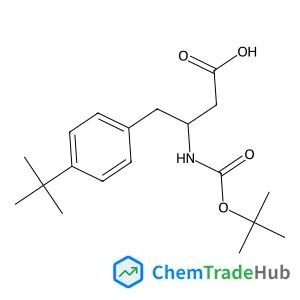
(S)-3-((tert-Butoxycarbonyl)amino)-4-(4-(tert-butyl)phenyl)butanoic acid
CAS Number:
403661-85-8
Molecular Formula:
C19H29NO4
Recommended Suppliers



Disclaimer
This page provides academic journal information for reference and research purposes only. We are not affiliated with any journal publishers and do not handle publication submissions. For publication-related inquiries, please contact the respective journal publishers directly.
If you notice any inaccuracies in the information displayed, please contact us at support@chemtradehub.com. We will promptly review and address your concerns.