












![6-Bromo-3-ethyl-3H-imidazo[4,5-b]pyridine structure](https://static.chemtradehub.com/structs/103/1033202-59-3-2a8f.webp "6-Bromo-3-ethyl-3H-imidazo[4,5-b]pyridine structure")
Solvent-free γ-valerolactone hydrogenation to 2-methyltetrahydrofuran catalysed by Ru/C: a reaction network analysis
Literature Information
Publication Date
2013-12-12
DOI
10.1039/C3GC41803K
Impact Factor
10.182
Authors
Mohammad G. Al-Shaal, Adam Dzierbinski, Regina Palkovits
View Original
Abstract
2-Methyltetrahydrofuran (2-MTHF) is considered to be an attractive biomass based platform chemical with high potential as a biofuel compound and as a green solvent. 2-MTHF can be synthesised from bio-based levulinic acid (LA) and γ-valerolactone (GVL). Herein the optimum reaction conditions for the hydrogenation of GVL over Ru/C have been studied. A full conversion of GVL has been obtained under solvent free conditions with a maximum yield of 2-MTHF of 43%. The optimized conditions have been employed in a mechanistic study of the synthesis of 2-MTHF. Several side reactions have been investigated to explore the full reaction network of this heterogeneously catalysed system and to elucidate the factors influencing product selectivity. Additionally an efficient solvent-free hydrogenation reaction of LA into 2-MTHF could be achieved delivering 90% conversion of LA with a yield of 2-MTHF of 61% by removing water from the system in a two-step approach.
Related Literature
Halogen⋯halogen interactions in decahalo-closo-carboranes: CSD analysis and theoretical study
Maria de las Nieves Piña, Antonio Bauzá, Antonio Frontera
2020-02-21
Paper
DOI: 10.1039/D0CP00114G
Defect engineering, microstructural examination and improvement of ultrafast third harmonic generation in GaZnO nanostructures: a study of e-beam irradiation
Albin Antony, Poornesh P., I. V. Kityk, K. Ozga, J. Jedryka, G. Myronchuk, Suresh D. Kulkarni, Ganesh Sanjeev, Vikash Chandra Petwal, Vijay Pal Verma, Jishnu Dwivedi
2020-01-21
Paper
DOI: 10.1039/C9CP06323D
Is the origin of green fluorescence in unsymmetrical four-ring bent-core liquid crystals single or double proton transfer?
Venkatesh Gude, Manobina Karmakar, Avishek Dey, Prasanta Kumar Datta, Kumar Biradha
2020-02-03
Paper
DOI: 10.1039/C9CP06307B
An in situ exchange mechanism for dye molecules and cations at the nano-semiconductor film/electrolyte interface
Simin Tu
2020-01-28
Communication
DOI: 10.1039/C9CP06288B
Surface plasmon resonance study of the interaction of N-methyl mesoporphyrin IX with G-quadruplex DNA
M. Perenon, H. Bonnet, T. Lavergne, J. Dejeu, E. Defrancq
2020-02-06
Paper
DOI: 10.1039/C9CP06321H
Mirror symmetry origin of Dirac cone formation in rectangular two-dimensional materials
Xuming Qin, Yi Liu, Gui Yang, Dongqiu Zhao
2020-03-02
Paper
DOI: 10.1039/D0CP00244E
Tuning the electronic structures of monolayer triphosphides MP3 (M = Sn and Ge) for CO2 electroreduction through interface engineering: a theoretical prediction
Zhongxu Wang
2020-02-27
Paper
DOI: 10.1039/D0CP00062K
Ti2O3/TiO2 heterophase junctions with enhanced charge separation and spatially separated active sites for photocatalytic CO2 reduction
Min Xu, Rui Yan, Haonan Li, Ning Sun, Yang Qu
2020-02-04
Paper
DOI: 10.1039/C9CP05147C
You might also like
Compound Q&A
What is the market or research trend for N-(4-Methoxybenzyl)-2-pyridinamine (CAS: 52818-63-0)?
N-(4-Methoxybenzyl)-2-pyridinamine (CAS: 52818-63-0) is increasingly being used ...
52818-63-0N-(4-Methoxybenzyl)-...
Compound Q&A
What precautions should be taken when handling Ethyl 4-(2-chlorophenyl)-1,3-thiazole-2-carboxylate (CAS: 1050507-06-6)?
When handling Ethyl 4-(2-chlorophenyl)-1,3-thiazole-2-carboxylate, appropriate p...
1050507-06-6Ethyl 4-(2-chlorophe...
Compound Q&A
What regulatory guidelines apply to diethyldiselane (CAS: 628-39-7)?
Diethyldiselane (CAS: 628-39-7) is classified under the Globally Harmonized Syst...
628-39-7Diethyldiselane
Compound Q&A
What is the market or research trend for oxocopper (CAS: 12053-18-8)?
The market for oxocopper (CAS: 12053-18-8) is primarily driven by its use in cat...
12053-18-8oxocopper; oxo-(oxoc...
Compound Q&A
What is the market or research trend for 5-{[(2-Methyl-2-propanyl)oxy]carbonyl}-5-azaspiro[2.4]heptane-7-carboxylic acid?
The market for 5-{[(2-Methyl-2-propanyl)oxy]carbonyl}-5-azaspiro[2.4]heptane-7-c...
1268519-54-55-{[(2-Methyl-2-prop...
Compound Q&A
What is 2-(1-Pyrrolidinyl)-4-pyridinamine (CAS: 35981-63-6)?
2-(1-Pyrrolidinyl)-4-pyridinamine is a chemical compound with the CAS number 359...
35981-63-62-(1-Pyrrolidinyl)-4...
Compound Q&A
What are the physical and chemical properties of 2-(3-Pyridinyl)-1-azabicyclo[2.2.2]octane (CAS: 91556-75-1)?
2-(3-Pyridinyl)-1-azabicyclo[2.2.2]octane (CAS: 91556-75-1) is a crystalline sol...
91556-75-12-(3-Pyridinyl)-1-az...
Compound Q&A
How is (S)-Alpha-allyl-proline hydrochloride (CAS: 129704-91-2) typically synthesized?
(S)-Alpha-allyl-proline hydrochloride is usually synthesized via a Wittig reacti...
129704-91-2(S)-Alpha-allyl-prol...
Compound Q&A
What is 3-Methyl-1,2-oxazole-5-carboxylic acid (CAS: 4857-42-5)?
3-Methyl-1,2-oxazole-5-carboxylic acid (CAS: 4857-42-5) is an organic compound w...
4857-42-53-Methyl-1,2-oxazole...
Compound Q&A
How is Lys-SMCC-DM1 (CAS: 1281816-04-3) typically synthesized?
Lys-SMCC-DM1 is synthesized via a multi-step process involving the coupling of S...
1281816-04-3Lys-SMCC-DM1
Source Journal
Green Chemistry

CiteScore:
16.1
Self-citation Rate:
7.5%
Articles per Year:
944
Green Chemistry provides a unique forum for the publication of innovative research on the development of alternative green and sustainable technologies. The scope of Green Chemistry is based on, but not limited to, the definition proposed by Anastas and Warner (Green Chemistry: Theory and Practice, P T Anastas and J C Warner, Oxford University Press, Oxford, 1998). Green chemistry is the utilisation of a set of principles that reduces or eliminates the use or generation of hazardous substances in the design, manufacture and application of chemical products. Green Chemistry is at the frontiers of this continuously-evolving interdisciplinary science and publishes research that attempts to reduce the environmental impact of the chemical enterprise by developing a technology base that is inherently non-toxic to living things and the environment. Submissions on all aspects of research relating to the endeavour are welcome. The journal publishes original and significant cutting-edge research that is likely to be of wide general appeal. To be published, work must present a significant advance in green chemistry. Papers must contain a comparison with existing methods and demonstrate advantages over those methods before publication can be considered. For more information please see this Editorial. Coverage includes the following, but is not limited to: Design (e.g. biomimicry, design for degradation/recycling/reduced toxicity…) Reagents & Feedstocks (e.g. renewables, CO2, solvents, auxiliary agents, waste utilization…) Synthesis (e.g. organic, inorganic, synthetic biology…) Catalysis (e.g. homogeneous, heterogeneous, enzyme, whole cell…) Process (e.g. process design, intensification, separations, recycling, efficiency…) Energy (e.g. renewable energy, fuels, photovoltaics, fuel cells, energy storage, energy carriers…) Applications (e.g. electronics, dyes, consumer products, coatings, pharmaceuticals, preservatives, building materials, chemicals for industry/agriculture/mining…) Impact (e.g. safety, metrics, LCA, sustainability, (eco)toxicology…) Green chemistry is, by definition, a continuously-evolving frontier. Therefore, the inclusion of a particular material or technology does not, of itself, guarantee that a paper is suitable for the journal. To be suitable, the novel advance should have the potential for reduced environmental impact relative to the state of the art. Green Chemistry does not normally deal with research associated with 'end-of-pipe' or remediation issues.
Recommended Compounds
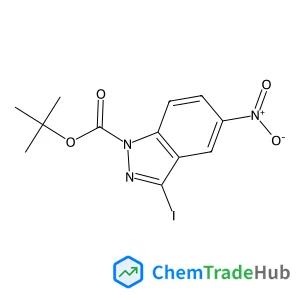
Tert-butyl 3-iodo-5-nitro-1H-indazole-1-carboxylate
CAS Number:
459133-69-8
Molecular Formula:
C12H12IN3O4
Recommended Suppliers




Disclaimer
This page provides academic journal information for reference and research purposes only. We are not affiliated with any journal publishers and do not handle publication submissions. For publication-related inquiries, please contact the respective journal publishers directly.
If you notice any inaccuracies in the information displayed, please contact us at support@chemtradehub.com. We will promptly review and address your concerns.