












![Methyl 3-({2'-[(E)-(hydroxyhydrazono)methyl]-4-biphenylyl}methyl)-2-oxo-2,3-dihydro-1H-benzimidazole-4-carboxylate structure](https://static.chemtradehub.com/structs/149/1499167-72-4-034a.webp "Methyl 3-({2'-[(E)-(hydroxyhydrazono)methyl]-4-biphenylyl}methyl)-2-oxo-2,3-dihydro-1H-benzimidazole-4-carboxylate structure")
Methyl 3-({2'-[(E)-(hydroxyhydrazono)methyl]-4-biphenylyl}methyl)-2-oxo-2,3-dihydro-1H-benzimidazole-4-carboxylate
CAS Number:
1499167-72-4
Molecular Formula:
C23H20N4O4
Hong Liu, Zhong Yuan Lu
To produce soybean oil based foam plastics in terms of the supercritical carbon dioxide foaming technique, the B-stage gel formed by the radical copolymerization of acrylated epoxidized soybean oil (AESO) and styrene (St) was prepared and studied. Accordingly, a dual initiator system consisting of cyclohexanone peroxide (CP) and di-tert-butyl peroxide (DTBP) catalyzed by cobalt octoate (CoOct) was introduced, which provided the gel with (i) good permeability and sufficient thermal stability for saturation in the supercritical carbon dioxide and (ii) polymerizability for freezing the depressurization induced cells during post cure at higher temperatures. The relationships among the reaction processes, structural evolvement and properties variation were characterized and analyzed. Additionally, the experimental results were verified by a numerical simulation. It is hoped that the outcome of this work would not only deepen the understanding of the intermediate status of thermosets, but also help to determine the optimal conditions for fabricating thermosetting foams by supercritical carbon dioxide foaming.
Xiaoyan Hu, Xinru Wang, Zipan Ge, Le Zhang, Yaru Zhou, Jingya Li, Linfeng Bu, Hengan Wu, Pan Li
DOI: 10.1039/C9AN00251K
Mirza Muhammad Fahad Baig, Yu-Chie Chen
DOI: 10.1039/C9AN00240E
Zenghe Li, Lianying Wang, Weijiang Guan, Caifeng Ding, Chao Lu
DOI: 10.1039/C9AN00463G
Julian Haas, Anja Müller, Lorenz Sykora, Boris Mizaikoff
DOI: 10.1039/C9AN00417C
Maria Paraskevaidi, Kássio M. G. Lima, Katherine M. Ashton, Helen F. Stringfellow, Pierre L. Martin-Hirsch, Francis L. Martin
DOI: 10.1039/C8AN00027A
Yuhao Sheng, Tingwei Cao, Yan Xiao, Xiuhua Zhang, Shengfu Wang, Zhihong Liu
DOI: 10.1039/C9AN00288J
Chunyi Liu, Jong H. Yoo
DOI: 10.1039/C9AN00370C
Shing Chung Lam, Estrella Sanz Rodriguez, Paul R. Haddad, Brett Paull
DOI: 10.1039/C9AN00329K
Jintao Huang, Danqi Hong, Wenjie Lang, Jian Liu, Jia Dong, Chaonan Yuan, Jie Luo, Jingyan Ge, Qing Zhu
DOI: 10.1039/C9AN00409B
Nikita T. Looby, Tijana Vasiljevic, Marcin Wąsowicz, Janusz Pawliszyn
DOI: 10.1039/C9AN00041K
When handling 4-Methyl-6-(trifluoromethyl)quinoline (CAS: 40716-16-3), safety go...
4-(3,5-Difluorophenyl)aniline is an aromatic organic compound with the CAS numbe...
5-{[4-(Trifluoromethyl)phenyl]sulfanyl}-1,2,3-thiadiazole-4-carboxylic acid can ...
The market for 4-Benzylaniline hydrochloride (CAS: 6317-57-3) is steadily growin...
[3-(Diethylsulfamoyl)phenyl]boronic acid is generally considered safe when handl...
3-Bromo-2,5-dimethoxyaniline is mainly used in the pharmaceutical and chemical i...
N-Methyl-1-(5-methyl-1H-indol-3-yl)methanamine (CAS: 915922-67-7) is subject to ...
This compound is primarily used in the pharmaceutical industry for the synthesis...
2-Methyl-2-propanyl [(1S,3R)-3-aminocyclohexyl]carbamate (CAS: 1298101-47-9) sho...
Ethyl 2-bromo-4,4,4-trifluorobutanoate (CAS: 367-33-9) is utilized in the pharma...

Green Chemistry provides a unique forum for the publication of innovative research on the development of alternative green and sustainable technologies. The scope of Green Chemistry is based on, but not limited to, the definition proposed by Anastas and Warner (Green Chemistry: Theory and Practice, P T Anastas and J C Warner, Oxford University Press, Oxford, 1998). Green chemistry is the utilisation of a set of principles that reduces or eliminates the use or generation of hazardous substances in the design, manufacture and application of chemical products. Green Chemistry is at the frontiers of this continuously-evolving interdisciplinary science and publishes research that attempts to reduce the environmental impact of the chemical enterprise by developing a technology base that is inherently non-toxic to living things and the environment. Submissions on all aspects of research relating to the endeavour are welcome. The journal publishes original and significant cutting-edge research that is likely to be of wide general appeal. To be published, work must present a significant advance in green chemistry. Papers must contain a comparison with existing methods and demonstrate advantages over those methods before publication can be considered. For more information please see this Editorial. Coverage includes the following, but is not limited to: Design (e.g. biomimicry, design for degradation/recycling/reduced toxicity…) Reagents & Feedstocks (e.g. renewables, CO2, solvents, auxiliary agents, waste utilization…) Synthesis (e.g. organic, inorganic, synthetic biology…) Catalysis (e.g. homogeneous, heterogeneous, enzyme, whole cell…) Process (e.g. process design, intensification, separations, recycling, efficiency…) Energy (e.g. renewable energy, fuels, photovoltaics, fuel cells, energy storage, energy carriers…) Applications (e.g. electronics, dyes, consumer products, coatings, pharmaceuticals, preservatives, building materials, chemicals for industry/agriculture/mining…) Impact (e.g. safety, metrics, LCA, sustainability, (eco)toxicology…) Green chemistry is, by definition, a continuously-evolving frontier. Therefore, the inclusion of a particular material or technology does not, of itself, guarantee that a paper is suitable for the journal. To be suitable, the novel advance should have the potential for reduced environmental impact relative to the state of the art. Green Chemistry does not normally deal with research associated with 'end-of-pipe' or remediation issues.
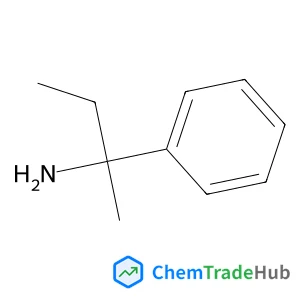
![N-{3-[Benzyl(methyl)amino]propyl}-9-chloro-5,6,7,8-tetrahydro-2-acridinecarboxamide structure](https://static.chemtradehub.com/structs/142/1426944-49-1-1e4c.webp "N-{3-[Benzyl(methyl)amino]propyl}-9-chloro-5,6,7,8-tetrahydro-2-acridinecarboxamide structure")
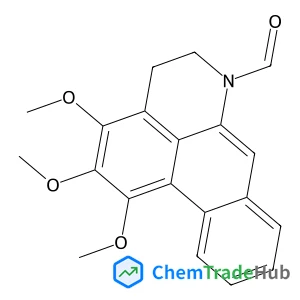
![[3-(2,6-Dichlorophenyl)-5-isopropyl-1,2-oxazol-4-yl]methanol structure](https://static.chemtradehub.com/structs/278/278597-30-1-5c79.webp "[3-(2,6-Dichlorophenyl)-5-isopropyl-1,2-oxazol-4-yl]methanol structure")


