












An eco-friendly three-component regio- and stereoselective synthesis of highly functionalized dihydroindeno[1,2-b]pyrroles under grinding
Literature Information
Publication Date
2013-11-21
DOI
10.1039/C3GC42150C
Impact Factor
10.182
Authors
Sivasubramanian Muthusaravanan, Chinnathambi Sasikumar, Balasubramanian Devi Bala, Subbu Perumal
View Original
Abstract
Facile three-component domino reactions of (E)-3-(dimethylamino)-1-arylprop-2-en-1-ones with anilines and ninhydrin in an equimolar ratio upon grinding in the presence of acetic acid (0.1 ml per mmol of reactants) afforded highly functionalized dihydroindeno[1,2-b]pyrroles regio- and stereoselectively in good yields. This protocol has advantages such as solvent-free reactions under grinding, ambient temperature, short reaction times, simple work-up avoiding chromatographic purification and excellent yields.
Related Literature
In situ study of RSK2 kinase activity in a single living cell by combining single molecule spectroscopy with activity-based probes
Shengrong Yu, Zhixue Du, Chaoqing Dong, Jicun Ren
2019-04-15
Paper
DOI: 10.1039/C9AN00178F
A new visual immunoassay for prostate-specific antigen using near-infrared excited CuxS nanocrystals and imaging on a smartphone
Shuzhen Lv, Kangyao Zhang, Dianping Tang
2019-05-13
Communication
DOI: 10.1039/C9AN00724E
Multiplexing cytokine analysis: towards reducing sample volume needs in clinical diagnostics
Daniel Scott, Smita Joel
2019-04-18
Paper
DOI: 10.1039/C9AN00297A
A novel “signal-on” photoelectrochemical sensor for ultrasensitive detection of alkaline phosphatase activity based on a TiO2/g-C3N4 heterojunction
Feng Xia Wang, Cui Ye, Shi Mo, Liu Li Liao, Xiao Fang Zhang, Yu Ling, Lu Lu, Hong Qun Luo, Nian Bing Li
2018-06-05
Paper
DOI: 10.1039/C8AN00895G
Multi-functional derivatization of amine, hydroxyl, and carboxylate groups for metabolomic investigations of human tissue by electrospray ionization mass spectrometry
Tianjiao Huang, Richard Lee, Dawn S. Hui, James L. Edwards
2018-06-14
Paper
DOI: 10.1039/C8AN00490K
A highly sensitive endotoxin sensor based on redox cycling in a nanocavity
Kentaro Ito, Kumi Y. Inoue, Kosuke Ino, Tomokazu Matsue, Hitoshi Shiku
2019-04-24
Paper
DOI: 10.1039/C9AN00478E
Correction: A new approach to find biomarkers in chronic fatigue syndrome/myalgic encephalomyelitis (CFS/ME) by single-cell Raman micro-spectroscopy
Jiabao Xu, Michelle Potter, Cara Tomas, Joanna L. Elson, Karl J. Morten, Joanna Poulton, Ning Wang, Hanqing Jin, Zhaoxu Hou, Wei E. Huang
2019-06-07
Correction
DOI: 10.1039/C9AN90055A
SERS-based rapid assay for sensitive detection of Group A Streptococcus by evaluation of the swab sampling technique
Merve Eryılmaz, Esra Acar Soykut, Demet Çetin, İsmail Hakkı Boyacı, Zekiye Suludere, Uğur Tamer
2019-04-12
Paper
DOI: 10.1039/C9AN00173E
You might also like
Compound Q&A
What precautions should be taken when handling 4-Methyl-6-(trifluoromethyl)quinoline (CAS: 40716-16-3)?
When handling 4-Methyl-6-(trifluoromethyl)quinoline (CAS: 40716-16-3), safety go...
40716-16-34-Methyl-6-(trifluor...
Compound Q&A
What is 4-(3,5-Difluorophenyl)aniline (CAS: 405058-00-6)?
4-(3,5-Difluorophenyl)aniline is an aromatic organic compound with the CAS numbe...
405058-00-64-(3,5-Difluoropheny...
Compound Q&A
How is 5-{[4-(Trifluoromethyl)phenyl]sulfanyl}-1,2,3-thiadiazole-4-carboxylic acid (CAS: 338982-07-3) typically synthesized?
5-{[4-(Trifluoromethyl)phenyl]sulfanyl}-1,2,3-thiadiazole-4-carboxylic acid can ...
338982-07-35-{[4-(Trifluorometh...
Compound Q&A
What is the market or research trend for 4-Benzylaniline hydrochloride (CAS: 6317-57-3)?
The market for 4-Benzylaniline hydrochloride (CAS: 6317-57-3) is steadily growin...
6317-57-34-Benzylaniline hydr...
Compound Q&A
Is [3-(Diethylsulfamoyl)phenyl]boronic acid (CAS: 871329-58-7) safe?
[3-(Diethylsulfamoyl)phenyl]boronic acid is generally considered safe when handl...
871329-58-7[3-(Diethylsulfamoyl...
Compound Q&A
What are the main uses of 3-Bromo-2,5-dimethoxyaniline (CAS: 115929-62-9)?
3-Bromo-2,5-dimethoxyaniline is mainly used in the pharmaceutical and chemical i...
115929-62-93-Bromo-2,5-dimethox...
Compound Q&A
What regulatory guidelines apply to N-Methyl-1-(5-methyl-1H-indol-3-yl)methanamine (CAS: 915922-67-7)?
N-Methyl-1-(5-methyl-1H-indol-3-yl)methanamine (CAS: 915922-67-7) is subject to ...
915922-67-7N-Methyl-1-(5-methyl...
Compound Q&A
What industries use Carbamic acid, N-[(5S)-5,6-diamino-6-oxohexyl]-, 1,1-dimethylethyl ester (CAS: 24828-96-4)?
This compound is primarily used in the pharmaceutical industry for the synthesis...
24828-96-4Carbamic acid, N-[(5...
Compound Q&A
How should 2-Methyl-2-propanyl [(1S,3R)-3-aminocyclohexyl]carbamate (CAS: 1298101-47-9) be stored?
2-Methyl-2-propanyl [(1S,3R)-3-aminocyclohexyl]carbamate (CAS: 1298101-47-9) sho...
1298101-47-92-Methyl-2-propanyl ...
Compound Q&A
What industries use Ethyl 2-bromo-4,4,4-trifluorobutanoate (CAS: 367-33-9)?
Ethyl 2-bromo-4,4,4-trifluorobutanoate (CAS: 367-33-9) is utilized in the pharma...
367-33-9Ethyl 2-bromo-4,4,4-...
Source Journal
Green Chemistry

CiteScore:
16.1
Self-citation Rate:
7.5%
Articles per Year:
944
Green Chemistry provides a unique forum for the publication of innovative research on the development of alternative green and sustainable technologies. The scope of Green Chemistry is based on, but not limited to, the definition proposed by Anastas and Warner (Green Chemistry: Theory and Practice, P T Anastas and J C Warner, Oxford University Press, Oxford, 1998). Green chemistry is the utilisation of a set of principles that reduces or eliminates the use or generation of hazardous substances in the design, manufacture and application of chemical products. Green Chemistry is at the frontiers of this continuously-evolving interdisciplinary science and publishes research that attempts to reduce the environmental impact of the chemical enterprise by developing a technology base that is inherently non-toxic to living things and the environment. Submissions on all aspects of research relating to the endeavour are welcome. The journal publishes original and significant cutting-edge research that is likely to be of wide general appeal. To be published, work must present a significant advance in green chemistry. Papers must contain a comparison with existing methods and demonstrate advantages over those methods before publication can be considered. For more information please see this Editorial. Coverage includes the following, but is not limited to: Design (e.g. biomimicry, design for degradation/recycling/reduced toxicity…) Reagents & Feedstocks (e.g. renewables, CO2, solvents, auxiliary agents, waste utilization…) Synthesis (e.g. organic, inorganic, synthetic biology…) Catalysis (e.g. homogeneous, heterogeneous, enzyme, whole cell…) Process (e.g. process design, intensification, separations, recycling, efficiency…) Energy (e.g. renewable energy, fuels, photovoltaics, fuel cells, energy storage, energy carriers…) Applications (e.g. electronics, dyes, consumer products, coatings, pharmaceuticals, preservatives, building materials, chemicals for industry/agriculture/mining…) Impact (e.g. safety, metrics, LCA, sustainability, (eco)toxicology…) Green chemistry is, by definition, a continuously-evolving frontier. Therefore, the inclusion of a particular material or technology does not, of itself, guarantee that a paper is suitable for the journal. To be suitable, the novel advance should have the potential for reduced environmental impact relative to the state of the art. Green Chemistry does not normally deal with research associated with 'end-of-pipe' or remediation issues.
Recommended Compounds
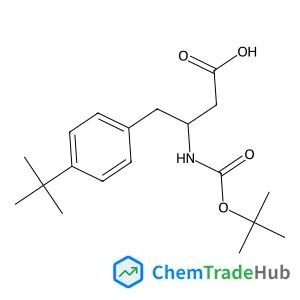
(S)-3-((tert-Butoxycarbonyl)amino)-4-(4-(tert-butyl)phenyl)butanoic acid
CAS Number:
403661-85-8
Molecular Formula:
C19H29NO4
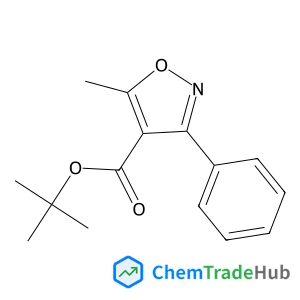
2-Methyl-2-propanyl 5-methyl-3-phenyl-1,2-oxazole-4-carboxylate
CAS Number:
211429-79-7
Molecular Formula:
C15H17NO3
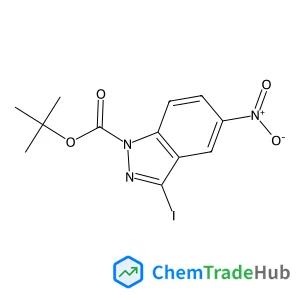
Tert-butyl 3-iodo-5-nitro-1H-indazole-1-carboxylate
CAS Number:
459133-69-8
Molecular Formula:
C12H12IN3O4
Recommended Suppliers







Disclaimer
This page provides academic journal information for reference and research purposes only. We are not affiliated with any journal publishers and do not handle publication submissions. For publication-related inquiries, please contact the respective journal publishers directly.
If you notice any inaccuracies in the information displayed, please contact us at support@chemtradehub.com. We will promptly review and address your concerns.