












A procedure for the preparation of Ti-Beta zeolites for catalytic epoxidation with hydrogen peroxide
Literature Information
Publication Date
2014-01-20
DOI
10.1039/C3GC42534G
Impact Factor
10.182
Authors
Bo Tang, Weili Dai, Naijia Guan, Landong Li, Michael Hunger
View Original
Abstract
Ti-Beta zeolite has been successfully prepared via a reproducible and scalable two-step post-synthesis strategy, which consists of creating vacant T sites with associated silanol groups by dealumination of H-Beta and subsequent dry impregnation of the resulting Si-Beta with titanocene dichloride. The mechanism of Ti incorporation into the framework of Beta is investigated by diffuse reflectance infrared Fourier transform (DRIFT) and multinuclear solid-state nuclear magnetic resonance (SSNMR) spectroscopy. Characterization results obtained from diffuse reflectance ultraviolet-visible (UV-vis) and X-ray photoelectron spectroscopy (XPS) reveal that the majority of incorporated Ti species exist in the form of isolated tetrahedrally coordinated Ti(IV) in the zeolite framework while a minority exists in the form of isolated octahedrally coordinated Ti(VI) at framework or extra-framework positions. The obtained Ti-Beta zeolites are highly active and selective catalysts for the epoxidation of unsaturated ketones, e.g. 2-cyclohexen-1-one, with hydrogen peroxide as an oxidant. A quasilinear correlation between the epoxidation rate and the number of framework Ti(IV) species could be drawn evidencing that these Ti(IV) species are responsible for the epoxidation activity of the Ti-Beta zeolites under study. The impact of preparation parameters and reaction conditions on the catalytic performances of the Ti-Beta zeolites in the epoxidation of unsaturated organic compounds with hydrogen peroxide is discussed in detail.
Recommended Journals
Related Literature
Electron confinement induced by diluted hydrogen-like ad-atoms in graphene ribbons
L. Rosales, M. Pacheco, A. Ayuela
2015-08-21
Paper
DOI: 10.1039/C5CP03061G
Non-covalent interaction of benzene with methanol and diethyl ether solid surfaces
Demian Marchione, Martin R. S. McCoustra
2016-07-07
Paper
DOI: 10.1039/C6CP01787H
Carbon and proton Overhauser DNP from MD simulations and ab initio calculations: TEMPOL in acetone
Sami Emre Küçük, Timur Biktagirov, Deniz Sezer
2015-08-25
Paper
DOI: 10.1039/C5CP04405G
HP-β-cyclodextrin as an inhibitor of amyloid-β aggregation and toxicity
Rundong Hu, Mingzhen Zhang, Hong Chen, Yan Sun, Lingyun Jia, Jie Zheng
2016-06-28
Paper
DOI: 10.1039/C6CP03582E
TEMPO-mediated oxidized winter melon-based carbonaceous aerogel as an ultralight 3D support for enhanced photodegradation of organic pollutants
Miao Miao, Gangling Wang, Shaomei Cao, Xin Feng, Jianhui Fang, Liyi Shi
2015-08-27
Paper
DOI: 10.1039/C5CP04679C
Near infrared electroluminescence of ZnMgO/InN core–shell nanorod heterostructures grown on Si substrate
Guoguang Wu, Weitao Zheng, Fubin Gao, Hang Yang, Yang Zhao, Jingzhi Yin, Wei Zheng, Wancheng Li, Baolin Zhang, Guotong Du
2016-06-07
Paper
DOI: 10.1039/C6CP03199D
Electron–vibration entanglement in the Born–Oppenheimer description of chemical reactions and spectroscopy
Ross H. McKenzie
2015-07-08
Paper
DOI: 10.1039/C5CP02239H
Near infrared absorbing near infrared emitting highly-sensitive luminescent nanothermometer based on Nd3+ to Yb3+ energy transfer
Ł. Marciniak, A. Bednarkiewicz, M. Stefanski, R. Tomala, D. Hreniak, W. Strek
2015-08-17
Paper
DOI: 10.1039/C5CP03861H
π-Ring currents in doped coronenes with nitrogen and boron: diatropic–paratropic duality
Inmaculada García Cuesta, Barnaby Pownall, Stefano Pelloni, Alfredo M. Sánchez de Merás
2015-08-26
Paper
DOI: 10.1039/C5CP03732H
Computational insights into CdSe quantum dots' interactions with acetate ligands
Patrick K. Tamukong, Wadumesthrige D. N. Peiris, Svetlana Kilina
2016-07-04
Paper
DOI: 10.1039/C6CP01665K
You might also like
Compound Q&A
What precautions should be taken when handling 4-Methyl-6-(trifluoromethyl)quinoline (CAS: 40716-16-3)?
When handling 4-Methyl-6-(trifluoromethyl)quinoline (CAS: 40716-16-3), safety go...
40716-16-34-Methyl-6-(trifluor...
Compound Q&A
What is 4-(3,5-Difluorophenyl)aniline (CAS: 405058-00-6)?
4-(3,5-Difluorophenyl)aniline is an aromatic organic compound with the CAS numbe...
405058-00-64-(3,5-Difluoropheny...
Compound Q&A
How is 5-{[4-(Trifluoromethyl)phenyl]sulfanyl}-1,2,3-thiadiazole-4-carboxylic acid (CAS: 338982-07-3) typically synthesized?
5-{[4-(Trifluoromethyl)phenyl]sulfanyl}-1,2,3-thiadiazole-4-carboxylic acid can ...
338982-07-35-{[4-(Trifluorometh...
Compound Q&A
What is the market or research trend for 4-Benzylaniline hydrochloride (CAS: 6317-57-3)?
The market for 4-Benzylaniline hydrochloride (CAS: 6317-57-3) is steadily growin...
6317-57-34-Benzylaniline hydr...
Compound Q&A
Is [3-(Diethylsulfamoyl)phenyl]boronic acid (CAS: 871329-58-7) safe?
[3-(Diethylsulfamoyl)phenyl]boronic acid is generally considered safe when handl...
871329-58-7[3-(Diethylsulfamoyl...
Compound Q&A
What are the main uses of 3-Bromo-2,5-dimethoxyaniline (CAS: 115929-62-9)?
3-Bromo-2,5-dimethoxyaniline is mainly used in the pharmaceutical and chemical i...
115929-62-93-Bromo-2,5-dimethox...
Compound Q&A
What regulatory guidelines apply to N-Methyl-1-(5-methyl-1H-indol-3-yl)methanamine (CAS: 915922-67-7)?
N-Methyl-1-(5-methyl-1H-indol-3-yl)methanamine (CAS: 915922-67-7) is subject to ...
915922-67-7N-Methyl-1-(5-methyl...
Compound Q&A
What industries use Carbamic acid, N-[(5S)-5,6-diamino-6-oxohexyl]-, 1,1-dimethylethyl ester (CAS: 24828-96-4)?
This compound is primarily used in the pharmaceutical industry for the synthesis...
24828-96-4Carbamic acid, N-[(5...
Compound Q&A
How should 2-Methyl-2-propanyl [(1S,3R)-3-aminocyclohexyl]carbamate (CAS: 1298101-47-9) be stored?
2-Methyl-2-propanyl [(1S,3R)-3-aminocyclohexyl]carbamate (CAS: 1298101-47-9) sho...
1298101-47-92-Methyl-2-propanyl ...
Compound Q&A
What industries use Ethyl 2-bromo-4,4,4-trifluorobutanoate (CAS: 367-33-9)?
Ethyl 2-bromo-4,4,4-trifluorobutanoate (CAS: 367-33-9) is utilized in the pharma...
367-33-9Ethyl 2-bromo-4,4,4-...
Source Journal
Green Chemistry

CiteScore:
16.1
Self-citation Rate:
7.5%
Articles per Year:
944
Green Chemistry provides a unique forum for the publication of innovative research on the development of alternative green and sustainable technologies. The scope of Green Chemistry is based on, but not limited to, the definition proposed by Anastas and Warner (Green Chemistry: Theory and Practice, P T Anastas and J C Warner, Oxford University Press, Oxford, 1998). Green chemistry is the utilisation of a set of principles that reduces or eliminates the use or generation of hazardous substances in the design, manufacture and application of chemical products. Green Chemistry is at the frontiers of this continuously-evolving interdisciplinary science and publishes research that attempts to reduce the environmental impact of the chemical enterprise by developing a technology base that is inherently non-toxic to living things and the environment. Submissions on all aspects of research relating to the endeavour are welcome. The journal publishes original and significant cutting-edge research that is likely to be of wide general appeal. To be published, work must present a significant advance in green chemistry. Papers must contain a comparison with existing methods and demonstrate advantages over those methods before publication can be considered. For more information please see this Editorial. Coverage includes the following, but is not limited to: Design (e.g. biomimicry, design for degradation/recycling/reduced toxicity…) Reagents & Feedstocks (e.g. renewables, CO2, solvents, auxiliary agents, waste utilization…) Synthesis (e.g. organic, inorganic, synthetic biology…) Catalysis (e.g. homogeneous, heterogeneous, enzyme, whole cell…) Process (e.g. process design, intensification, separations, recycling, efficiency…) Energy (e.g. renewable energy, fuels, photovoltaics, fuel cells, energy storage, energy carriers…) Applications (e.g. electronics, dyes, consumer products, coatings, pharmaceuticals, preservatives, building materials, chemicals for industry/agriculture/mining…) Impact (e.g. safety, metrics, LCA, sustainability, (eco)toxicology…) Green chemistry is, by definition, a continuously-evolving frontier. Therefore, the inclusion of a particular material or technology does not, of itself, guarantee that a paper is suitable for the journal. To be suitable, the novel advance should have the potential for reduced environmental impact relative to the state of the art. Green Chemistry does not normally deal with research associated with 'end-of-pipe' or remediation issues.
Recommended Compounds
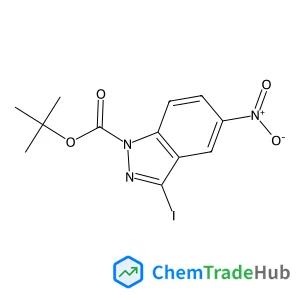
Tert-butyl 3-iodo-5-nitro-1H-indazole-1-carboxylate
CAS Number:
459133-69-8
Molecular Formula:
C12H12IN3O4
![Imidazo[1,2-c]pyrimidine structure](https://static.chemtradehub.com/structs/274/274-78-2-8b4c.webp "Imidazo[1,2-c]pyrimidine structure")
Recommended Suppliers







Disclaimer
This page provides academic journal information for reference and research purposes only. We are not affiliated with any journal publishers and do not handle publication submissions. For publication-related inquiries, please contact the respective journal publishers directly.
If you notice any inaccuracies in the information displayed, please contact us at support@chemtradehub.com. We will promptly review and address your concerns.