












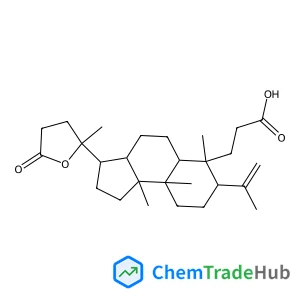
Clean and efficient assembly of functionalized benzofuro[2,3-c]pyridines via metal-free one-pot domino reactions
Literature Information
Publication Date
2014-01-10
DOI
10.1039/C3GC42234H
Impact Factor
10.182
Authors
Yin Rao, Zhexian Li, Guodong Yin
View Original
Abstract
A clean and efficient method for the domino synthesis of new functionalized benzofuro[2,3-c]pyridines from easily accessible 2-hydroxychalcones, α-bromo ketones and ammonium acetate is described. Furan and pyridine ring moieties are ingeniously formed in a one-pot operation in this tricyclic system.
Related Literature
Anomalous effective polarity of an air/liquid-mixture interface: a heterodyne-detected electronic and vibrational sum frequency generation study
Sudip Kumar Mondal, Ken-ichi Inoue, Shoichi Yamaguchi
2015-09-01
Communication
DOI: 10.1039/C5CP04264J
Unravelling the optical responses of nanoplasmonic mirror-on-mirror metamaterials
Debabrata Sikdar, Shakeeb B. Hasan, Michael Urbakh, Joshua B. Edel, Alexei A. Kornyshev
2016-07-05
Paper
DOI: 10.1039/C6CP04551K
Nanoscale magnetism and novel electronic properties of a bilayer bismuth(111) film with vacancies and chemical doping
Yajun Zhang
2016-06-29
Paper
DOI: 10.1039/C6CP03056D
Divergent trend in density versus viscosity of ionic liquid/water mixtures: a molecular view from guanidinium ionic liquids
Ramesh L. Gardas, Sanjib Senapati
2015-08-28
Paper
DOI: 10.1039/C5CP02841H
Separation of thorium ions from wolframite and scandium concentrates using graphene oxide
Ondřej Jankovský, David Sedmidubský, Petr Šimek, Kateřina Klímová, Daniel Bouša, Chris Boothroyd, Zdeněk Sofer
2015-08-27
Paper
DOI: 10.1039/C5CP04384K
The role of alkoxy radicals in the heterogeneous reaction of two structural isomers of dimethylsuccinic acid
Chiu Tung Cheng, Kevin R. Wilson
2015-08-27
Paper
DOI: 10.1039/C5CP03791C
Electrical impedance spectroscopy of a PET chip sandwiched between two disk electrodes: understanding the contribution of the polymer/electrode interface
L. Chaal, V. Vivier, B. Tribollet, J. Gamby
2016-06-29
Paper
DOI: 10.1039/C6CP03042D
A rational synthesis of hierarchically porous, N-doped carbon from Mg-based MOFs: understanding the link between nitrogen content and oxygen reduction electrocatalysis
David Eisenberg, Wowa Stroek, Norbert J. Geels, Stefania Tanase, Marilena Ferbinteanu, Simon J. Teat, Pierre Mettraux, Ning Yan, Gadi Rothenberg
2016-07-08
Paper
DOI: 10.1039/C6CP04132A
Deformation twinning and the role of amino acids and magnesium in calcite hardness from molecular simulation
A. S. Côté, R. Darkins, D. M. Duffy
2015-07-13
Paper
DOI: 10.1039/C5CP03370E
A chemical chaperone induces inhomogeneous conformational changes in flexible proteins
Djemel Hamdane, Christophe Velours, David Cornu, Magali Nicaise, Murielle Lombard, Marc Fontecave
2016-07-01
Paper
DOI: 10.1039/C6CP03635J
You might also like
Compound Q&A
What precautions should be taken when handling 4-Methyl-6-(trifluoromethyl)quinoline (CAS: 40716-16-3)?
When handling 4-Methyl-6-(trifluoromethyl)quinoline (CAS: 40716-16-3), safety go...
40716-16-34-Methyl-6-(trifluor...
Compound Q&A
What is 4-(3,5-Difluorophenyl)aniline (CAS: 405058-00-6)?
4-(3,5-Difluorophenyl)aniline is an aromatic organic compound with the CAS numbe...
405058-00-64-(3,5-Difluoropheny...
Compound Q&A
How is 5-{[4-(Trifluoromethyl)phenyl]sulfanyl}-1,2,3-thiadiazole-4-carboxylic acid (CAS: 338982-07-3) typically synthesized?
5-{[4-(Trifluoromethyl)phenyl]sulfanyl}-1,2,3-thiadiazole-4-carboxylic acid can ...
338982-07-35-{[4-(Trifluorometh...
Compound Q&A
What is the market or research trend for 4-Benzylaniline hydrochloride (CAS: 6317-57-3)?
The market for 4-Benzylaniline hydrochloride (CAS: 6317-57-3) is steadily growin...
6317-57-34-Benzylaniline hydr...
Compound Q&A
Is [3-(Diethylsulfamoyl)phenyl]boronic acid (CAS: 871329-58-7) safe?
[3-(Diethylsulfamoyl)phenyl]boronic acid is generally considered safe when handl...
871329-58-7[3-(Diethylsulfamoyl...
Compound Q&A
What are the main uses of 3-Bromo-2,5-dimethoxyaniline (CAS: 115929-62-9)?
3-Bromo-2,5-dimethoxyaniline is mainly used in the pharmaceutical and chemical i...
115929-62-93-Bromo-2,5-dimethox...
Compound Q&A
What regulatory guidelines apply to N-Methyl-1-(5-methyl-1H-indol-3-yl)methanamine (CAS: 915922-67-7)?
N-Methyl-1-(5-methyl-1H-indol-3-yl)methanamine (CAS: 915922-67-7) is subject to ...
915922-67-7N-Methyl-1-(5-methyl...
Compound Q&A
What industries use Carbamic acid, N-[(5S)-5,6-diamino-6-oxohexyl]-, 1,1-dimethylethyl ester (CAS: 24828-96-4)?
This compound is primarily used in the pharmaceutical industry for the synthesis...
24828-96-4Carbamic acid, N-[(5...
Compound Q&A
How should 2-Methyl-2-propanyl [(1S,3R)-3-aminocyclohexyl]carbamate (CAS: 1298101-47-9) be stored?
2-Methyl-2-propanyl [(1S,3R)-3-aminocyclohexyl]carbamate (CAS: 1298101-47-9) sho...
1298101-47-92-Methyl-2-propanyl ...
Compound Q&A
What industries use Ethyl 2-bromo-4,4,4-trifluorobutanoate (CAS: 367-33-9)?
Ethyl 2-bromo-4,4,4-trifluorobutanoate (CAS: 367-33-9) is utilized in the pharma...
367-33-9Ethyl 2-bromo-4,4,4-...
Source Journal
Green Chemistry

CiteScore:
16.1
Self-citation Rate:
7.5%
Articles per Year:
944
Green Chemistry provides a unique forum for the publication of innovative research on the development of alternative green and sustainable technologies. The scope of Green Chemistry is based on, but not limited to, the definition proposed by Anastas and Warner (Green Chemistry: Theory and Practice, P T Anastas and J C Warner, Oxford University Press, Oxford, 1998). Green chemistry is the utilisation of a set of principles that reduces or eliminates the use or generation of hazardous substances in the design, manufacture and application of chemical products. Green Chemistry is at the frontiers of this continuously-evolving interdisciplinary science and publishes research that attempts to reduce the environmental impact of the chemical enterprise by developing a technology base that is inherently non-toxic to living things and the environment. Submissions on all aspects of research relating to the endeavour are welcome. The journal publishes original and significant cutting-edge research that is likely to be of wide general appeal. To be published, work must present a significant advance in green chemistry. Papers must contain a comparison with existing methods and demonstrate advantages over those methods before publication can be considered. For more information please see this Editorial. Coverage includes the following, but is not limited to: Design (e.g. biomimicry, design for degradation/recycling/reduced toxicity…) Reagents & Feedstocks (e.g. renewables, CO2, solvents, auxiliary agents, waste utilization…) Synthesis (e.g. organic, inorganic, synthetic biology…) Catalysis (e.g. homogeneous, heterogeneous, enzyme, whole cell…) Process (e.g. process design, intensification, separations, recycling, efficiency…) Energy (e.g. renewable energy, fuels, photovoltaics, fuel cells, energy storage, energy carriers…) Applications (e.g. electronics, dyes, consumer products, coatings, pharmaceuticals, preservatives, building materials, chemicals for industry/agriculture/mining…) Impact (e.g. safety, metrics, LCA, sustainability, (eco)toxicology…) Green chemistry is, by definition, a continuously-evolving frontier. Therefore, the inclusion of a particular material or technology does not, of itself, guarantee that a paper is suitable for the journal. To be suitable, the novel advance should have the potential for reduced environmental impact relative to the state of the art. Green Chemistry does not normally deal with research associated with 'end-of-pipe' or remediation issues.
Recommended Compounds
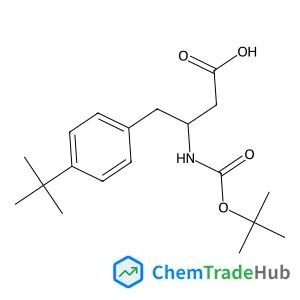
(S)-3-((tert-Butoxycarbonyl)amino)-4-(4-(tert-butyl)phenyl)butanoic acid
CAS Number:
403661-85-8
Molecular Formula:
C19H29NO4
Recommended Suppliers





Disclaimer
This page provides academic journal information for reference and research purposes only. We are not affiliated with any journal publishers and do not handle publication submissions. For publication-related inquiries, please contact the respective journal publishers directly.
If you notice any inaccuracies in the information displayed, please contact us at support@chemtradehub.com. We will promptly review and address your concerns.