












Efficient dye regeneration at low driving force achieved in triphenylamine dye LEG4 and TEMPO redox mediator based dye-sensitized solar cells
Literature Information
Publication Date
2015-05-12
DOI
10.1039/C5CP01880C
Impact Factor
3.676
Authors
Wenxing Yang, Yan Hao, Gerrit Boschloo
View Original
Abstract
Minimizing the driving force required for the regeneration of oxidized dyes using redox mediators in an electrolyte is essential to further improve the open-circuit voltage and efficiency of dye-sensitized solar cells (DSSCs). Appropriate combinations of redox mediators and dye molecules should be explored to achieve this goal. Herein, we present a triphenylamine dye, LEG4, in combination with a TEMPO-based electrolyte in acetonitrile (E0 = 0.89 V vs. NHE), reaching an efficiency of up to 5.4% under one sun illumination and 40% performance improvement compared to the previously and widely used indoline dye D149. The origin of this improvement was found to be the increased dye regeneration efficiency of LEG4 using the TEMPO redox mediator, which regenerated more than 80% of the oxidized dye with a driving force of only ∼0.2 eV. Detailed mechanistic studies further revealed that in addition to electron recombination to oxidized dyes, recombination of electrons from the conducting substrate and the mesoporous TiO2 film to the TEMPO+ redox species in the electrolyte accounts for the reduced short circuit current, compared to the state-of-the-art cobalt tris(bipyridine) electrolyte system. The diffusion length of the TEMPO-electrolyte based DSSCs was determined to be ∼0.5 μm, which is smaller than the ∼2.8 μm found for cobalt-electrolyte based DSSCs. These results show the advantages of using LEG4 as a sensitizer, compared to previously record indoline dyes, in combination with a TEMPO-based electrolyte. The low driving force for efficient dye regeneration presented by these results shows the potential to further improve the power conversion efficiency (PCE) of DSSCs by utilizing redox couples and dyes with a minimal need of driving force for high regeneration yields.
Related Literature
Efficient surface enhanced Raman scattering on confeito-like gold nanoparticle-adsorbed self-assembled monolayers
Chia-Chi Chang, Liang-Yih Chen, Masaki Ujihara
2015-11-04
Paper
DOI: 10.1039/C5CP05490G
Excited-state deactivation in 8-oxo-deoxyguanosine: comparison between anionic and neutral forms
Deniz Tuna, Wolfgang Domcke
2015-11-23
Paper
DOI: 10.1039/C5CP05804J
On the explanation of hysteresis in the adsorption of ammonia on graphitized thermal carbon black
Yonghong Zeng, D. D. Do, Toshihide Horikawa, D. Nicholson, Kazuyuki Nakai
2015-11-27
Paper
DOI: 10.1039/C5CP06034F
Urea hydration from dielectric relaxation spectroscopy: old findings confirmed, new insights gained
Vira Agieienko, Richard Buchner
2015-12-24
Paper
DOI: 10.1039/C5CP07604H
Engineering of hydrogenated two-dimensional h-BN/C superlattices as electrostatic substrates
Zhun Liu, Xiaoliang Zhong, Hui Yan, Ru-Zhi Wang
2015-11-23
Paper
DOI: 10.1039/C5CP06037K
Characterization of nitrogen species incorporated into graphite using low energy nitrogen ion sputtering
Hisao Kiuchi, Takahiro Kondo, Masataka Sakurai, Donghui Guo, Junji Nakamura, Maki Kawai, Masaharu Oshima
2015-11-16
Paper
DOI: 10.1039/C5CP02305J
Interaction of C60 fullerenes with asymmetric and curved lipid membranes: a molecular dynamics study
Yevhen K. Cherniavskyi, Christophe Ramseyer, Semen O. Yesylevskyy
2015-11-16
Paper
DOI: 10.1039/C5CP05838D
High temperature oxidation of iron–iron oxide core–shell nanowires composed of iron nanoparticles
M. Krajewski, K. Brzozka, W. S. Lin, H. M. Lin, M. Tokarczyk, G. Kowalski, D. Wasik
2016-01-06
Paper
DOI: 10.1039/C5CP07569F
Comment on “Fullerene-based materials for solar cell applications: design of novel acceptors for efficient polymer solar cells – a DFT study” by A. Mohajeri and A. Omidvar, Phys. Chem. Chem. Phys., 2015, 17, 22367
Denis Sh. Sabirov, Anton O. Terentyev, Igor S. Shepelevich
2016-01-04
Comment
DOI: 10.1039/C5CP05408G
Deep traps can reduce memory effects of shallower ones in scintillators
Federico Moretti, Gaël Patton, Andrei Belsky, Ashot G. Petrosyan, Christophe Dujardin
2015-12-01
Paper
DOI: 10.1039/C5CP05711F
You might also like
Compound Q&A
How should waste containing 6-Chloro-5-(2'-hydroxy-3'-methoxy-4-biphenylyl)-3-(3-methoxyphenyl)-1H-pyrrolo[3,2-d]pyrimidine-2,4(3H,5H)-dione (CAS: 1346607-05-3) be handled?
Waste containing 6-Chloro-5-(2'-hydroxy-3'-methoxy-4-biphenylyl)-3-(3-methoxyphe...
1346607-05-36-Chloro-5-(2'-hydro...
Compound Q&A
What are the main uses of (3alpha,5alpha)-3-Hydroxypregnane-11,20-dione (CAS: 23930-19-0)?
(3alpha,5alpha)-3-Hydroxypregnane-11,20-dione is primarily used in the pharmaceu...
23930-19-0(3alpha,5alpha)-3-Hy...
Compound Q&A
What is the market or research trend for 4-Amino-6-chloro-2-pyridinecarboxylic acid (CAS: 546141-56-4)?
The market for 4-Amino-6-chloro-2-pyridinecarboxylic acid (CAS: 546141-56-4) is ...
546141-56-44-Amino-6-chloro-2-p...
Compound Q&A
Are there alternatives to (2-Benzoylethyl)trimethylammonium chloride (CAS: 24472-88-6) in synthesis?
Alternatives to (2-Benzoylethyl)trimethylammonium chloride (CAS: 24472-88-6) in ...
24472-88-6(2-Benzoylethyl)trim...
Compound Q&A
Is N-[4-Nitro-3-(trifluoromethyl)phenyl]acetamide (CAS: 393-12-4) safe?
N-[4-Nitro-3-(trifluoromethyl)phenyl]acetamide (CAS: 393-12-4) is generally safe...
393-12-4N-[4-Nitro-3-(triflu...
Compound Q&A
Are there alternatives to [(4R,5R,6S)-5-hydroxy-10-imino-3,7-dioxa-1,9-diazatricyclo[6.4.0.02,6]dodeca-8,11-dien-4-yl]methyl dihydrogen phosphate (CAS: 39679-56-6) in synthesis?
Alternative reagents such as other phosphates or similar functional groups can b...
39679-56-6[(4R,5R,6S)-5-hydrox...
Compound Q&A
Are there alternatives to N,N'-Bis(3-aminopropyl)-1,3-propanediamine (CAS: 4605-14-5) in synthesis?
There are alternatives to N,N'-Bis(3-aminopropyl)-1,3-propanediamine (CAS: 4605-...
4605-14-5N,N'-Bis(3-aminoprop...
Compound Q&A
What precautions should be taken when handling Aluminium trihexadecanoate (CAS: 555-35-1)?
When handling Aluminium trihexadecanoate, it is important to use appropriate per...
555-35-1Aluminium trihexadec...
Compound Q&A
What is (1,1-Dioxido-3-oxo-1,2-benzothiazol-2(3H)-yl)acetic acid (CAS: 52188-11-1)?
(1,1-Dioxido-3-oxo-1,2-benzothiazol-2(3H)-yl)acetic acid is a chemical compound ...
52188-11-1(1,1-Dioxido-3-oxo-1...
Compound Q&A
Are there alternatives to 5,5-dimethyloxolan-2-one (CAS: 3123-97-5) in synthesis?
Several alternatives to 5,5-dimethyloxolan-2-one (CAS: 3123-97-5) can be used in...
3123-97-55,5-dimethyloxolan-2...
Source Journal
Physical Chemistry Chemical Physics

CiteScore:
5.5
Self-citation Rate:
10.3%
Articles per Year:
3036
Physical Chemistry Chemical Physics (PCCP) is an international journal co-owned by 19 physical chemistry and physics societies from around the world. This journal publishes original, cutting-edge research in physical chemistry, chemical physics and biophysical chemistry. To be suitable for publication in PCCP, articles must include significant innovation and/or insight into physical chemistry; this is the most important criterion that reviewers and Editors will judge against when evaluating submissions. The journal has a broad scope and welcomes contributions spanning experiment, theory, computation and data science. Topical coverage includes spectroscopy, dynamics, kinetics, statistical mechanics, thermodynamics, electrochemistry, catalysis, surface science, quantum mechanics, quantum computing and machine learning. Interdisciplinary research areas such as polymers and soft matter, materials, nanoscience, energy, surfaces/interfaces, and biophysical chemistry are welcomed if they demonstrate significant innovation and/or insight into physical chemistry. Joined experimental/theoretical studies are particularly appreciated when complementary and based on up-to-date approaches.
Recommended Compounds

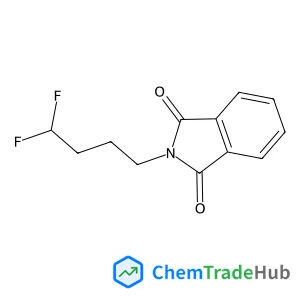
2-(4,4-Difluorobutyl)-1H-isoindole-1,3(2H)-dione
CAS Number:
1265341-14-7
Molecular Formula:
C12H11F2NO2

![N-{[(2-Methyl-2-propanyl)oxy]carbonyl}-L-methionylglycine structure](https://static.chemtradehub.com/structs/234/23446-03-9-e1e5.webp "N-{[(2-Methyl-2-propanyl)oxy]carbonyl}-L-methionylglycine structure")
N-{[(2-Methyl-2-propanyl)oxy]carbonyl}-L-methionylglycine
CAS Number:
23446-03-9
Molecular Formula:
C12H22N2O5S
Recommended Suppliers





Disclaimer
This page provides academic journal information for reference and research purposes only. We are not affiliated with any journal publishers and do not handle publication submissions. For publication-related inquiries, please contact the respective journal publishers directly.
If you notice any inaccuracies in the information displayed, please contact us at support@chemtradehub.com. We will promptly review and address your concerns.