












![Benzo[b]naphtho[2,1-d]thiophene structure](https://static.chemtradehub.com/structs/239/239-35-0-ff90.webp "Benzo[b]naphtho[2,1-d]thiophene structure")
Efficient surface enhanced Raman scattering on confeito-like gold nanoparticle-adsorbed self-assembled monolayers
Literature Information
Publication Date
2015-11-04
DOI
10.1039/C5CP05490G
Impact Factor
3.676
Authors
Chia-Chi Chang, Liang-Yih Chen, Masaki Ujihara
View Original
Abstract
Confeito-like gold nanoparticles (AuNPs; average diameter = 80 nm) exhibiting a plasmon absorption band at 590 nm were adsorbed through immersion-adsorption on two self-assembled monolayers (SAMs) of 3-aminopropyltriethoxysilane (APTES-SAM) and polystyrene spheres coated with amine-terminated poly(amido amine) dendrimers (DEN/PS-SAM). The surface enhanced Raman scattering (SERS) effect on the SAM substrates was examined using the molecules of a probe dye, rhodamine 6G (R6G). The Raman scattering was strongly intensified on both substrates, but the enhancement factor (>10 000) of the AuNP/DEN/PS-SAM hierarchy substrate was 5–10 times higher than that of the AuNP/APTES-SAM substrate. This strong enhancement is attributed to the large surface area of the substrate and the presence of hot spots. Furthermore, analyzing the R6G concentration dependence of SERS suggested that the enhancement mechanism effectively excited the R6G molecules in the first layer on the hot spots and invoked the strong SERS effect. These results indicate that the SERS activity of confeito-like AuNPs on SAM substrates has high potential in molecular electronic devices and ultrasensitive analyses.
Recommended Journals
Related Literature
Polymersome formation induced by encapsulation of water-insoluble molecules within ABC triblock terpolymers
Rintaro Takahashi, Shotaro Miwa, Carsten Rössel, Shota Fujii, Ji Ha Lee, Kazuo Sakurai
2020-04-21
Paper
DOI: 10.1039/D0PY00426J
Mechanical activation of polymers containing two adjacent mechanophores
Richard Stevenson, Min Zhang, Guillaume De Bo
2020-03-26
Paper
DOI: 10.1039/D0PY00279H
Assembly of miscible supramolecular network blends using DDA·AAD hydrogen-bonding interactions of pendent side-chains
Heather M. Coubrough, Matthew Reynolds, James A. Goodchild, Simon D. A. Connell, Johan Mattsson
2020-05-12
Paper
DOI: 10.1039/C9PY01913H
Morphological evolution and mechanical properties of an “anchor chain” nanodomain structure of a reactive amphiphilic triblock copolymer in epoxy resin
Quan Zhou, Qi Liu, Yueru Yu, Yuxiao Zhuang, Yizhe Lv, Hanliang Xiao, Ning Song, Lizhong Ni
2020-05-05
Paper
DOI: 10.1039/D0PY00365D
Development and disassembly of single and multiple acid-cleavable block copolymer nanoassemblies for drug delivery
Arman Moini Jazani, Jung Kwon Oh
2020-03-31
Review Article
DOI: 10.1039/D0PY00234H
Influence of surface charge on the formulation of elongated PEG-b-PDLLA nanoparticles
Roxane Ridolfo, David S. Williams, Jan C. M. van Hest
2020-03-31
Communication
DOI: 10.1039/D0PY00280A
A high performance phenyl-free LED photoinitiator for cationic or hybrid photopolymerization and its application in LED cationic 3D printing
Liqun Tang, Jun Nie, Xiaoqun Zhu
2020-03-25
Paper
DOI: 10.1039/D0PY00142B
A 3D printed drug delivery implant formed from a dynamic supramolecular polyurethane formulation
S. Salimi, Y. Wu, M. I. Evangelista Barreiros, A. A. Natfji, S. Khaled, R. Wildman, L. R. Hart, F. Greco, E. A. Clark, C. J. Roberts, W. Hayes
2020-04-21
Paper
DOI: 10.1039/D0PY00068J
You might also like
Compound Q&A
How should waste containing 6-Chloro-5-(2'-hydroxy-3'-methoxy-4-biphenylyl)-3-(3-methoxyphenyl)-1H-pyrrolo[3,2-d]pyrimidine-2,4(3H,5H)-dione (CAS: 1346607-05-3) be handled?
Waste containing 6-Chloro-5-(2'-hydroxy-3'-methoxy-4-biphenylyl)-3-(3-methoxyphe...
1346607-05-36-Chloro-5-(2'-hydro...
Compound Q&A
What are the main uses of (3alpha,5alpha)-3-Hydroxypregnane-11,20-dione (CAS: 23930-19-0)?
(3alpha,5alpha)-3-Hydroxypregnane-11,20-dione is primarily used in the pharmaceu...
23930-19-0(3alpha,5alpha)-3-Hy...
Compound Q&A
What is the market or research trend for 4-Amino-6-chloro-2-pyridinecarboxylic acid (CAS: 546141-56-4)?
The market for 4-Amino-6-chloro-2-pyridinecarboxylic acid (CAS: 546141-56-4) is ...
546141-56-44-Amino-6-chloro-2-p...
Compound Q&A
Are there alternatives to (2-Benzoylethyl)trimethylammonium chloride (CAS: 24472-88-6) in synthesis?
Alternatives to (2-Benzoylethyl)trimethylammonium chloride (CAS: 24472-88-6) in ...
24472-88-6(2-Benzoylethyl)trim...
Compound Q&A
Is N-[4-Nitro-3-(trifluoromethyl)phenyl]acetamide (CAS: 393-12-4) safe?
N-[4-Nitro-3-(trifluoromethyl)phenyl]acetamide (CAS: 393-12-4) is generally safe...
393-12-4N-[4-Nitro-3-(triflu...
Compound Q&A
Are there alternatives to [(4R,5R,6S)-5-hydroxy-10-imino-3,7-dioxa-1,9-diazatricyclo[6.4.0.02,6]dodeca-8,11-dien-4-yl]methyl dihydrogen phosphate (CAS: 39679-56-6) in synthesis?
Alternative reagents such as other phosphates or similar functional groups can b...
39679-56-6[(4R,5R,6S)-5-hydrox...
Compound Q&A
Are there alternatives to N,N'-Bis(3-aminopropyl)-1,3-propanediamine (CAS: 4605-14-5) in synthesis?
There are alternatives to N,N'-Bis(3-aminopropyl)-1,3-propanediamine (CAS: 4605-...
4605-14-5N,N'-Bis(3-aminoprop...
Compound Q&A
What precautions should be taken when handling Aluminium trihexadecanoate (CAS: 555-35-1)?
When handling Aluminium trihexadecanoate, it is important to use appropriate per...
555-35-1Aluminium trihexadec...
Compound Q&A
What is (1,1-Dioxido-3-oxo-1,2-benzothiazol-2(3H)-yl)acetic acid (CAS: 52188-11-1)?
(1,1-Dioxido-3-oxo-1,2-benzothiazol-2(3H)-yl)acetic acid is a chemical compound ...
52188-11-1(1,1-Dioxido-3-oxo-1...
Compound Q&A
Are there alternatives to 5,5-dimethyloxolan-2-one (CAS: 3123-97-5) in synthesis?
Several alternatives to 5,5-dimethyloxolan-2-one (CAS: 3123-97-5) can be used in...
3123-97-55,5-dimethyloxolan-2...
Source Journal
Physical Chemistry Chemical Physics

CiteScore:
5.5
Self-citation Rate:
10.3%
Articles per Year:
3036
Physical Chemistry Chemical Physics (PCCP) is an international journal co-owned by 19 physical chemistry and physics societies from around the world. This journal publishes original, cutting-edge research in physical chemistry, chemical physics and biophysical chemistry. To be suitable for publication in PCCP, articles must include significant innovation and/or insight into physical chemistry; this is the most important criterion that reviewers and Editors will judge against when evaluating submissions. The journal has a broad scope and welcomes contributions spanning experiment, theory, computation and data science. Topical coverage includes spectroscopy, dynamics, kinetics, statistical mechanics, thermodynamics, electrochemistry, catalysis, surface science, quantum mechanics, quantum computing and machine learning. Interdisciplinary research areas such as polymers and soft matter, materials, nanoscience, energy, surfaces/interfaces, and biophysical chemistry are welcomed if they demonstrate significant innovation and/or insight into physical chemistry. Joined experimental/theoretical studies are particularly appreciated when complementary and based on up-to-date approaches.
Recommended Compounds

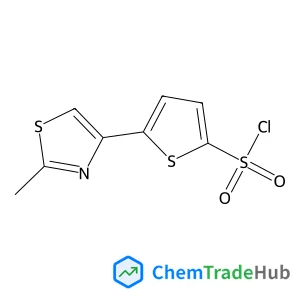
5-(2-Methyl-1,3-thiazol-4-yl)-2-thiophenesulfonyl chloride
CAS Number:
215434-25-6
Molecular Formula:
C8H6ClNO2S3
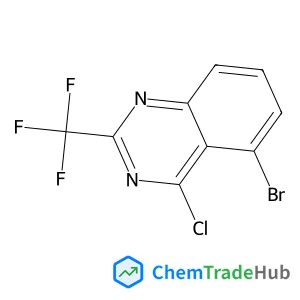
5-Bromo-4-chloro-2-(trifluoromethyl)quinazoline
CAS Number:
2089311-03-3
Molecular Formula:
C9H3BrClF3N2
Recommended Suppliers






Disclaimer
This page provides academic journal information for reference and research purposes only. We are not affiliated with any journal publishers and do not handle publication submissions. For publication-related inquiries, please contact the respective journal publishers directly.
If you notice any inaccuracies in the information displayed, please contact us at support@chemtradehub.com. We will promptly review and address your concerns.