












On the explanation of hysteresis in the adsorption of ammonia on graphitized thermal carbon black
Literature Information
Publication Date
2015-11-27
DOI
10.1039/C5CP06034F
Impact Factor
3.676
Authors
Yonghong Zeng, D. D. Do, Toshihide Horikawa, D. Nicholson, Kazuyuki Nakai
View Original
Abstract
We present a Monte Carlo simulation and experimental study of ammonia adsorption on graphitized thermal carbon black. Our new molecular model for the adsorbent is composed of basal plane graphene surfaces with ultrafine pores grafted with hydroxyl groups at the junctions between graphene layers. The simulated adsorption isotherms and isosteric heats are in good agreement with the experimental data of Holmes and Beebe, and the simulations reproduce the unusual experimental hysteresis of ammonia adsorption on an open graphite surface for the first time in the literature. The detailed mechanisms of adsorption and desorption, and the origin of hysteresis, are investigated by the microscopic analysis of the adsorbate structures to show that restructuring occurs during adsorption. The main results from this work are: (i) at the triple point, ammonia adsorbs preferentially around the functional groups to form clusters in the ultrafine pores and spills-over onto the basal plane as the loading is increased; followed by a 2D condensation on the graphite surface to form a bilayer adsorbate; (ii) at the boiling point, adsorption occurs on the basal plane due to the increasing importance of thermal fluctuations (an entropic effect); (iii) the isosteric heat is very high at zero loading due to the strong interaction between ammonia and the functional groups, decreases steeply when the functional group is saturated, and eventually reaches the heat of condensation as the fluid-fluid interaction increases.
Related Literature
Synthesis and enantioseparation of proline-derived helical polyacetylenes as chiral stationary phases for HPLC
Ge Shi, Xiao Dai, Yue Zhou, Jie Zhang, Jun Shen, Xinhua Wan
2020-04-09
Paper
DOI: 10.1039/D0PY00205D
Visible light-mediated ring-opening polymerization of lactones based on the excited state acidity of ESPT molecules
Xun Zhang, Siping Hu, Qiang Ma
2020-04-06
Paper
DOI: 10.1039/D0PY00369G
Photo-switching of surface wettability on micropatterned photopolymers for fast transport of water droplets over a long-distance
E. Rossegger, D. Nees, S. Turisser, S. Radl, T. Griesser, S. Schlögl
2020-03-24
Paper
DOI: 10.1039/D0PY00263A
Comprehensive theoretical and experimental study of near infrared absorbing copolymers based on dithienosilole
Katarzyna Brymora, Wissem Khelifi, Hussein Awada, Sylvie Blanc, Lionel Hirsch, Antoine Bousquet, Christine Lartigau-Dagron, Frédéric Castet
2020-04-30
Paper
DOI: 10.1039/D0PY00330A
A 3D printed drug delivery implant formed from a dynamic supramolecular polyurethane formulation
S. Salimi, Y. Wu, M. I. Evangelista Barreiros, A. A. Natfji, S. Khaled, R. Wildman, L. R. Hart, F. Greco, E. A. Clark, C. J. Roberts, W. Hayes
2020-04-21
Paper
DOI: 10.1039/D0PY00068J
Preparation of aryl polysulfonates via a highly efficient SuFEx click reaction, their controllable degradation and functionalized behavior
Zhenlei Cao, Feng Zhou, Pei-Yang Gu, Dongyun Chen, Jinghui He, John R. Cappiello, Peng Wu, Qingfeng Xu, Jianmei Lu
2020-04-23
Communication
DOI: 10.1039/D0PY00435A
Epoxy-functional diblock copolymer spheres, worms and vesicles via polymerization-induced self-assembly in mineral oil
Philip J. Docherty, Chloé Girou, Matthew J. Derry, Steven P. Armes
2020-04-29
Paper
DOI: 10.1039/D0PY00380H
Biosignal-responsive polymer nanorods that specifically recognize hydrogen polysulfide (H2Sn) from reactive sulfur species
Wei Sang, Kunbing Ouyang, Qiang Yan
2020-04-08
Communication
DOI: 10.1039/D0PY00360C
You might also like
Compound Q&A
How should waste containing 6-Chloro-5-(2'-hydroxy-3'-methoxy-4-biphenylyl)-3-(3-methoxyphenyl)-1H-pyrrolo[3,2-d]pyrimidine-2,4(3H,5H)-dione (CAS: 1346607-05-3) be handled?
Waste containing 6-Chloro-5-(2'-hydroxy-3'-methoxy-4-biphenylyl)-3-(3-methoxyphe...
1346607-05-36-Chloro-5-(2'-hydro...
Compound Q&A
What are the main uses of (3alpha,5alpha)-3-Hydroxypregnane-11,20-dione (CAS: 23930-19-0)?
(3alpha,5alpha)-3-Hydroxypregnane-11,20-dione is primarily used in the pharmaceu...
23930-19-0(3alpha,5alpha)-3-Hy...
Compound Q&A
What is the market or research trend for 4-Amino-6-chloro-2-pyridinecarboxylic acid (CAS: 546141-56-4)?
The market for 4-Amino-6-chloro-2-pyridinecarboxylic acid (CAS: 546141-56-4) is ...
546141-56-44-Amino-6-chloro-2-p...
Compound Q&A
Are there alternatives to (2-Benzoylethyl)trimethylammonium chloride (CAS: 24472-88-6) in synthesis?
Alternatives to (2-Benzoylethyl)trimethylammonium chloride (CAS: 24472-88-6) in ...
24472-88-6(2-Benzoylethyl)trim...
Compound Q&A
Is N-[4-Nitro-3-(trifluoromethyl)phenyl]acetamide (CAS: 393-12-4) safe?
N-[4-Nitro-3-(trifluoromethyl)phenyl]acetamide (CAS: 393-12-4) is generally safe...
393-12-4N-[4-Nitro-3-(triflu...
Compound Q&A
Are there alternatives to [(4R,5R,6S)-5-hydroxy-10-imino-3,7-dioxa-1,9-diazatricyclo[6.4.0.02,6]dodeca-8,11-dien-4-yl]methyl dihydrogen phosphate (CAS: 39679-56-6) in synthesis?
Alternative reagents such as other phosphates or similar functional groups can b...
39679-56-6[(4R,5R,6S)-5-hydrox...
Compound Q&A
Are there alternatives to N,N'-Bis(3-aminopropyl)-1,3-propanediamine (CAS: 4605-14-5) in synthesis?
There are alternatives to N,N'-Bis(3-aminopropyl)-1,3-propanediamine (CAS: 4605-...
4605-14-5N,N'-Bis(3-aminoprop...
Compound Q&A
What precautions should be taken when handling Aluminium trihexadecanoate (CAS: 555-35-1)?
When handling Aluminium trihexadecanoate, it is important to use appropriate per...
555-35-1Aluminium trihexadec...
Compound Q&A
What is (1,1-Dioxido-3-oxo-1,2-benzothiazol-2(3H)-yl)acetic acid (CAS: 52188-11-1)?
(1,1-Dioxido-3-oxo-1,2-benzothiazol-2(3H)-yl)acetic acid is a chemical compound ...
52188-11-1(1,1-Dioxido-3-oxo-1...
Compound Q&A
Are there alternatives to 5,5-dimethyloxolan-2-one (CAS: 3123-97-5) in synthesis?
Several alternatives to 5,5-dimethyloxolan-2-one (CAS: 3123-97-5) can be used in...
3123-97-55,5-dimethyloxolan-2...
Source Journal
Physical Chemistry Chemical Physics

CiteScore:
5.5
Self-citation Rate:
10.3%
Articles per Year:
3036
Physical Chemistry Chemical Physics (PCCP) is an international journal co-owned by 19 physical chemistry and physics societies from around the world. This journal publishes original, cutting-edge research in physical chemistry, chemical physics and biophysical chemistry. To be suitable for publication in PCCP, articles must include significant innovation and/or insight into physical chemistry; this is the most important criterion that reviewers and Editors will judge against when evaluating submissions. The journal has a broad scope and welcomes contributions spanning experiment, theory, computation and data science. Topical coverage includes spectroscopy, dynamics, kinetics, statistical mechanics, thermodynamics, electrochemistry, catalysis, surface science, quantum mechanics, quantum computing and machine learning. Interdisciplinary research areas such as polymers and soft matter, materials, nanoscience, energy, surfaces/interfaces, and biophysical chemistry are welcomed if they demonstrate significant innovation and/or insight into physical chemistry. Joined experimental/theoretical studies are particularly appreciated when complementary and based on up-to-date approaches.
Recommended Compounds
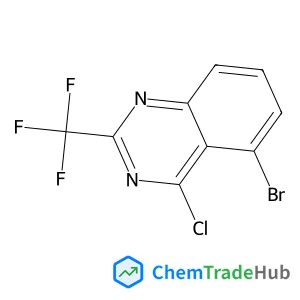
5-Bromo-4-chloro-2-(trifluoromethyl)quinazoline
CAS Number:
2089311-03-3
Molecular Formula:
C9H3BrClF3N2
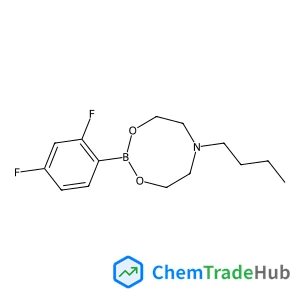
6-Butyl-2-(2,4-difluorophenyl)-1,3,6,2-dioxazaborocane
CAS Number:
1190988-98-7
Molecular Formula:
C14H20BF2NO2
Recommended Suppliers








Disclaimer
This page provides academic journal information for reference and research purposes only. We are not affiliated with any journal publishers and do not handle publication submissions. For publication-related inquiries, please contact the respective journal publishers directly.
If you notice any inaccuracies in the information displayed, please contact us at support@chemtradehub.com. We will promptly review and address your concerns.