













The critical role of intragap states in the energy transfer from gold nanoparticles to TiO2
Literature Information
Publication Date
2015-01-15
DOI
10.1039/C4CP05775A
Impact Factor
3.676
Authors
Alberto Naldoni, Filippo Fabbri, Marco Altomare, Marcello Marelli, Rinaldo Psaro, Elena Selli, Giancarlo Salviati, Vladimiro Dal Santo
View Original
Abstract
Cathodoluminescence spectroscopy is profitably exploited to study energy transfer mechanisms in Au and Pt/black TiO2 heterostructures. While Pt nanoparticles absorb light in the UV region, Au nanoparticles absorb light by surface plasmon resonance and interband transitions, both of them occurring in the visible region. The intra-bandgap states (oxygen vacancies) of black TiO2 play a key role in promoting both hot electron transfer and plasmonic resonant energy transfer from Au nanoparticles to the TiO2 semiconductor with a consequent photocatalytic H2 production increase. An innovative criterion is introduced for the design of plasmonic composites with increased efficiency under visible light.
Related Literature
Interpreting the Raman OH/OD stretch band of ice from isotopic substitution and phase transition effects
Qingcheng Hu, Haiwen Zhao, Shunli Ouyang
2018-10-26
Paper
DOI: 10.1039/C8CP06281A
The ortho-benzyne cation is not planar
D. Kaiser, E. Reusch, P. Hemberger, A. Bodi, E. Welz, B. Engels, I. Fischer
2018-01-09
Paper
DOI: 10.1039/C7CP08055G
Correction: Necessary and sufficient conditions for the successful three-phase photocatalytic reduction of CO2 by H2O over heterogeneous photocatalysts
2018-07-26
Correction
DOI: 10.1039/C8CP91824D
Theoretical study on photo-induced processes of 1-methyl-3-(N-(1,8-naphthalimidyl)ethyl)imidazolium halide species: an application of constrained density functional theory
Takao Otsuka, Hironori Izawa, Kenji Morihashi
2017-12-08
Paper
DOI: 10.1039/C7CP07877C
On the physics of both surface overcharging and charge reversal at heterophase interfaces
Zhi-Yong Wang, Pengli Zhang, Zengwei Ma
2018-01-04
Paper
DOI: 10.1039/C7CP08117K
The nature of frontier orbitals under systematic ligand exchange in (pseudo-)octahedral Fe(ii) complexes
Mattis Fondell, Piter S. Miedema, Jesper Norell, Annette Pietzsch, Wilson Quevedo, Johannes Niskanen, Kristjan Kunnus
2018-09-13
Paper
DOI: 10.1039/C8CP04341H
Electrochemical surface-enhanced Raman spectroscopy (EC-SERS) study of the interaction between protein aggregates and biomimetic membranes
Reem Ahmed Karaballi, Soraya Merchant, Sasha R. Power, Christa L. Brosseau
2018-01-19
Paper
DOI: 10.1039/C7CP06838G
The last link of the x-aminobutyric acid series: the five conformers of β-aminobutyric acid
I. León, I. Peña, C. Cabezas, E. R. Alonso, J. L. Alonso
2018-05-11
Paper
DOI: 10.1039/C8CP01734D
Manipulating triplet states: tuning energies, absorption, lifetimes, and annihilation rates in anthanthrene derivatives
Jianmin Shi, Tod A. Grusenmeyer, Christopher L. McCleese, Ryan M. O’Donnell, Thomas M. Cooper, William M. Shensky, III, Joy E. Haley
2018-10-31
Paper
DOI: 10.1039/C8CP06048G
Insights into the dissociative ionization of glycine by PEPICO experiments
Paola Bolognesi, Alicja Domaracka, Patrick Rousseau, Mattea Carmen Castrovilli, Robert Richter, Subhojyoti Chatterjee, Feng Wang, Lorenzo Avaldi
2018-08-15
Paper
DOI: 10.1039/C8CP03473G
You might also like
Compound Q&A
Is 6-(3-Fluorophenyl)picolinic acid (CAS: 887982-40-3) safe?
6-(3-Fluorophenyl)picolinic acid is generally considered safe for laboratory use...
887982-40-36-(3-Fluorophenyl)pi...
Compound Q&A
What industries use (3R)-3-Pyrrolidinol (CAS: 2799-21-5)?
(3R)-3-Pyrrolidinol is used in the pharmaceutical industry as a precursor for dr...
2799-21-5(3R)-3-Pyrrolidinol
Compound Q&A
What precautions should be taken when handling (4R,5R)-4,5-Diethoxycarbonyl-2,2-dimethyldioxolane (CAS: 59779-75-8)?
When handling (4R,5R)-4,5-Diethoxycarbonyl-2,2-dimethyldioxolane (CAS: 59779-75-...
59779-75-8(4R,5R)-4,5-Diethoxy...
Compound Q&A
How is 1-(6-Chloroimidazo[1,2-b]pyridazin-3-yl)ethanone (CAS: 90734-71-7) typically synthesized?
1-(6-Chloroimidazo[1,2-b]pyridazin-3-yl)ethanone is often synthesized via a mult...
90734-71-71-(6-Chloroimidazo[1...
Compound Q&A
What is the market or research trend for N-Ethyl-3,4-dimethylbenzylamine (CAS: 39180-83-1)?
The market for N-Ethyl-3,4-dimethylbenzylamine (CAS: 39180-83-1) remains steady,...
39180-83-1N-Ethyl-3,4-dimethyl...
Compound Q&A
What is Tert-butyl 3-(pyrrolidin-1-yl)azetidine-1-carboxylate (CAS: 1019008-21-9)?
Tert-butyl 3-(pyrrolidin-1-yl)azetidine-1-carboxylate is a chemical compound wit...
1019008-21-9Tert-butyl 3-(pyrrol...
Compound Q&A
What regulatory guidelines apply to 1-Bromo-3-chloro-2,4-dimethoxybenzene (CAS: 1228956-93-1)?
1-Bromo-3-chloro-2,4-dimethoxybenzene (CAS: 1228956-93-1) falls under the classi...
1228956-93-11-Bromo-3-chloro-2,4...
Compound Q&A
Is 8-Bromo-2-methyl-3,4-dihydroisoquinolin-1(2H)-one (CAS: 1368622-07-4) safe?
The safety of 8-Bromo-2-methyl-3,4-dihydroisoquinolin-1(2H)-one (CAS: 1368622-07...
1368622-07-48-Bromo-2-methyl-3,4...
Compound Q&A
Is Benzyl [(3S)-2,6-dioxo-3-piperidinyl]carbamate (CAS: 22785-43-9) safe?
Benzyl [(3S)-2,6-dioxo-3-piperidinyl]carbamate is generally safe when handled wi...
22785-43-9Benzyl [(3S)-2,6-dio...
Compound Q&A
How should 1-{[4-(4,4,5,5-Tetramethyl-1,3,2-dioxaborolan-2-yl)phenyl]sulfonyl}pyrrolidine (CAS: 928657-21-0) be stored?
1-{[4-(4,4,5,5-Tetramethyl-1,3,2-dioxaborolan-2-yl)phenyl]sulfonyl}pyrrolidine s...
928657-21-01-{[4-(4,4,5,5-Tetra...
Source Journal
Physical Chemistry Chemical Physics

CiteScore:
5.5
Self-citation Rate:
10.3%
Articles per Year:
3036
Physical Chemistry Chemical Physics (PCCP) is an international journal co-owned by 19 physical chemistry and physics societies from around the world. This journal publishes original, cutting-edge research in physical chemistry, chemical physics and biophysical chemistry. To be suitable for publication in PCCP, articles must include significant innovation and/or insight into physical chemistry; this is the most important criterion that reviewers and Editors will judge against when evaluating submissions. The journal has a broad scope and welcomes contributions spanning experiment, theory, computation and data science. Topical coverage includes spectroscopy, dynamics, kinetics, statistical mechanics, thermodynamics, electrochemistry, catalysis, surface science, quantum mechanics, quantum computing and machine learning. Interdisciplinary research areas such as polymers and soft matter, materials, nanoscience, energy, surfaces/interfaces, and biophysical chemistry are welcomed if they demonstrate significant innovation and/or insight into physical chemistry. Joined experimental/theoretical studies are particularly appreciated when complementary and based on up-to-date approaches.
Recommended Compounds

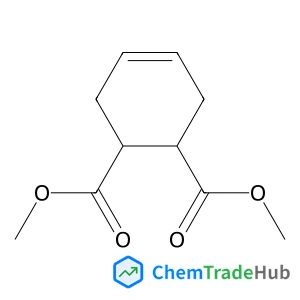
4-Cyclohexene-1,2-dicarboxylic acid, 1,2-dimethyl ester, (1R,2R)-rel-
CAS Number:
17673-68-6
Molecular Formula:
C10H14O4
Recommended Suppliers





Disclaimer
This page provides academic journal information for reference and research purposes only. We are not affiliated with any journal publishers and do not handle publication submissions. For publication-related inquiries, please contact the respective journal publishers directly.
If you notice any inaccuracies in the information displayed, please contact us at support@chemtradehub.com. We will promptly review and address your concerns.