












Insights into the dissociative ionization of glycine by PEPICO experiments
Literature Information
Publication Date
2018-08-15
DOI
10.1039/C8CP03473G
Impact Factor
3.676
Authors
Paola Bolognesi, Alicja Domaracka, Patrick Rousseau, Mattea Carmen Castrovilli, Robert Richter, Subhojyoti Chatterjee, Feng Wang, Lorenzo Avaldi
View Original
Abstract
The fragmentation of glycine (NH2CH2COOH) has been studied by photoelectron–photoion coincidence, PEPICO, experiments at 60 eV photon energy. Glycine practically fragments at the ionization threshold, with the charge being on the H2NCH2+ moiety, due to ejection of an electron from the nitrogen lone pair of the highest occupied molecular orbital. To observe the formation of the complementary cation COOH+ further energy is needed. The flexibility with respect to rotation about the C–C, C–N and C–O bonds makes glycine exist in the gas phase in several conformers of both Cs and C1 point group symmetry in the neutral as well as ion states. The ionization can lead to stabilization of some conformations, rearrangements and, last but not least, H migration between the two moieties. The results of these experiments prove the sensitivity of PEPICO to pin point all these processes.
Related Literature
Dynamics of propene and propane in ZIF-8 probed by solid-state 2H NMR
Dieter Freude, Alexander G. Stepanov
2020-02-21
Paper
DOI: 10.1039/D0CP00270D
A ReaxFF molecular dynamics study of molecular-level interactions during binder jetting 3D-printing
Yawei Gao, Yun Kyung Shin, Daniel Martinez, Guha Manogharan, Adri C. T. van Duin
2019-09-10
Paper
DOI: 10.1039/C9CP03585K
Water binding to FeIII hemes studied in a cooled ion trap: characterization of a strong ‘weak’ ligand
Mohammad Aarabi, Satchin Soorkia, Gilles Grégoire, Aurélien de la Lande, Benoît Soep, Reza Omidyan, Niloufar Shafizadeh
2019-09-02
Paper
DOI: 10.1039/C9CP03608C
Improved SERS activity of non-stoichiometric copper sulfide nanostructures related to charge-transfer resonance
Chaocang Weng, Lei Gao, Guotao Duan
2020-02-01
Paper
DOI: 10.1039/C9CP05930J
Probing molecular interactions of PEGylated chitosan in aqueous solutions using a surface force apparatus
Li Xiang, Lu Gong, Jiawen Zhang, Ling Zhang, Wenjihao Hu, Wenda Wang, Qingye Lu, Hongbo Zeng
2019-07-22
Paper
DOI: 10.1039/C9CP03189H
A quantum chemical study of hydrogen adsorption on carbon-supported palladium clusters
Lisa Warczinski, Christof Hättig
2019-09-10
Paper
DOI: 10.1039/C9CP04606B
Phase transition and electronic properties of skutterudite-type IrP3 under high pressure
Xuejiao Ma, Dan Zhou, Yan Yan, Jing Xu, Siyuan Liu, Yulan Wang, Manai Cui, Yuheng Cheng, Yu Miao, Yanhui Liu
2019-08-27
Paper
DOI: 10.1039/C9CP02422K
You might also like
Compound Q&A
Is 6-(3-Fluorophenyl)picolinic acid (CAS: 887982-40-3) safe?
6-(3-Fluorophenyl)picolinic acid is generally considered safe for laboratory use...
887982-40-36-(3-Fluorophenyl)pi...
Compound Q&A
What industries use (3R)-3-Pyrrolidinol (CAS: 2799-21-5)?
(3R)-3-Pyrrolidinol is used in the pharmaceutical industry as a precursor for dr...
2799-21-5(3R)-3-Pyrrolidinol
Compound Q&A
What precautions should be taken when handling (4R,5R)-4,5-Diethoxycarbonyl-2,2-dimethyldioxolane (CAS: 59779-75-8)?
When handling (4R,5R)-4,5-Diethoxycarbonyl-2,2-dimethyldioxolane (CAS: 59779-75-...
59779-75-8(4R,5R)-4,5-Diethoxy...
Compound Q&A
How is 1-(6-Chloroimidazo[1,2-b]pyridazin-3-yl)ethanone (CAS: 90734-71-7) typically synthesized?
1-(6-Chloroimidazo[1,2-b]pyridazin-3-yl)ethanone is often synthesized via a mult...
90734-71-71-(6-Chloroimidazo[1...
Compound Q&A
What is the market or research trend for N-Ethyl-3,4-dimethylbenzylamine (CAS: 39180-83-1)?
The market for N-Ethyl-3,4-dimethylbenzylamine (CAS: 39180-83-1) remains steady,...
39180-83-1N-Ethyl-3,4-dimethyl...
Compound Q&A
What is Tert-butyl 3-(pyrrolidin-1-yl)azetidine-1-carboxylate (CAS: 1019008-21-9)?
Tert-butyl 3-(pyrrolidin-1-yl)azetidine-1-carboxylate is a chemical compound wit...
1019008-21-9Tert-butyl 3-(pyrrol...
Compound Q&A
What regulatory guidelines apply to 1-Bromo-3-chloro-2,4-dimethoxybenzene (CAS: 1228956-93-1)?
1-Bromo-3-chloro-2,4-dimethoxybenzene (CAS: 1228956-93-1) falls under the classi...
1228956-93-11-Bromo-3-chloro-2,4...
Compound Q&A
Is 8-Bromo-2-methyl-3,4-dihydroisoquinolin-1(2H)-one (CAS: 1368622-07-4) safe?
The safety of 8-Bromo-2-methyl-3,4-dihydroisoquinolin-1(2H)-one (CAS: 1368622-07...
1368622-07-48-Bromo-2-methyl-3,4...
Compound Q&A
Is Benzyl [(3S)-2,6-dioxo-3-piperidinyl]carbamate (CAS: 22785-43-9) safe?
Benzyl [(3S)-2,6-dioxo-3-piperidinyl]carbamate is generally safe when handled wi...
22785-43-9Benzyl [(3S)-2,6-dio...
Compound Q&A
How should 1-{[4-(4,4,5,5-Tetramethyl-1,3,2-dioxaborolan-2-yl)phenyl]sulfonyl}pyrrolidine (CAS: 928657-21-0) be stored?
1-{[4-(4,4,5,5-Tetramethyl-1,3,2-dioxaborolan-2-yl)phenyl]sulfonyl}pyrrolidine s...
928657-21-01-{[4-(4,4,5,5-Tetra...
Source Journal
Physical Chemistry Chemical Physics

CiteScore:
5.5
Self-citation Rate:
10.3%
Articles per Year:
3036
Physical Chemistry Chemical Physics (PCCP) is an international journal co-owned by 19 physical chemistry and physics societies from around the world. This journal publishes original, cutting-edge research in physical chemistry, chemical physics and biophysical chemistry. To be suitable for publication in PCCP, articles must include significant innovation and/or insight into physical chemistry; this is the most important criterion that reviewers and Editors will judge against when evaluating submissions. The journal has a broad scope and welcomes contributions spanning experiment, theory, computation and data science. Topical coverage includes spectroscopy, dynamics, kinetics, statistical mechanics, thermodynamics, electrochemistry, catalysis, surface science, quantum mechanics, quantum computing and machine learning. Interdisciplinary research areas such as polymers and soft matter, materials, nanoscience, energy, surfaces/interfaces, and biophysical chemistry are welcomed if they demonstrate significant innovation and/or insight into physical chemistry. Joined experimental/theoretical studies are particularly appreciated when complementary and based on up-to-date approaches.
Recommended Compounds

(R)-2-(Methylamino)propanoic acid hydrochloride
CAS Number:
1155878-14-0
Molecular Formula:
C4H10ClNO2

![2-[({[(2-Methyl-2-propanyl)oxy]carbonyl}amino)methyl]isonicotinic acid structure](https://static.chemtradehub.com/structs/473/473924-63-9-973b.webp "2-[({[(2-Methyl-2-propanyl)oxy]carbonyl}amino)methyl]isonicotinic acid structure")
2-[({[(2-Methyl-2-propanyl)oxy]carbonyl}amino)methyl]isonicotinic acid
CAS Number:
473924-63-9
Molecular Formula:
C12H16N2O4
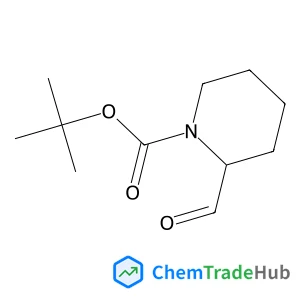
2-Methyl-2-propanyl (2R)-2-formyl-1-piperidinecarboxylate
CAS Number:
134526-69-5
Molecular Formula:
C11H19NO3
Recommended Suppliers






Disclaimer
This page provides academic journal information for reference and research purposes only. We are not affiliated with any journal publishers and do not handle publication submissions. For publication-related inquiries, please contact the respective journal publishers directly.
If you notice any inaccuracies in the information displayed, please contact us at support@chemtradehub.com. We will promptly review and address your concerns.