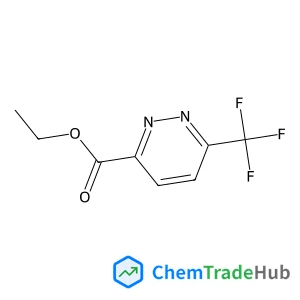
Ethyl 6-(trifluoromethyl)pyridazine-3-carboxylate
CAS Number:
1192155-06-8
Molecular Formula:
C8H7F3N2O2
Qingcheng Hu, Haiwen Zhao, Shunli Ouyang
Understanding the OD/OH stretch band (ODSB/OHSB) features for the Raman spectra of ice remains a challenge. This study measures the ODSB/OHSB for isotopically substituted D2O/H2O (with volume ratio VD2O/VH2O of 1/0, 4/1, 1/1, 1/4 and 0/1) ice Ih, and compares them with those for liquid water and ices in various phases. The data show that istopic substitution (IS) narrows the ODSB/OHSB of ice from both the low-frequency and the high-frequency side to the middle of the OD/OH stretch regions, but in contrast, IS enhances the high-frequency part of the ODSB/OHSB for liquid water. The ODSB/OHSB features of ice and their dependences on IS and phase transition can be understood basically from the concept that ice has diverse HB configurations that depend on the ice lattice form and the proton (dis)order and essentially determine the intermolecular vibrational couplings in ice. Combined with a Gaussian fitting analysis, more details for the HB configurations in ice are revealed: tetrahedral HB profiles, which are responsible for the main peak, are dominant and non-tetrahedral ones, which bring about the high-frequency shoulders, are also important. On IS, the proportion of tetrahedral HB profiles sees a dramatic decrease.
Vishnuraj Ramakrishnan, Keerthi G. Nair, Jayaseelan Dhakshinamoorthy, K. R. Ravi, Biji Pullithadathil
DOI: 10.1039/D0CP00567C
Fabian Düll, Manuel Meusel, Florian Späth, Simon Schötz, Udo Bauer, Philipp Bachmann, Johann Steinhauer, Hans-Peter Steinrück, Andreas Bayer, Christian Papp
DOI: 10.1039/C9CP04095A
Golda Mensa-Bonsu, Aude Lietard, Jan R. R. Verlet
DOI: 10.1039/D0CP90056G
Aritra Mandal
DOI: 10.1039/C9CP04101J
Germán Molpeceres, Johannes Kästner
DOI: 10.1039/D0CP00250J
Drew F. Parsons, Friedrich Anton Burger, Priyadarshini Thiyam, I. Brevik, Clas Persson
DOI: 10.1039/C9CP03165K
DOI: 10.1039/C9CP03213D
Manthila Rajapakse, George Anderson, Congyan Zhang, Rajib Musa, Jackson Walter, Ming Yu, Jacek B. Jasinski
DOI: 10.1039/C9CP06547D
6-(3-Fluorophenyl)picolinic acid is generally considered safe for laboratory use...
(3R)-3-Pyrrolidinol is used in the pharmaceutical industry as a precursor for dr...
When handling (4R,5R)-4,5-Diethoxycarbonyl-2,2-dimethyldioxolane (CAS: 59779-75-...
1-(6-Chloroimidazo[1,2-b]pyridazin-3-yl)ethanone is often synthesized via a mult...
The market for N-Ethyl-3,4-dimethylbenzylamine (CAS: 39180-83-1) remains steady,...
Tert-butyl 3-(pyrrolidin-1-yl)azetidine-1-carboxylate is a chemical compound wit...
1-Bromo-3-chloro-2,4-dimethoxybenzene (CAS: 1228956-93-1) falls under the classi...
The safety of 8-Bromo-2-methyl-3,4-dihydroisoquinolin-1(2H)-one (CAS: 1368622-07...
Benzyl [(3S)-2,6-dioxo-3-piperidinyl]carbamate is generally safe when handled wi...
1-{[4-(4,4,5,5-Tetramethyl-1,3,2-dioxaborolan-2-yl)phenyl]sulfonyl}pyrrolidine s...

Physical Chemistry Chemical Physics (PCCP) is an international journal co-owned by 19 physical chemistry and physics societies from around the world. This journal publishes original, cutting-edge research in physical chemistry, chemical physics and biophysical chemistry. To be suitable for publication in PCCP, articles must include significant innovation and/or insight into physical chemistry; this is the most important criterion that reviewers and Editors will judge against when evaluating submissions. The journal has a broad scope and welcomes contributions spanning experiment, theory, computation and data science. Topical coverage includes spectroscopy, dynamics, kinetics, statistical mechanics, thermodynamics, electrochemistry, catalysis, surface science, quantum mechanics, quantum computing and machine learning. Interdisciplinary research areas such as polymers and soft matter, materials, nanoscience, energy, surfaces/interfaces, and biophysical chemistry are welcomed if they demonstrate significant innovation and/or insight into physical chemistry. Joined experimental/theoretical studies are particularly appreciated when complementary and based on up-to-date approaches.
![Benzyl spiro[indole-3,4'-piperidine]-1(2H)-carboxylate hydrochloride (1:1) structure](https://static.chemtradehub.com/structs/159/159635-46-8-8de0.webp "Benzyl spiro[indole-3,4'-piperidine]-1(2H)-carboxylate hydrochloride (1:1) structure")