













Manipulating triplet states: tuning energies, absorption, lifetimes, and annihilation rates in anthanthrene derivatives
Literature Information
Publication Date
2018-10-31
DOI
10.1039/C8CP06048G
Impact Factor
3.676
Authors
Jianmin Shi, Tod A. Grusenmeyer, Christopher L. McCleese, Ryan M. O’Donnell, Thomas M. Cooper, William M. Shensky, III, Joy E. Haley
View Original
Abstract
The photophysical properties of anthanthrene, four anthanthrene derivatives containing varying phenyl and p-tBu-phenyl substituents, and two anthanthrones with phenyl and p-tBu-phenyl substituents are examined. In general, as the anthanthrenes and anthanthrones become more substituted, red-shifts are observed in the peak maxima of the ground- and excited-state absorption and fluorescence spectra. The anthanthrones have large (>0.8) intersystem crossing (ISC) quantum yields (ΦT) likely caused by nπ* character in the ground or excited states. A bromo-substituted anthanthrene has a unity ISC yield due to an ISC rate constant of 2.5 × 10¹⁰ s−1 caused by heavy-atom induced, spin–orbit coupling. This leads to low fluorescence quantum yields (ΦF) in these three derivatives. The parent anthanthrene and remaining derivatives behave much differently. All have ΦF values from 0.58–0.84 with lower ΦT values as radiative decay outcompetes ISC. The anthanthrones have remarkable excited-state absorption with strong, broad transitions across the visible region with weaker transitions extending to nearly two μm. The anthanthrenes have very similar-shaped, broad transitions in the visible which can be shifted ∼60 nm by controlling the substituents. The triplet lifetimes range from 31–1200 μs and increase as the ISC yields decrease; the bromo-substituted anthanthrene is the shortest, followed by the anthanthrones then the other anthanthrenes. The rate of triplet–triplet annihilation is also affected by the presence of substituents; as the amount of steric bulk is increased, the rate of annihilation decreases.
Related Literature
Germanene/GaGeTe heterostructure: a promising electric-field induced data storage device with high carrier mobility
Liang Zhang, Jin Zhang, Pei-ji Wang, Chang-Wen Zhang
2020-02-04
Paper
DOI: 10.1039/C9CP06445A
Velocity map imaging study of the photodissociation dynamics of the allyl radical
Marta G. González, Luis Rubio-Lago
2020-02-18
Paper
DOI: 10.1039/C9CP04758A
Correction: Thermo-orientation in fluids of arbitrarily shaped particles
Andrea Gardin, Alberta Ferrarini
2020-02-28
Correction
DOI: 10.1039/D0CP90053B
Novel inorganic aromatic mixed-valent superalkali electride CaN3Ca: an alkaline-earth-based high-sensitivity multi-state nonlinear optical molecular switch
Yin-Feng Wang, Tian Qin, Jia-Min Tang, Yan-Jiao Liu, Miao Xie, Jia Li, Jiangen Huang, Zhi-Ru Li
2020-02-19
Paper
DOI: 10.1039/C9CP06848A
Probing molecular interactions of PEGylated chitosan in aqueous solutions using a surface force apparatus
Li Xiang, Lu Gong, Jiawen Zhang, Ling Zhang, Wenjihao Hu, Wenda Wang, Qingye Lu, Hongbo Zeng
2019-07-22
Paper
DOI: 10.1039/C9CP03189H
Phase transition and electronic properties of skutterudite-type IrP3 under high pressure
Xuejiao Ma, Dan Zhou, Yan Yan, Jing Xu, Siyuan Liu, Yulan Wang, Manai Cui, Yuheng Cheng, Yu Miao, Yanhui Liu
2019-08-27
Paper
DOI: 10.1039/C9CP02422K
Correction: A hexagonal Ni6 cluster protected by 2-phenylethanethiol for catalytic conversion of toluene to benzaldehyde
Anthony M. S. Pembere, Chaonan Cui, Rajini Anumula, Haiming Wu, Pan An, Tongling Liang, Zhixun Luo
2020-02-28
Correction
DOI: 10.1039/D0CP90052D
Gauging stability and reactivity of carbonyl O-oxide Criegee intermediates
J. Philipp Wagner
2019-09-13
Paper
DOI: 10.1039/C9CP03790J
Boron-based inorganic heterocyclic clusters: electronic structure, chemical bonding, aromaticity, and analogy to hydrocarbons
Lin-Yan Feng, Rui Li, Hua-Jin Zhai
2019-07-04
Perspective
DOI: 10.1039/C9CP03254A
You might also like
Compound Q&A
Is 6-(3-Fluorophenyl)picolinic acid (CAS: 887982-40-3) safe?
6-(3-Fluorophenyl)picolinic acid is generally considered safe for laboratory use...
887982-40-36-(3-Fluorophenyl)pi...
Compound Q&A
What industries use (3R)-3-Pyrrolidinol (CAS: 2799-21-5)?
(3R)-3-Pyrrolidinol is used in the pharmaceutical industry as a precursor for dr...
2799-21-5(3R)-3-Pyrrolidinol
Compound Q&A
What precautions should be taken when handling (4R,5R)-4,5-Diethoxycarbonyl-2,2-dimethyldioxolane (CAS: 59779-75-8)?
When handling (4R,5R)-4,5-Diethoxycarbonyl-2,2-dimethyldioxolane (CAS: 59779-75-...
59779-75-8(4R,5R)-4,5-Diethoxy...
Compound Q&A
How is 1-(6-Chloroimidazo[1,2-b]pyridazin-3-yl)ethanone (CAS: 90734-71-7) typically synthesized?
1-(6-Chloroimidazo[1,2-b]pyridazin-3-yl)ethanone is often synthesized via a mult...
90734-71-71-(6-Chloroimidazo[1...
Compound Q&A
What is the market or research trend for N-Ethyl-3,4-dimethylbenzylamine (CAS: 39180-83-1)?
The market for N-Ethyl-3,4-dimethylbenzylamine (CAS: 39180-83-1) remains steady,...
39180-83-1N-Ethyl-3,4-dimethyl...
Compound Q&A
What is Tert-butyl 3-(pyrrolidin-1-yl)azetidine-1-carboxylate (CAS: 1019008-21-9)?
Tert-butyl 3-(pyrrolidin-1-yl)azetidine-1-carboxylate is a chemical compound wit...
1019008-21-9Tert-butyl 3-(pyrrol...
Compound Q&A
What regulatory guidelines apply to 1-Bromo-3-chloro-2,4-dimethoxybenzene (CAS: 1228956-93-1)?
1-Bromo-3-chloro-2,4-dimethoxybenzene (CAS: 1228956-93-1) falls under the classi...
1228956-93-11-Bromo-3-chloro-2,4...
Compound Q&A
Is 8-Bromo-2-methyl-3,4-dihydroisoquinolin-1(2H)-one (CAS: 1368622-07-4) safe?
The safety of 8-Bromo-2-methyl-3,4-dihydroisoquinolin-1(2H)-one (CAS: 1368622-07...
1368622-07-48-Bromo-2-methyl-3,4...
Compound Q&A
Is Benzyl [(3S)-2,6-dioxo-3-piperidinyl]carbamate (CAS: 22785-43-9) safe?
Benzyl [(3S)-2,6-dioxo-3-piperidinyl]carbamate is generally safe when handled wi...
22785-43-9Benzyl [(3S)-2,6-dio...
Compound Q&A
How should 1-{[4-(4,4,5,5-Tetramethyl-1,3,2-dioxaborolan-2-yl)phenyl]sulfonyl}pyrrolidine (CAS: 928657-21-0) be stored?
1-{[4-(4,4,5,5-Tetramethyl-1,3,2-dioxaborolan-2-yl)phenyl]sulfonyl}pyrrolidine s...
928657-21-01-{[4-(4,4,5,5-Tetra...
Source Journal
Physical Chemistry Chemical Physics

CiteScore:
5.5
Self-citation Rate:
10.3%
Articles per Year:
3036
Physical Chemistry Chemical Physics (PCCP) is an international journal co-owned by 19 physical chemistry and physics societies from around the world. This journal publishes original, cutting-edge research in physical chemistry, chemical physics and biophysical chemistry. To be suitable for publication in PCCP, articles must include significant innovation and/or insight into physical chemistry; this is the most important criterion that reviewers and Editors will judge against when evaluating submissions. The journal has a broad scope and welcomes contributions spanning experiment, theory, computation and data science. Topical coverage includes spectroscopy, dynamics, kinetics, statistical mechanics, thermodynamics, electrochemistry, catalysis, surface science, quantum mechanics, quantum computing and machine learning. Interdisciplinary research areas such as polymers and soft matter, materials, nanoscience, energy, surfaces/interfaces, and biophysical chemistry are welcomed if they demonstrate significant innovation and/or insight into physical chemistry. Joined experimental/theoretical studies are particularly appreciated when complementary and based on up-to-date approaches.
Recommended Compounds
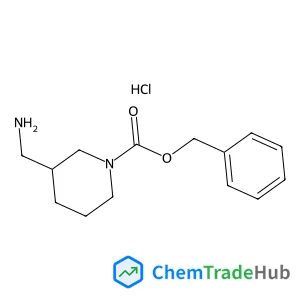
Benzyl 3-(aminomethyl)piperidine-1-carboxylate hydrochloride
CAS Number:
1186663-23-9
Molecular Formula:
C14H21ClN2O2

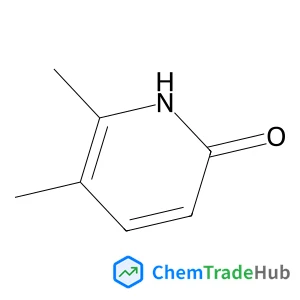

(11alpha,13E)-11-Hydroxy-9,15-dioxoprost-13-en-1-oic acid
CAS Number:
22973-19-9
Molecular Formula:
C20H32O5
Recommended Suppliers





Disclaimer
This page provides academic journal information for reference and research purposes only. We are not affiliated with any journal publishers and do not handle publication submissions. For publication-related inquiries, please contact the respective journal publishers directly.
If you notice any inaccuracies in the information displayed, please contact us at support@chemtradehub.com. We will promptly review and address your concerns.